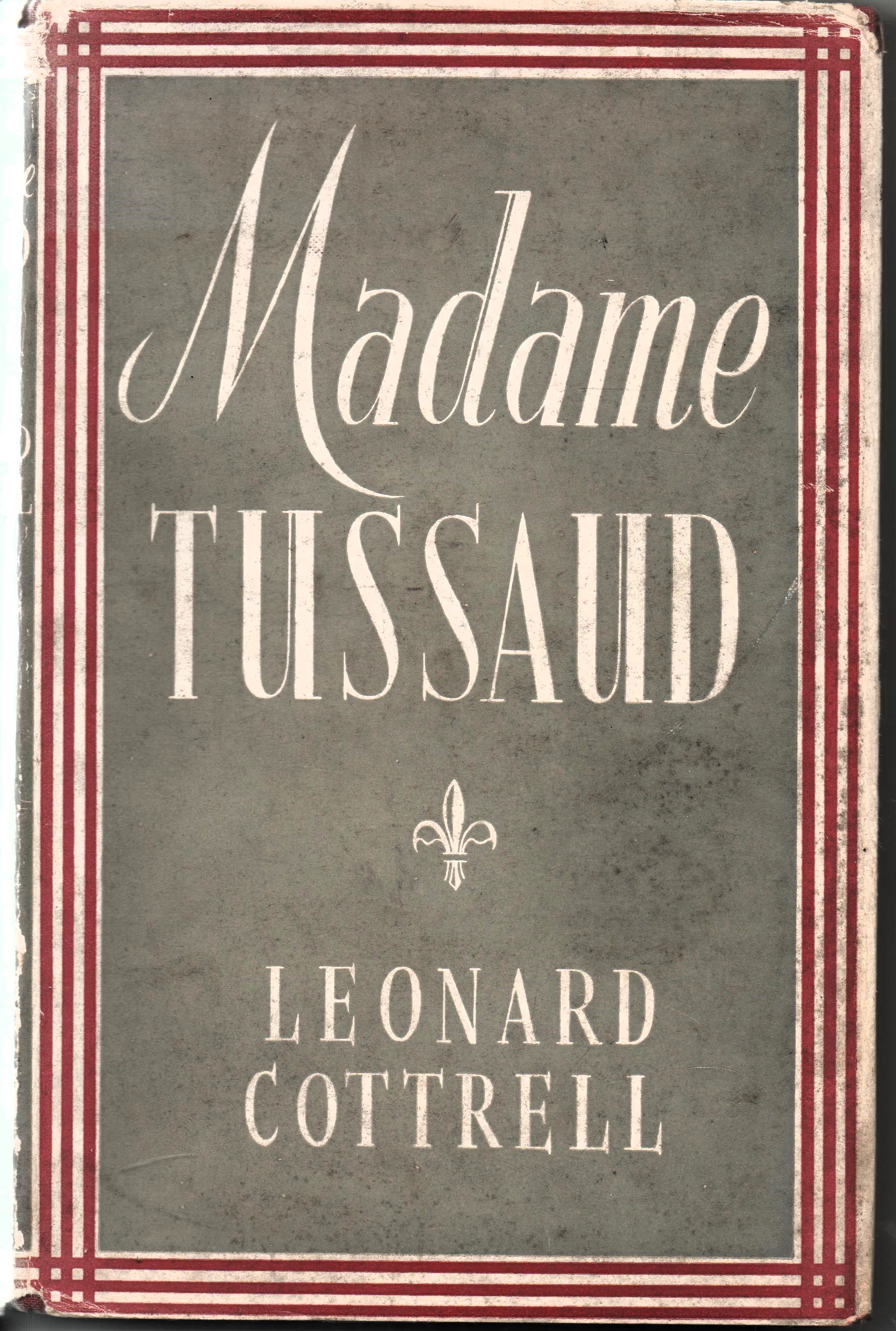
This short post marks a return to actually featuring a Landing Book Shelves book, after a glut of library book reading. Though I have to point out that it was a couple of library books that prompted me to take another look at a longtime resident of the book shelves. As I mentioned a while ago, I had picked up a library book on the Battle of Waterloo; on the strength of that I borrowed an audio version of An Infamous Army by Georgette Heyer, which has an excellent account of the battle, for a re-read. That in turn led me to dig out my copy of Madame Tussaud by Leonard Cottrell (Evans Brothers Publishers, 1951) which I bought in Liverpool many years ago and have not looked at again since first reading it.
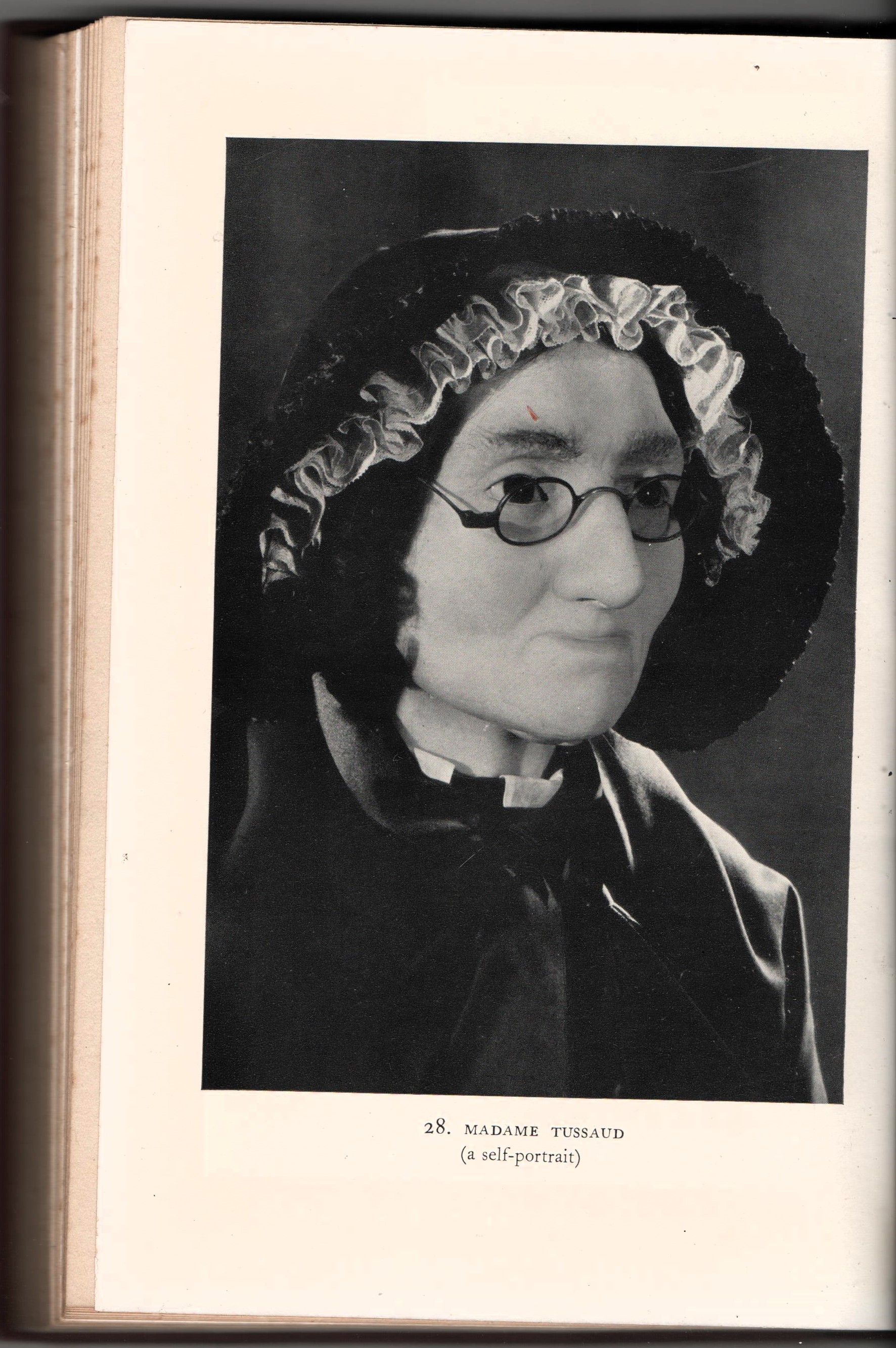
As usual, after searching on ABE Books I have to report that my edition of this book will fail to make my fortune. No pristine first edition for me (although mine is a nice copy with very little damage as you can see from my photos) but in fairness, this doesn’t seem to be such a rare publication so at least I am not missing out on a fortune. According to the pencilled figures inside the front cover, I paid the princely sum of £3.50 for Madame Tussaud, probably around thirty years ago. The book is illustrated with black and white photographs of some of the well-known historic pieces, including a Mme Tussaud’s self-portrait. The front and back endpapers feature maps of Tussaud’s British exhibition tours of her wax portraits between 1802 – 1833.
The book tells the story of her long life and of her famous exhibition, a fascinating story. I think this is due for a re-read this summer, so I will talk a bit more about the redoubtable Madame Tussaud next time.
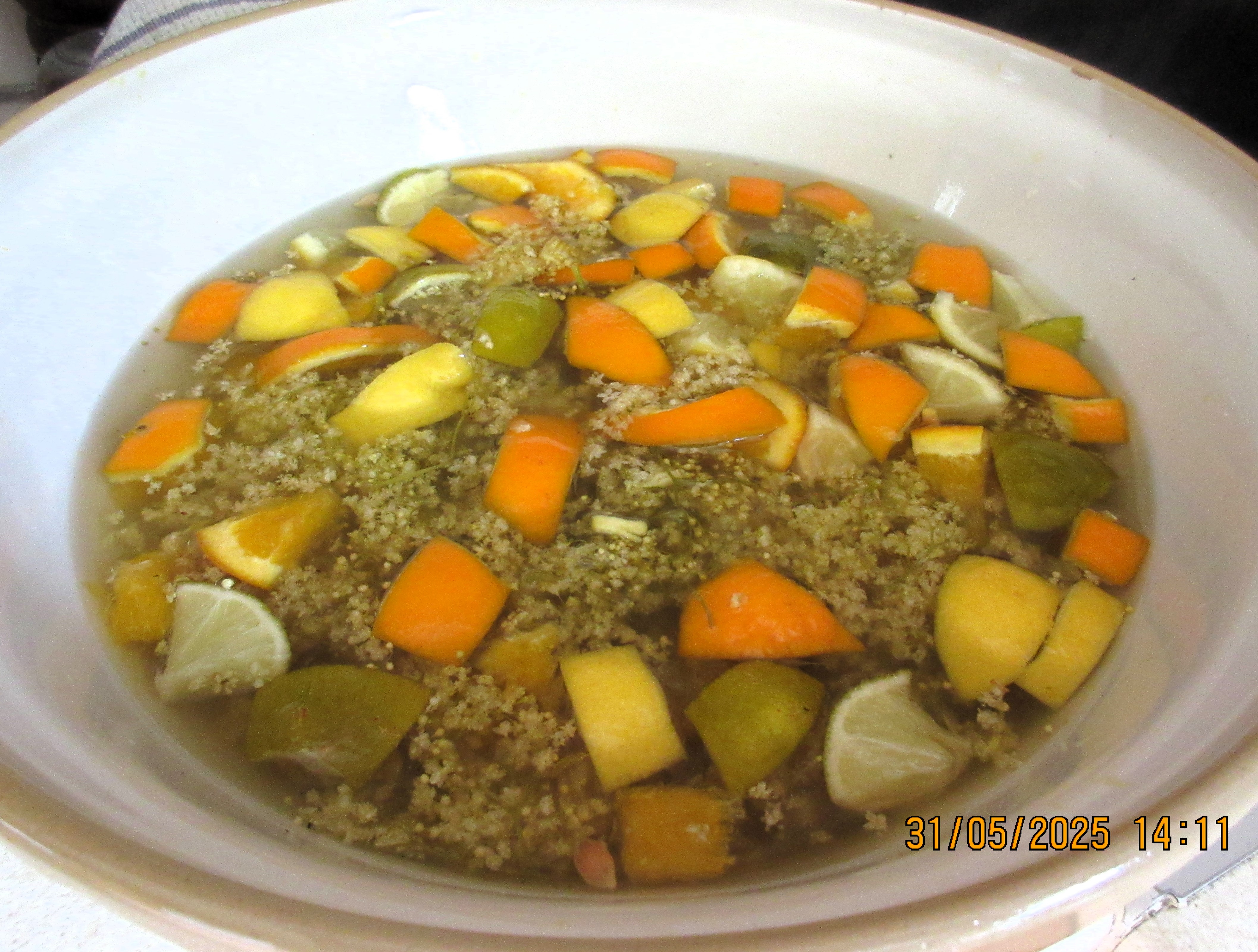
This is a foodish bookish Landing post today, as I have been a-foraging and have just started this year’s batch of elderflower cordial. I have previously featured a couple of foraging books on Landing Tales, Food for Free by Richard Mabey (1972, 1992) and Wild and Free by Cyril and Kit Ó Céirín (1978, 2013). Thane Prince’s Jams & Chutneys: Preserving the Harvest (2008), which I have also mentioned before, is not a foraging book as such; many recipes here you could make from your garden produce. Over the years, I have tried several of the recipes, in particular making preserves from foraged ingredients such as elderflowers (and berries), rowan, blackberries, rosehips and windfall apples. I have even occasionally actually bought fruit to try out a particular recipe, though I think food for free is much more rewarding. Sadly, there is no foraging for lemons, so if I want to make curd, I have to buy lemons!
There is quite a lot of domestic history within the pages of this cookbook as I have tucked in stray recipes that have never made it into my main recipe folder (and that’s a whole other issue). Some loose leaves are scanned from library books or recipes downloaded from favourite websites; others culled from magazines in the same way that my mum would have done. Naturally the pages of the book have acquired more than a few sticky marks during our preserving experiments, with a couple of pages here and there becoming a bit too fondly attached to each other. Some recipes sport annotations where we have tweaked ingredients/methods or scaled down large quantities. I can also find notes on where to buy citric acid or liquid pectin lest we forget such vital information.
Any recipes tried out by the testing committee have the year jotted down alongside; by now some pages have had a long line of dates added. Time certainly does fly; raspberry jam has been part of our repertoire on and off since 2018 and in later years we have made it with our homegrown fruit. I can see that we first made elderflower cordial in 2014 and have continued to do so most years since. I have already jotted down ‘2025’ in the list.
Now, I think I will go and give my cordial another stir, before getting the elderflower bottles and labels ready.
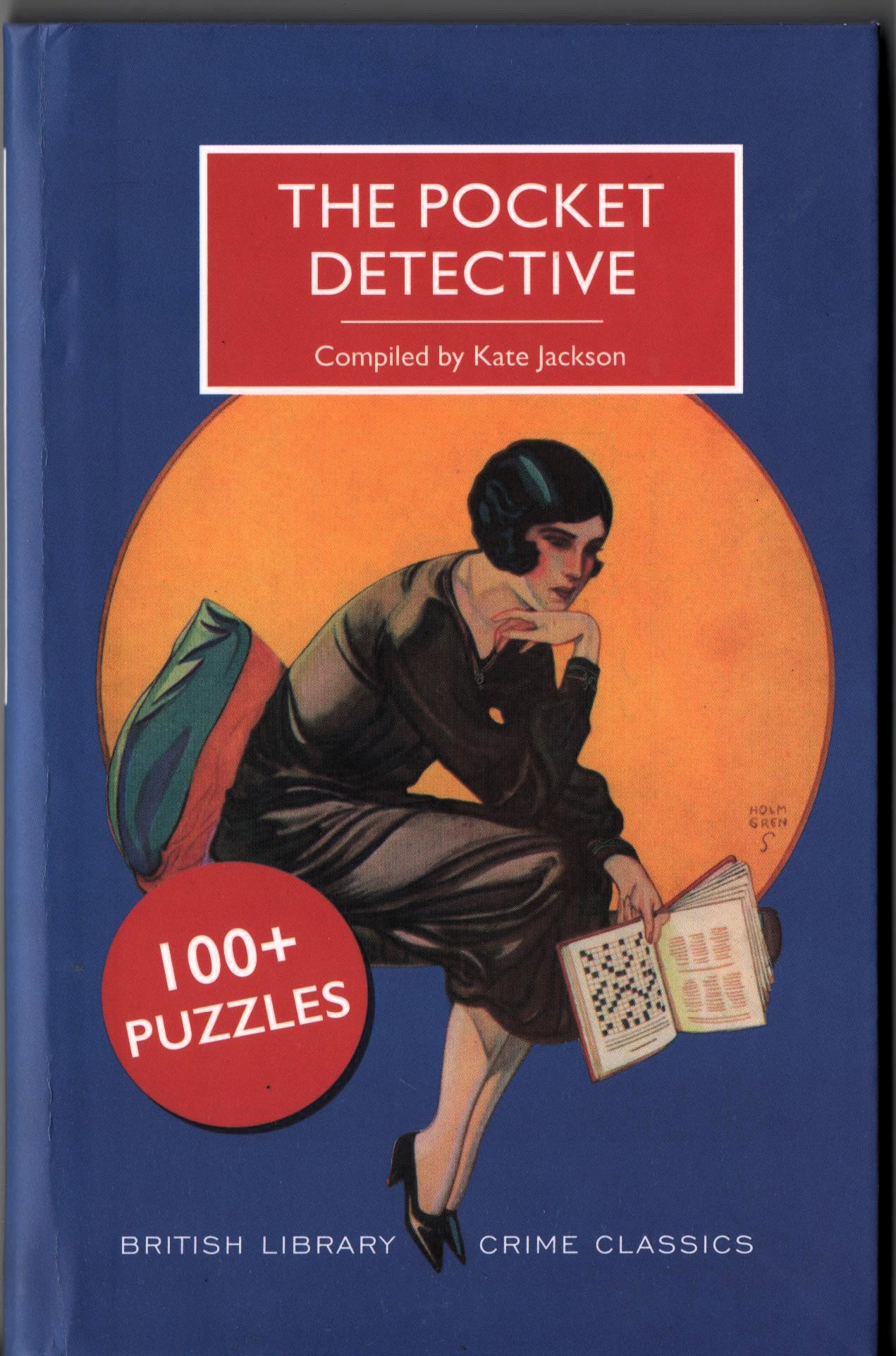
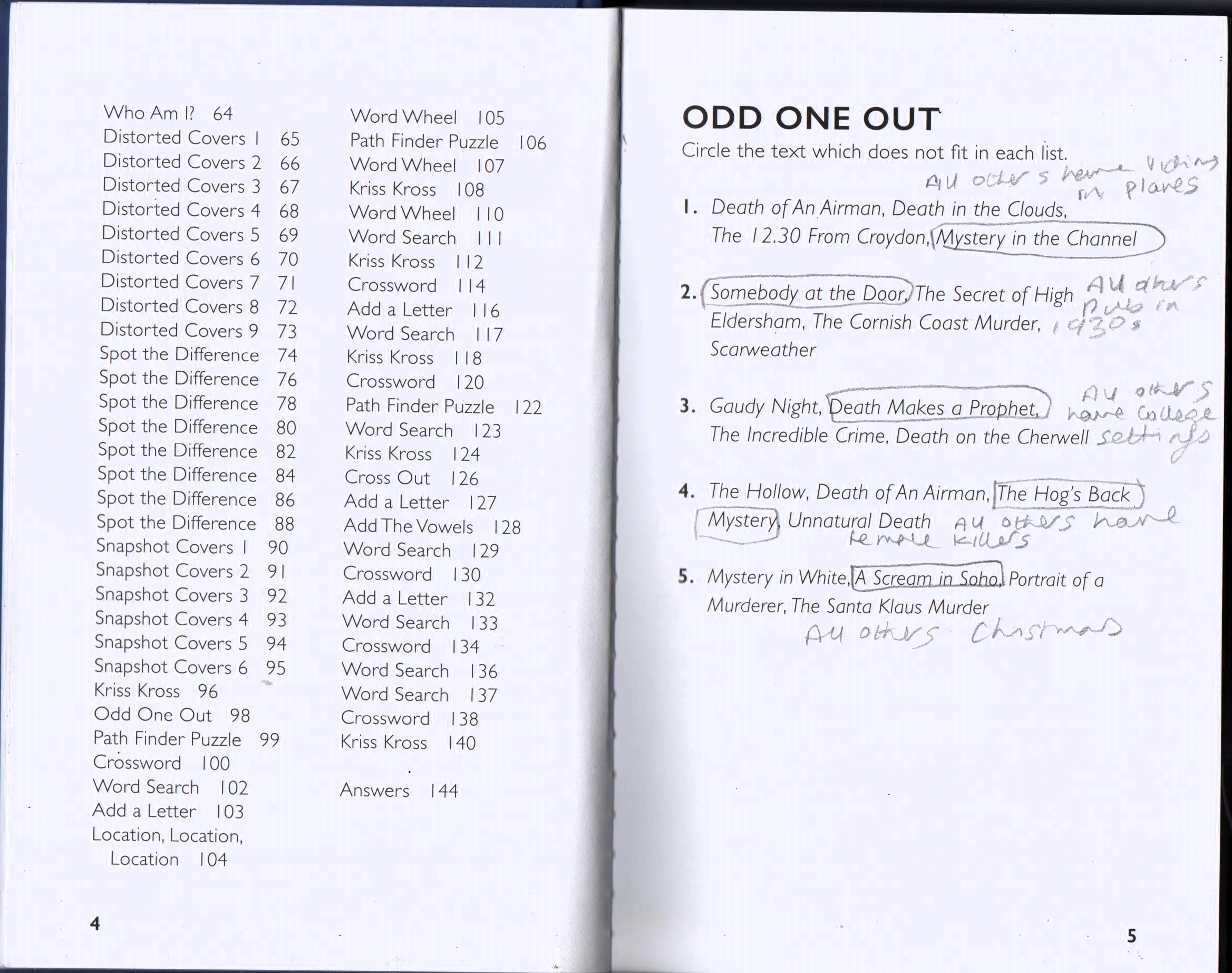
I was sorting through a pile of books on a shelf the other day, when I came across a little book published by the British Library Crime Classics series. It is a stocking filler that I received at the Christmas before last and that has been tucked away under other books for ages, in true Landing Tales tradition. This small tome is The Pocket Detective (2018) compiled by Kate Jackson, which contains more than a hundred crime fiction inspired puzzles. Now, the British Library editions are a bit of an enthusiasm of mine hence the gift of this puzzle book from He Who Put The Shelves Up. Not all of the brain teasers relate directly to titles in the series, some are more generally Golden Age related.
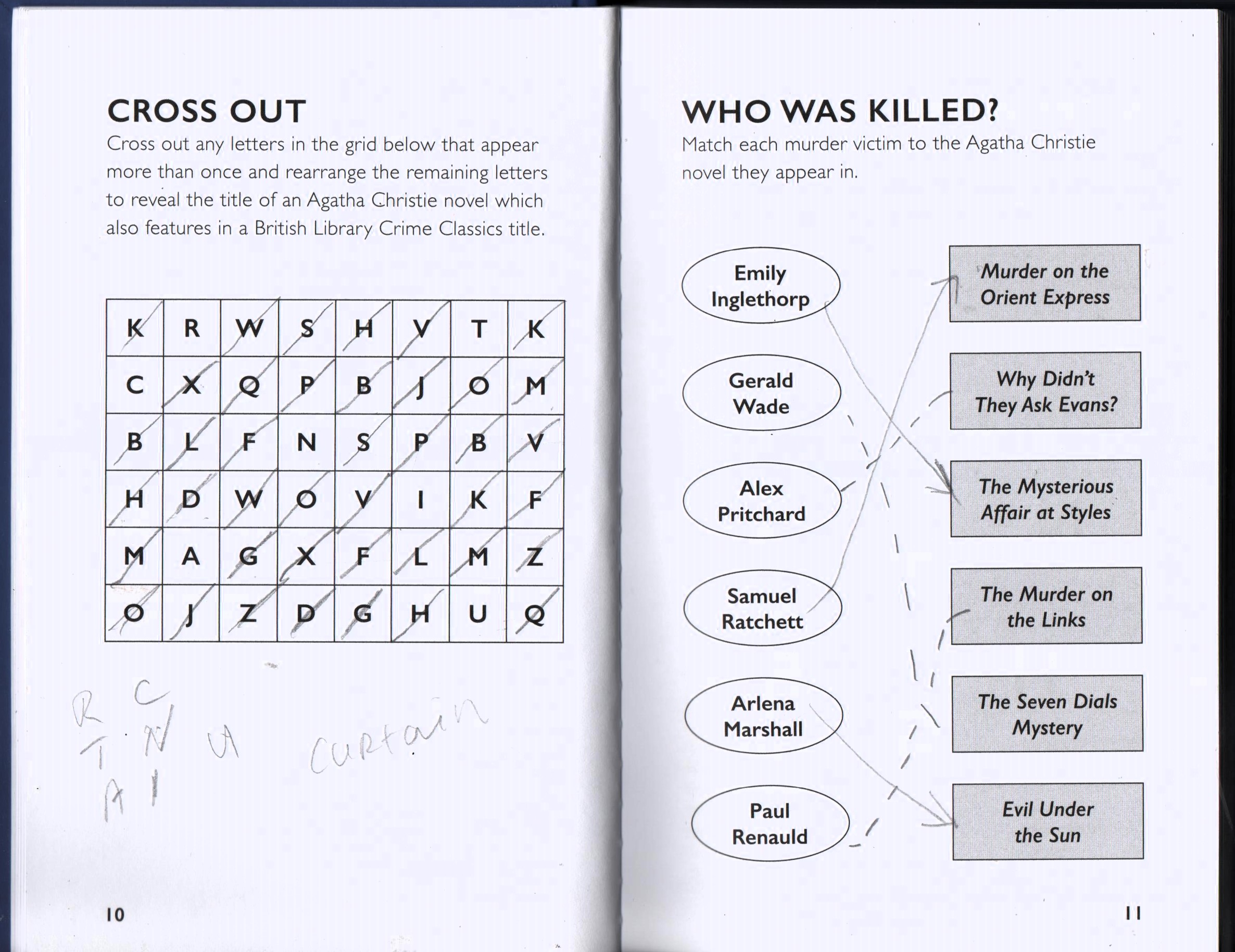
Sad to say, my knowledge of Agatha Christie murder victims, weapons and book titles is already shown to be wanting. My excuse is that it is many years since I read any of the books, though I could have sworn I was a bit of a fan (not in the specialist subject Mastermind kind of a way, but still…) The page I show here of questions on Christie murder victims is a case in point. I did manage to get two correct, but I had cheat and look the other answers up in the back of the book (yes, dear reader, there is instant relief from brain scratching!) But I am enjoying myself enormously despite the limits of my classic crime fiction knowledge.
Puzzling over the answersFalling at the first hurdleMore reading inspiration
I have now discovered that Kate Jackson runs a crime fiction book blog called crossexaminingcrime.com that looks well worth a browse and a follow. Not that I need any more books to read, if I am ever to make any further inroads into the Landing Book Shelves backlist. Actually, I wish that I could get hold of some titles in the British Library series in the Playaway format, which is great for commuting. As readers know, I am very fond of a little crime on the bus (so to speak).
Anyway, it seems to me that that my little crime puzzler might be just the thing for some leisurely Bank Holiday activity next weekend. It is just a pity that I didn’t unearth it before Easter when we had a holiday break of solid rain and gardening wasn’t on the agenda. See you when I have run out of puzzles!
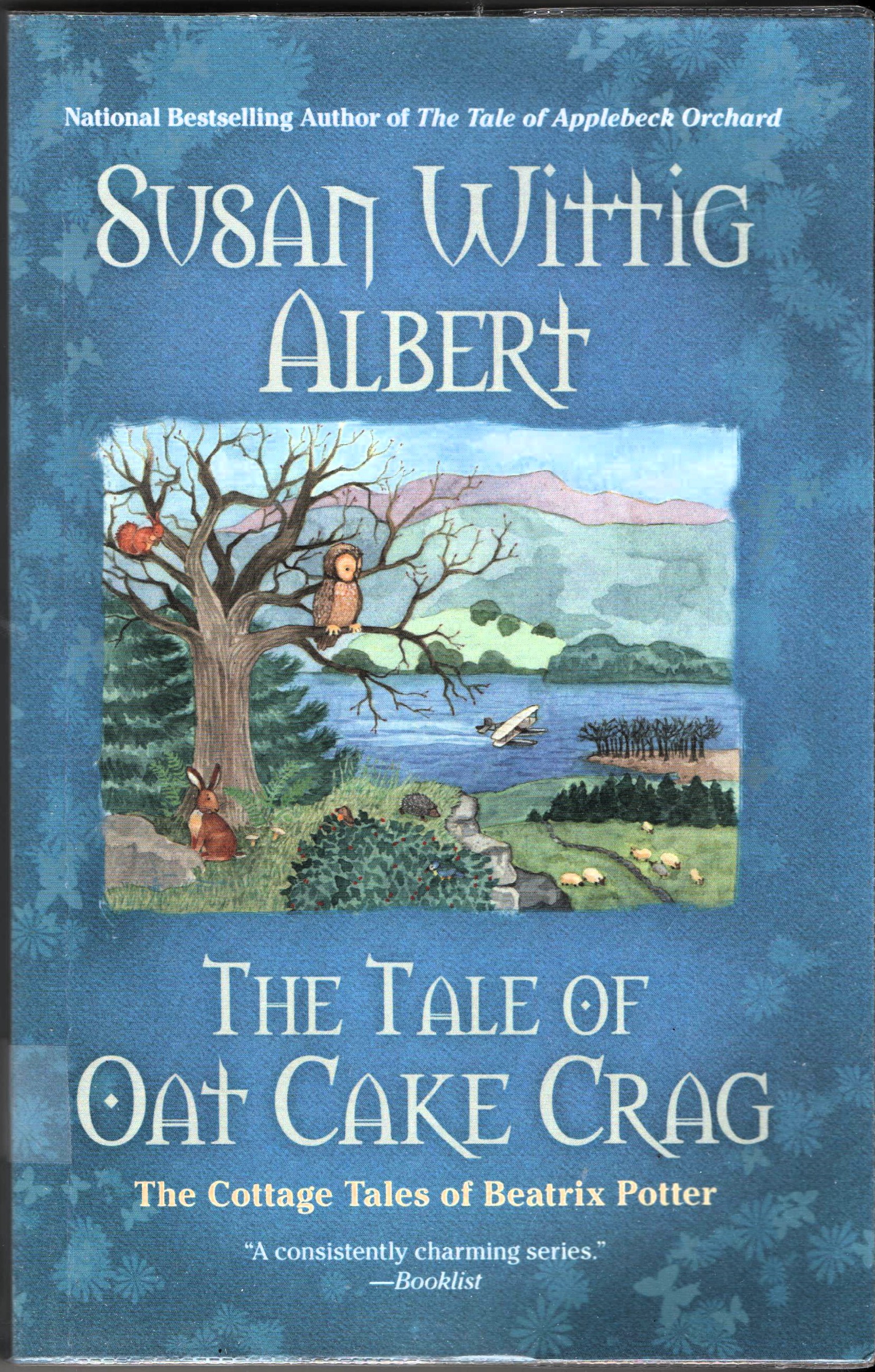
The Tale of Oatcake Crag (2010) by American mystery writer Susan Wittig Albert is a curiosity that I came across in my ongoing search for detective stories featuring historical figures. Similarly to spotting the Groucho Marx crime series, I was so intrigued by the premiss of Beatrix Potter (1866-1943) as an amateur detective that I searched the online library catalogue to see what I could reserve. As before, I was forced to settle for a large print edition, as there is very little else of this series available nationally. So it is thanks to Cork City Libraries for the loan of this Chivers edition.
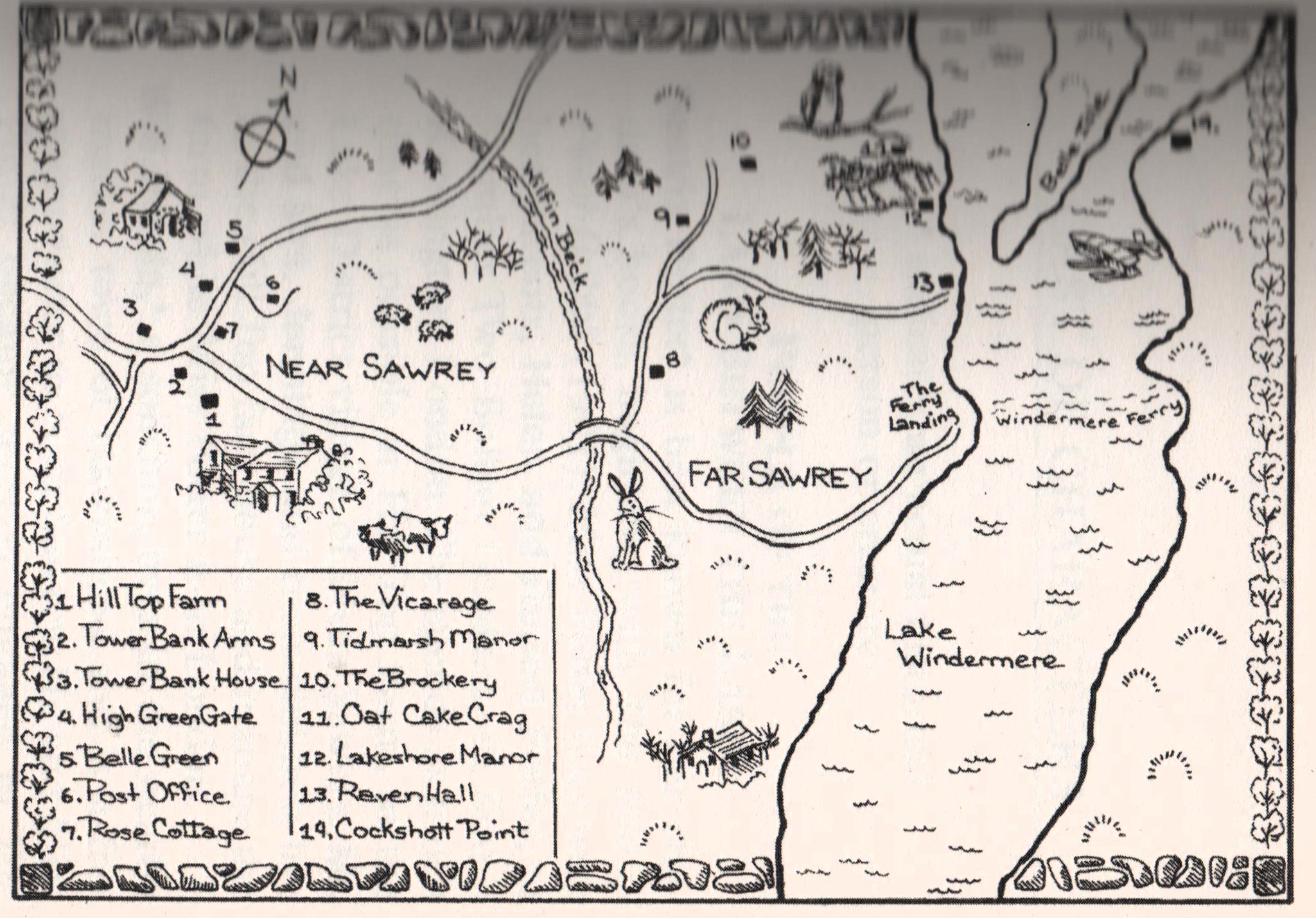
I was not sure what to expect from the novel, but I was not really surprised that this turned out to be a very gentle country tale indeed. No bodies in libraries, trains or anywhere else for that matter. It is one of a series, (The Cottage Tales of Beatrix Potter) imagining children’s writer Beatrix Potter as an amateur detective in her Lake District home and mixing real-life people with fictional characters. The eight-novel series began with The Tale of Hill Top Farm (2004), set around 1905 when the real Beatrix Potter’s fiancé Norman Warne has sadly died aged only thirty-seven. Potter subsequently bought Hill Top Farm in Near Sawrey with the proceeds from a legacy and the proceeds from her Peter Rabbit book, having become very attached to the Lake District over many years of visiting. She spent as much time as she could in this part of the country, when she was able to leave her parents for a while. Locations in the village feature in her books and illustrations.
Now, I have not read the earlier stories for comparison, but as I said, this one is very much in the cosy crime vein as there is indeed no murder (bloody or otherwise). The central mystery in the novel is the authorship of some poison pen letters, sent to the Vicar’s fiancée, Grace Lythecoe, apparently a respectable widow. Who would want to threaten the happiness of the seemingly well-liked couple? Grace asks her friend Beatrix to investigate the matter, which she does with the help of her present (unofficial) fiancé, William Heelis. The village animals also contribute to the investigations, which along with the dragon (yes, I did say dragon) requires a suspension of disbelief on the part of the reader.
The fictional poison pen letter affair is set against action inspired by real-life events; the literal ups and downs of the test flights of a hydroplane and the aggrieved local reaction to this. The test flights took place from 1911-12 and Wittig Albert has used details of the regular test flights over Lake Windermere as part of a sub-plot. The businessman backing the sea plane project has a fall and is seriously injured. An accident? Possibly suspicious, but again, no murder. Some details relating to the sea plane’s history in Windermere have been substantially altered but you will have to read the book to see what I mean (clue: the dragon is involved).
Map of the villages of Near & Far Sawrey, taken from the book.
We have gossip galore amongst the villagers of Near Sawrey, on the shores of Lake Windermere (though it has to be said that it is not merely the humans who gossip). However, with the chapters alternating between human and animal protagonists, it can really feel like reading a Peter Rabbit story for grownups. The author uses Potter’s affinity with animals to suggest that she can interpret what they are saying. Overall, this all has its charm but it does make me wonder who exactly is the intended audience for the series. Beatrix Potter solving the poison pen letters mystery is oddly convincing, as she does this by chatting to various people on her village rounds, in a perfectly natural way. She is very much a respected figure in her adopted home and her social class plays its part too. The overriding impression of reading this novel (if you discount the talking animals and a glowing green dragon) is of the dramas of village life as told in Miss Read’s tales of village goings-on in Fairacre and Thrush Green.
The descriptions of the area around Lake Windermere are beautifully done, as for example here, ‘I think it is fair to say that there is no place on this earth that gives the sun so much pleasure as this lovely green land, with its rambling rock walls, quiet lanes, tranquil waters, and long sweet silences.’ Lake District village life of the 1910s is well recreated, although with an awareness of the increased threat to the landscape from so-called progress. As Potter fans will know, she was instrumental in helping to preserve the landscape that she loved, via the National Trust, for future generations. At the end of the book, Wittig Albert includes some traditional recipes (though sadly without a conversion from cup measurements) as well as a glossary of local expressions, presumably aimed at her American audience.
I am not sure whether I would go out of my way to read another in the series, but this was an amusing and entertaining addition to my list of historical detectives. And all the better for not trying to shoehorn Potter’s fictional persona into a grittier or feistier role. I am still not convinced about the dragon though. Perhaps it deserves its own series.
Today is Ireland Reads Day, hence the almost unprecedented phenomenon of three blog posts in one month. I have not marked this date in the reading calendar on The Landing blog in recent years, so I thought I would chip in with a bookish update this year to make up for that lack.
In the interests of sharing reading inspiration, I will give a quick rundown of what is currently awaiting/occupying my attention. Or should I say, what is immediately holding my attention, as to do any more would require extensive auditing of the Landing Book Shelves. The extensive TBR Pile is very extensive indeed. So much for the blog’s core aim of reading my way around the shelves. I am not sure that I have come very far in the twelve years that I have been book blogging! But, on with some book notes …
Having curtailed my book buying in favour of trying to read what I actually have on the shelves is good, but those library loans will tend to keep on creeping in. My library audio book of the moment is The Winter of our Discontent by John Steinbeck (narrated by Jeff Harding). Attentive readers of this blog will know that I usually listen to crime on my bus rides, so this is something of a departure (no pun intended) for me. So far so good, though I have tended to doze off once or twice on the way home while listening. This is I am sure, no reflection on either Steinbeck or Harding, merely that after a day’s work a little bit of tension goes a long way towards keeping me awake. Though it is fair to point out that tension in the narrative is now growing as Ethan Hawley puts aside his previous scruples to improve his financial and social position.
I have several TBR library books at the moment, two of which are advance reading for a short Irish literature course that I am planning to take in April. In addition, and in no particular order are: The Death of Nature by Bill McKibben, The Millstone by Margaret Drabble, At Dusk by Hwang Sok-Yong and The Longest Afternoon: the 400 Men who Decided the Battle of Waterloo by Brendan Simms. As is often the case a moment of serendipity played a large part in the borrowing of these titles. I am a sucker for the trollies of the ‘Just Returned’ items. On the future ‘commute pile’ (I just invented that term) is One Big Damn Puzzler by John Harding (read by Peter Brooke), which is allegedly ‘painfully funny’, so that should surely keep me awake on the trip home. I will let you know.
At this stage of the year, I am still working my way through books I had for Christmas. One of these was Art History without Men by Katy Hessel, which I am dipping into in between novels. I have met some familiar artists, but also some new names to follow up on at my leisure. I may return to this one for a future blog post. Also on the Christmas pile is The Hidden Life of Trees: The Illustrated Edition by Peter Wohlleben. This I have yet to read, although I have browsed the photographs, which are absolutely fabulous.
Well, that is a quick snapshot of reading-in-progress chez The Landing, so I will go off into a quiet corner and carry on reading. I hope you have a pleasant Ireland Reads Day! Do let me know what you have been reading in the comment box below.
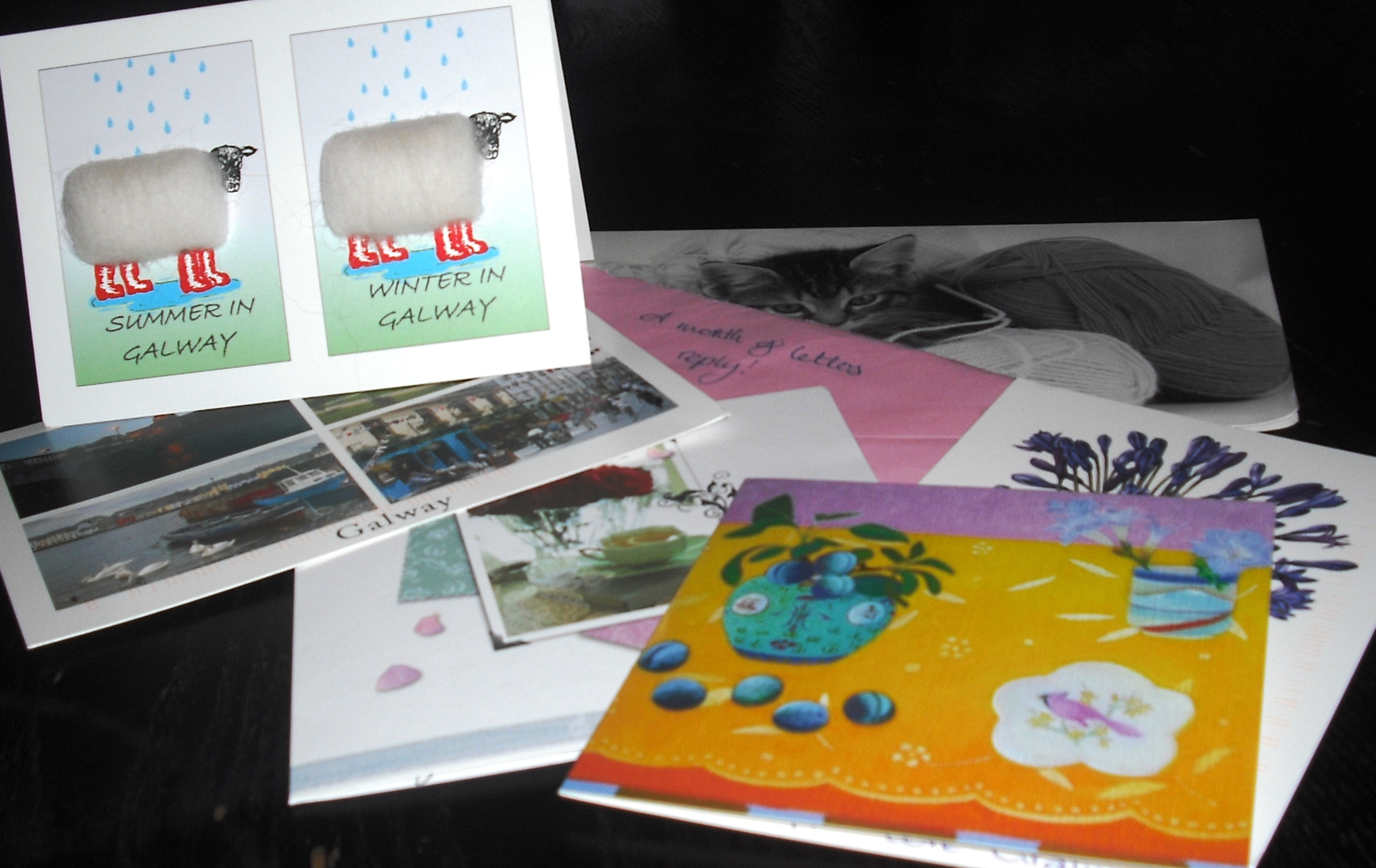
Alongside my reading this month I have been pursuing a correspondence challenge with the aim of getting me back into more regular letter writing and keeping in better touch with old friends and colleagues. In the past I have undertaken the Month of Letters Challenge, which I have featured on Landing Tales to record both my own progress and letters received in return. That certainly goes back a few years as I first did that in 2013. In recent years I have followed my own personal February letter writing ritual as a way of marking my late father’s birthday in this often bleak month. He was a postman until his retirement, so it seems appropriate. It also fills the gap left where I would have posted his birthday card as part of my Month of Letters Challenge. Now I have named my letter writing burst as ‘Postie’s Letter Challenge’ and I am hoping to make it through to the end of the month, posting an item each day.
The cards sat on the mat…
I have been toying with the idea of joining the Handwritten Letter Appreciation Society as I have been following them since well before Twitter became X. I like the idea of supporting keeping a letter writing tradition alive. The only snag is that I have to confess to not always writing by hand (but don’t tell anyone). I type letters to my mum in a larger point size for a practical reason, since she finds it much easier to read. I suppose I don’t have the same excuse for abandoning pens when writing to other people, but I blame the email habit for corrupting my good intentions. Perhaps using email so much has also contributed to the sad decline in my handwriting neatness. I have declined since my schooldays when my handwriting was praised for neatness. I have flirted with calligraphy in the past, which I rather enjoyed, so perhaps I should take it up again to improve my writing skills. Or, I can continue to claim that my handwriting is ‘artistic’ rather than untidy.
In the meantime, I will continue my personal challenge using a mixture of typing and handwriting and keep focussed on the end of the month. If I get any replies in kind, I will let you know.
I have previously written about my audio crime habit that livens up my rather tedious bus journeys into work. Well, I am here to tell you that both the audio and the crime bit are still going strong as part of my travel routine (that’s just as well as bus travel has been more than woeful in the last couple of weeks). Lately, I have been listening to a mixture of new-to-me authors as well as an old timer. And of course, I continue in my time-honoured habit of beginning any new series in the wrong place (in other words anywhere but at the beginning). My excuse is that I tend to pick up whatever catches my eye in the library, so that I often fail to get the titles in chronological order. Or at least, I don’t often have the patience to make a reservation from an author’s backlist so that I can ‘begin at the very beginning’ as Julie Andrews once so cheerfully sang.
I was particularly pleased finally to get around to Ray Celestin and his City Blues Quartet. Naturally, I inadvertently began at the end; but hey, at least I know who does and who does not end up dead by the final episode (never fear, I won’t plot spoil). The last in the series is called Sunset Swing (2021) and is set in Los Angeles, Christmas 1967. The story features three recuring characters, retired private eye Ida Young; mafia fixer Dante Sanfelippo and the one and only Louis Armstrong. The city itself is a stunning character in its own right. Now I have to go back to the beginning at some point and see how it all began (Chicago, 1919 was the time and place) as I enjoyed this book so much. As always with an audio book, the narration is very important and can make or break an audio version of a novel; Christopher Ragland did a really good job.
Again, true to tradition I picked up Peter May’s The Lewis Man (2011) which is the second in the trilogy set on the Isle of Lewis (though I have spotted that a fourth book came out in 2024, so surely this is now actually a quartet whether originally intended or not). This is a murder mystery which begins with the discovery of a body in a bog where seasonal peat cutting is taking place. For me, the bog body was the hook, having long been fascinated by the discoveries explored in the National Museum of Ireland. Perhaps not surprisingly, in this story the body turns out to be much more modern than that; an Elvis tattoo was a dead giveaway on that score. Reading the (well, listening to) descriptions of the landscape of the Outer Hebridean islands made me really want to visit, despite, or perhaps because of the bleakness. At some point I will probably read the rest of the series, especially as I became quite invested into two of the main characters, Fin Macleod and Marsaili MacDonald.
Then for something completely different, I listened to Why Shoot a Butler? By Georgette Heyer (1933) a blast from my reading past as It has been quite a while since I last read any of GH’s novels, whether historical or detective. I started with her Regency romances as a teenager and then found my way to her contemporary crime novels later. In this novel the butler is the murder victim as opposed to the trope of ‘the butler did it.’ But of course, there had to be a motive for killing an apparently harmless servant. What is it? This is one of those Golden Age of crime plots where gifted amateur detective, barrister Frank Amberley runs rings around the rural police force. This probably isn’t my favourite GH crime novel, but still an entertaining listen with some very funny lines. If you have read her Regency novels you will be able to spot the character types that she has transposed to the contemporary setting.
Sadly, not everything that I want to listen to is available in the Playaway MP3 unit format (see picture) which Is the audio version I favour for being out and about (or should I say, for being confined to public transport on wet mornings). Which, in a way is handy as I am likely to pick up something that I might not otherwise choose, if I find in a catalogue search that my first choice isn’t available in that edition. What I would love is if some of the British Library crime reprints were produced in the MP3 format. Now that woould make me a very happy bus traveller!
It is probably time to browse the library shelves again…
Today’s blog topic is a hangover from last year, when I had the idea of delving into detective novels featuring real historical figures. I had a search around and came up with a few possibilities but only got as far as one blog post. Until now, that is. I have been having a further delve into this type of fan fiction and come up with a few more historical figures to think of as fearless detectives.
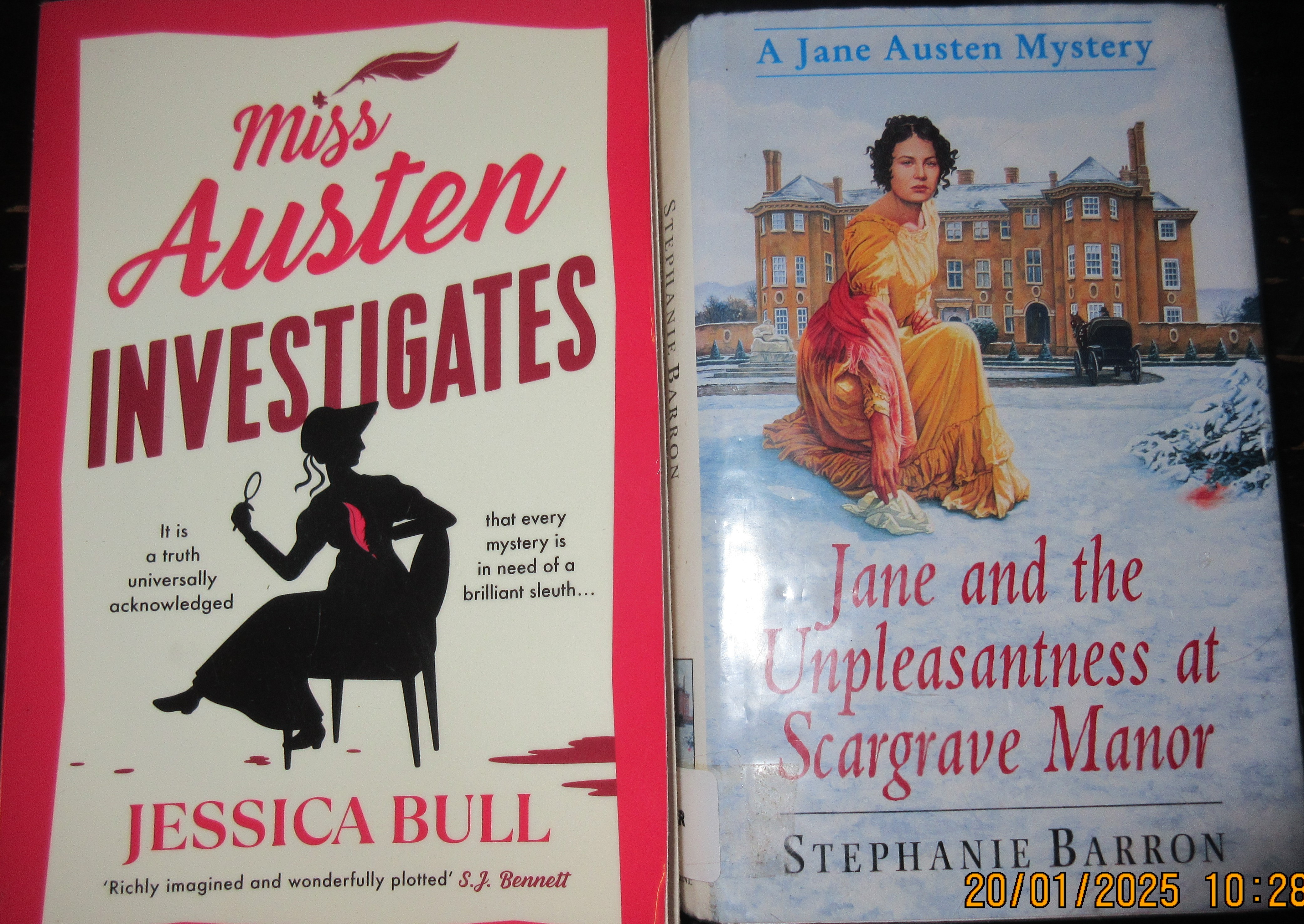
After previously riding along with Ron Goulart’s Groucho Marx on his cross-country crime solving, I have taken a trip back into Georgian England to encounter writer Jane Austen (1775-1817) in hitherto unsuspected detective mode. Austen has obviously struck a chord with some crime writers, as I have come across no less than four attempts to portray her as an amateur detective. In addition, I have discovered that she is apparently something of a time traveller too. There may be more crime, or indeed, time travelling Austen adventures out there that I have not yet discovered. Here are the crime novels that I have found so far:
An Austen crime series by Stephanie Barron, an American writer, originally from New York. The series began with Jane and the Unpleasantness at Scargave Manor (1996) and runs to ten books.
Miss Austen Investigates by London born and bred writer Jessica Bull (Michael Joseph, 2024). This is the first in a new series, the second novel being The Hapless Milliner.
Jane Austen Investigations: Death of a Lady by Laura Martin, Sapere Books, 2023. This is the first in a series of five novels by the Cambridgeshire based author.
Jane Austen Investigates: The Abbey Mystery by Julia Golding (for younger readers).
I have dipped into the Austen criminal world with the above-mentioned Stephanie Barron novel and the first of the Jessica Bull novels. Each author depicts Jane at a different stage in her life, Jessica Bull choosing to begin her series in 1795. Here is a youthful Jane, a writer but not yet a published author. She is engaged in a flirtation with Tom Lefroy and hoping that he will propose. As Austen aficionados will know, the desired proposal does not materialise due to family intervention. This Austen persona is lively and feisty, though an infuriatingly immature twenty-year-old. Given that she would be certainly be considered to be at a marriageable age in that era, the characterisation grates somewhat. Actually, the Austen characterisation reminds me of Georgette Heyer’s lively fresh-out-of-the-schoolroom misses who embark on risky escapades at the drop of a hat, but in this case with less charm.
In contrast Barron chose to place her version of Jane Austen in a slightly later period of her life, 1802 to be precise. However, in common with Jessica Bull’s novel, Austen’s romantic life is not going well. She has just accepted and subsequently refused a proposal from wealthy landowner Harris Bigg-Wither on the basis that she did not love him. The story therefore sees Austen on a visit to a newly married friend, the Countess of Scargrave to escape the fallout and find some peace. Unfortunately, she ends up having to deal with the murder of her friend’s husband.
Stephanie Barron introduced her story using the well-worn device of the discovery of long-lost manuscripts and letters that just happened to be penned by you know who (a distant ancestress of some friends). These papers detailed Austen’s experiences with several detective cases and had been preserved for posterity and then forgotten. As we know, Cassandra destroyed much of her sister’s correspondence, so the conceit of the papers being found in an American descendant’s cellar neatly avoids having to explain why they were not destroyed. The book’s preamble has Barron being allowed to read the manuscripts fresh from the hands of conservators and against the background of anxious bidding from august literary institutions for the previously unknown Austen trove. It is a clunky beginning but the story is readable and the Austen persona more likeable than in my other sample of the genre.
Even after having now read a couple of books featuring a version of Austen as a detective, I am still baffled as to why anyone ever hit upon the idea. Perhaps it was simply the unlikeliness of the idea of a gently bred, clergyman’s daughter as a detective. Though come to think of it, that could almost be the fictional Miss Jane Marple, in more modern times. I have tried to work out why the idea of Jane Austen as an intrepid detective does not really work for me and I am still no nearer an answer. Perhaps it is because her real-life literary output, unlike say, Elizabeth MacKintosh (AKA Josephine Tey) has nothing to do with crime so that I am unable to take the idea seriously. Oddly enough, even though the Groucho book was playing the comedic persona to the hilt, the idea of him as a detective seemed plausible enough, as was the idea that he was aquainted with mobsters. Though according to a 2024 Guardian article it was Groucho’s brother Zeppo who was connected with various mobsters and the underworld.
That is only skimming the surface of the considerable amount of Jane Austen focussed crime novels. I may come back to this crowded field again at some point. And reconsider the appeal of Jane as detective perhaps.
This is to be yet again an attempt to revitalise the Landing Tales blog and to see if it has any life left in it. Last year’s attempt foundered as you, Dear Reader, may have noticed. However, I am not one to give up without one more wrestle with the keyboard. To that end I have a plan of sorts to gee me up and into what I hope will be a sustainable blogging pattern for 2025.
I said a plan ‘of sorts’ because in a way there is no grand plan to lay out for your perusal. My very basic idea is that I will aim simply to write something bookish (or not exactly bookish, as the case may be) and pop it up on the blog without worrying too much about themes, topics, challenges, TBR piles etc. Just getting something, anything written has to be the best way forward for now if I don’t wish to give up entirely and retire the Landing for good after all these years.
As usual in recent years, I have spurned the notion of New Year resolutions, apart from my general aim to read as much as I possibly can. This is as well as continuing to do all the other activities that I enjoy. So the blog initiative falls under this New Year umbrella of ‘keeping on, keeping on’ doing stuff that I value and trying to find time for it all. Let us see if it works…
I was looking back over previous January posts on The Landing and spotted this New Year post from a rather scary twelve years ago about the vexed question of fresh starts, with Janus looking both back to the past year and ahead to the new. I will leave you with that and hope to be back with you soon.
This post returns us to the original idea behind the blog, reading or re-reading some of the books on the (admittedly former) Landing Book Shelves. I was prompted into this after we went to see this summer’s Shakespearian production from the Balally Players. This year it was A Midsummer Night’s Dream, an obvious choice for this season. It was just a pity that the weather refused to play along with the idea, as were almost rained off at one point in the performance. All credit to the company for carrying on regardless (and the audience sticking it out!) A cup of coffee and a slice of lemon drizzle cake at the interval helped us to cope with the resulting dampness.
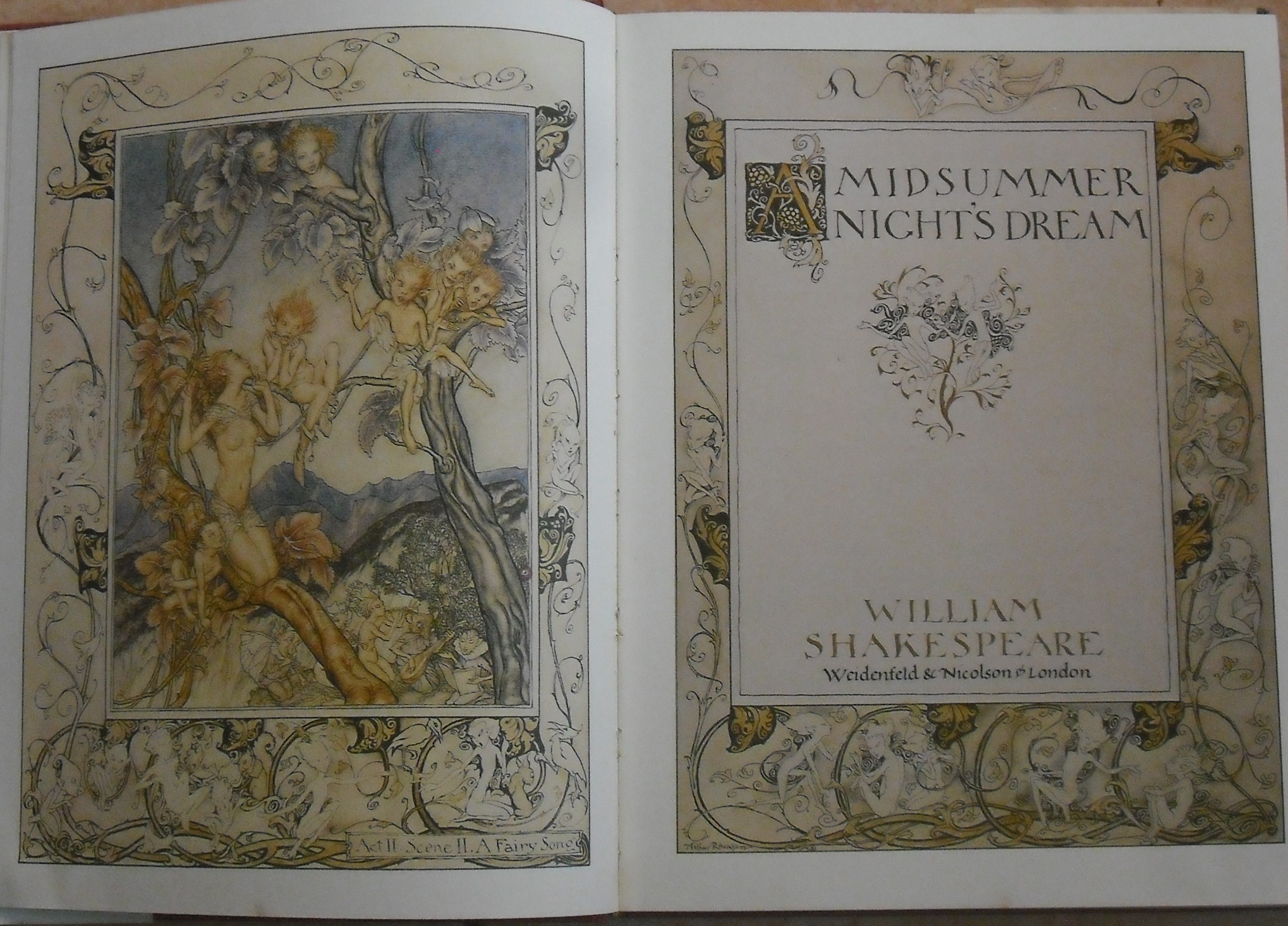
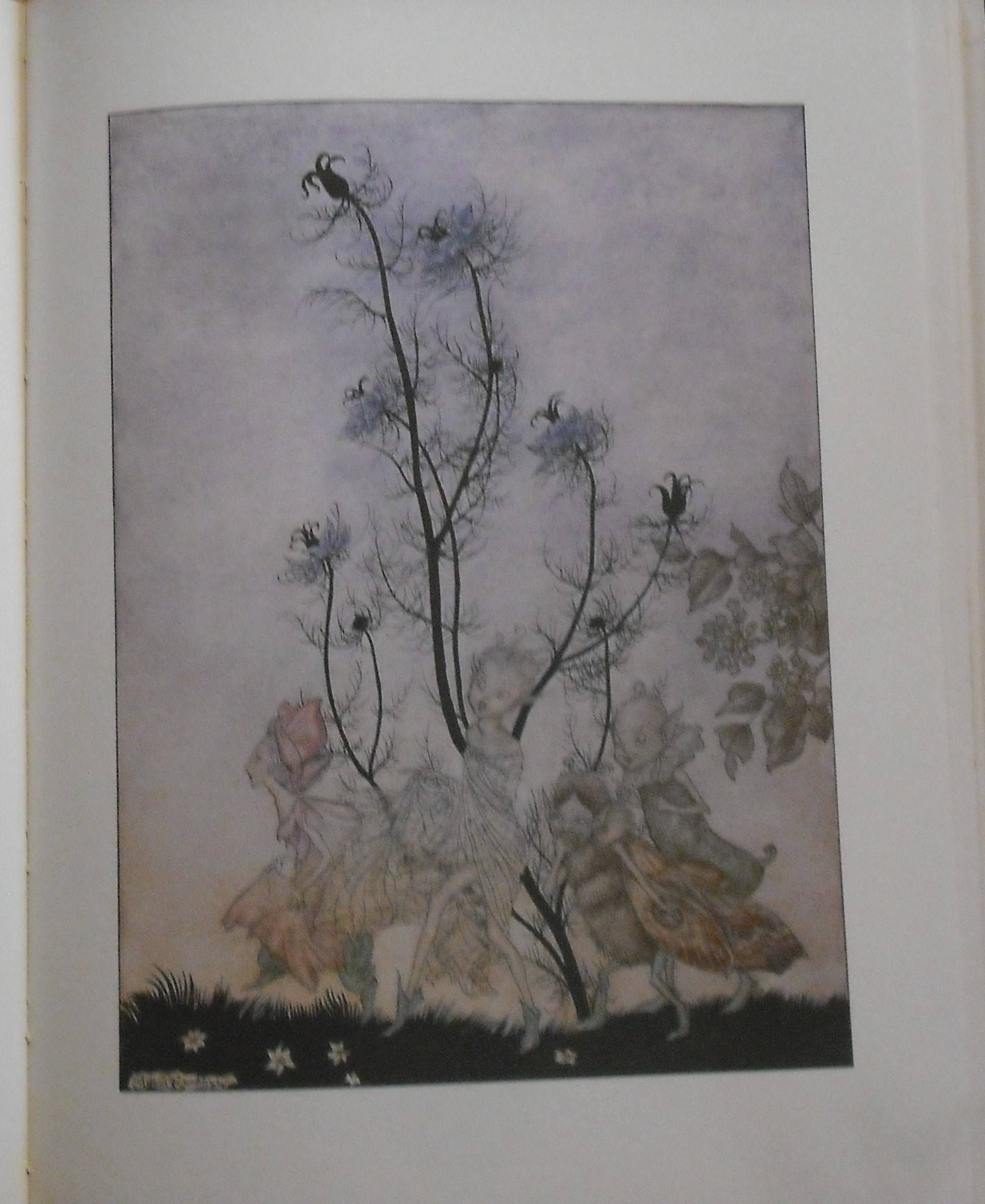
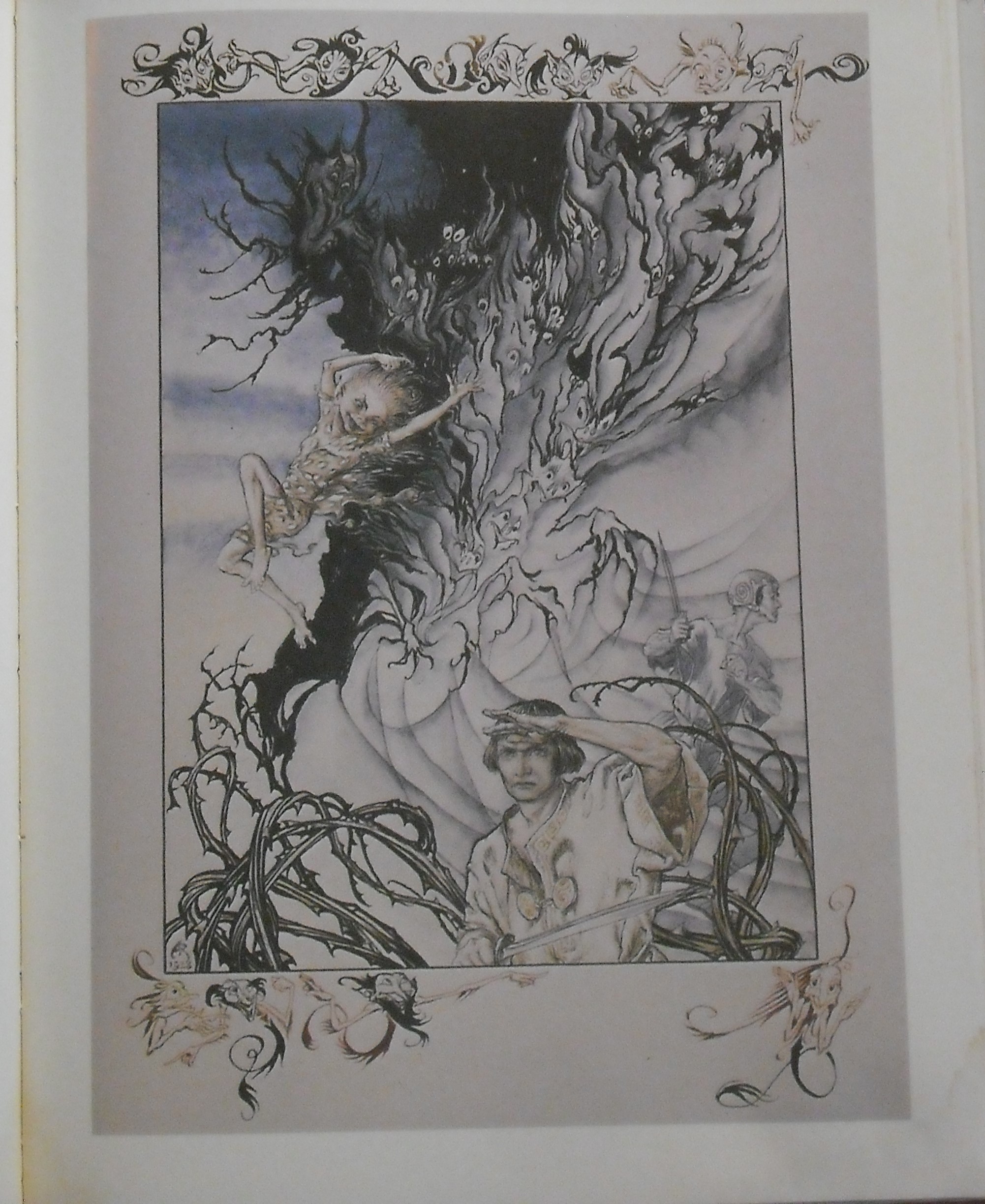
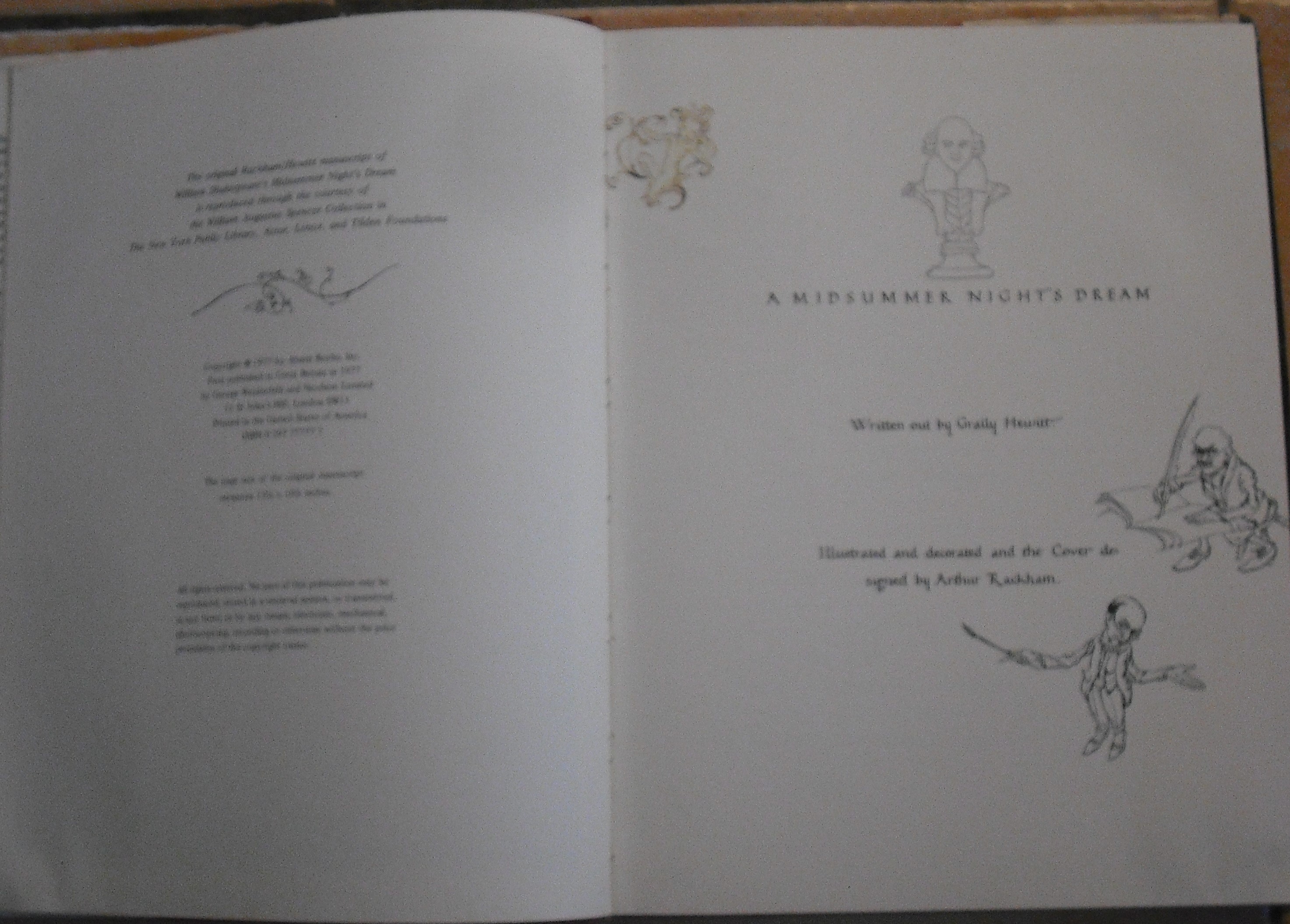
Anyway, the upshot is that afterwards, I had a ferret around on the bookshelves, braving the inevitable dust, to retrieve a copy of the very play. I have had this edition for many years and at this stage its origins are lost in the mists of time. As you can see from my photos, it is an edition beautifully illustrated by Arthur Rackham (1867-1939). Sadly, the jacket is not in the best condition at all. It wasn’t perfect when I acquired it, but several house moves over the years probably have not helped. However, the book itself is still in very good condition and is a lovely book to handle and to read. Suffice to say that although this is a first edition, I doubt if it will make my fortune.
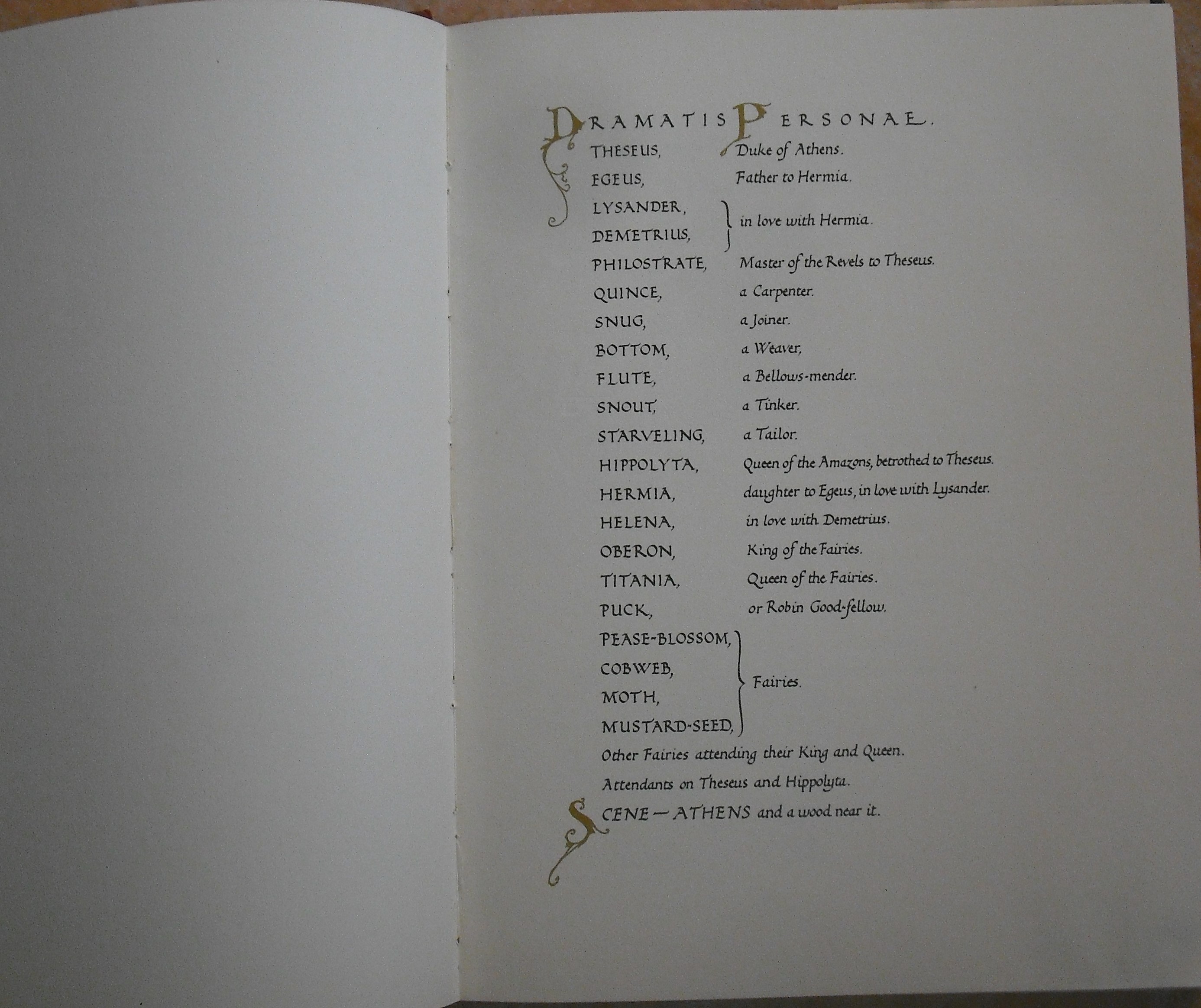
This edition was published from a book commissioned from Rackham by the New York Public Library’s William Augustus Spencer Collection in 1929. Calligrapher and novelist Graily Hewitt (1864-1952) produced the text, while Rackham designed the cover, page decorations and colour plates. The work was released for publication by the Spencer Collection in 1977, published in the US by Abaris Books and in the UK by Weidenfeld and Nicolson. If you want to know more about the gorgeous items in the Spencer collection, the NYPL blog has lots of information.
This is rather a large book to read curled up on the sofa, so resting it on a table is the best approach. The calligraphy is so beautiful to read that it adds much to the experience of reading Shakespeare’s words. Of course, re-reading while the production was still fresh in my mind was an added bonus. I am just going to indulge myself by quoting a few lines from Puck (or Robin Good-fellow) at the end of the play, to close this post.
And I will just mention that I have not forgotten my new crime theme for the blog. More of this goodly matter anon.
If we shadows have offended, Think but this, and all is mended, – That you have but slumbered here, While these visions did appear.
…
So, good night unto you all. Give me your hands, if we be friends, And Robin shall restore amends. [Exit]



 Tales From the Landing Book Shelves
You must be logged in to post a comment.