Midsummer on the Landing Book Shelves

This post returns us to the original idea behind the blog, reading or re-reading some of the books on the (admittedly former) Landing Book Shelves. I was prompted into this after we went to see this summer’s Shakespearian production from the Balally Players. This year it was A Midsummer Night’s Dream, an obvious choice for this season. It was just a pity that the weather refused to play along with the idea, as were almost rained off at one point in the performance. All credit to the company for carrying on regardless (and the audience sticking it out!) A cup of coffee and a slice of lemon drizzle cake at the interval helped us to cope with the resulting dampness.

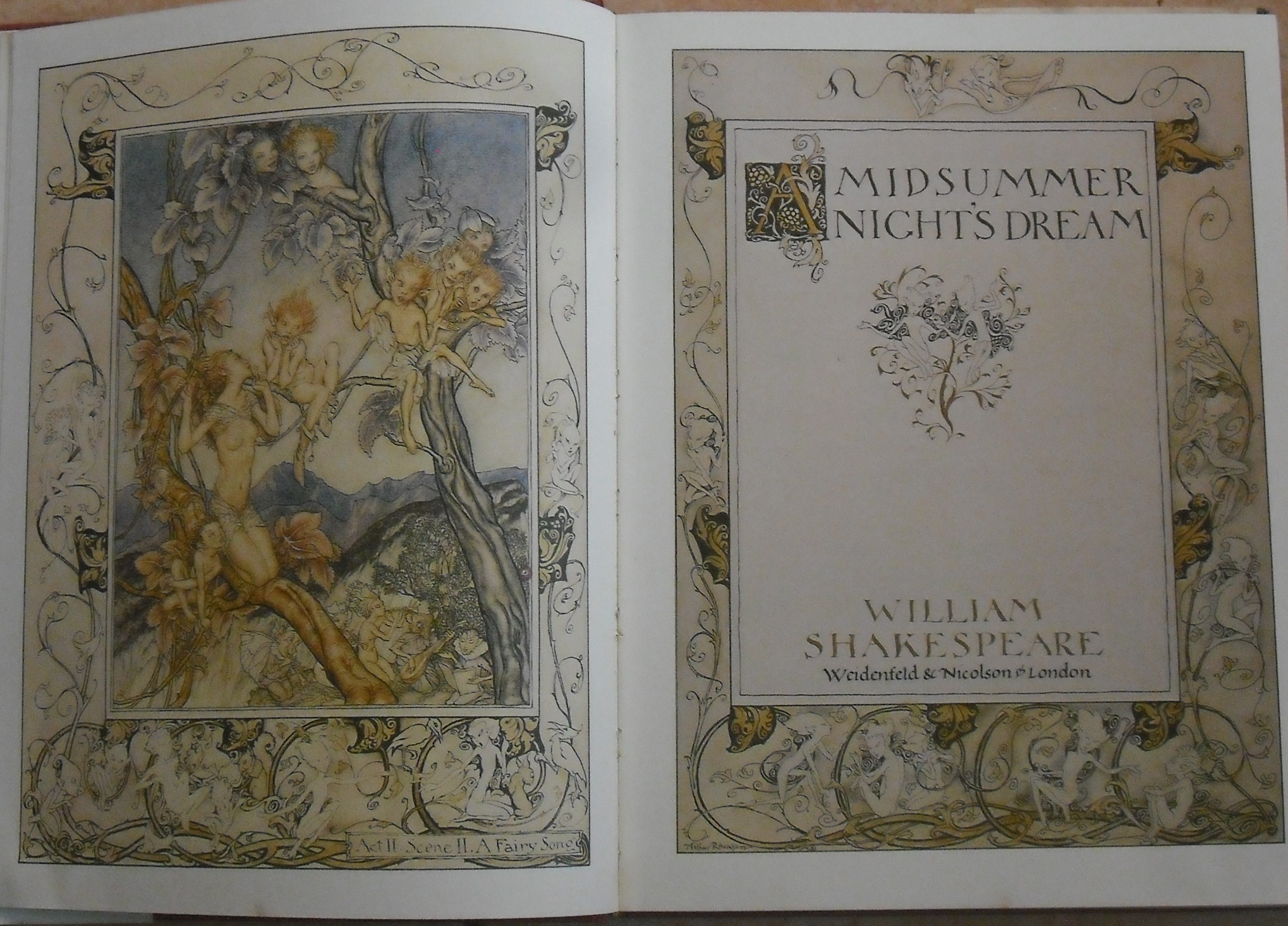
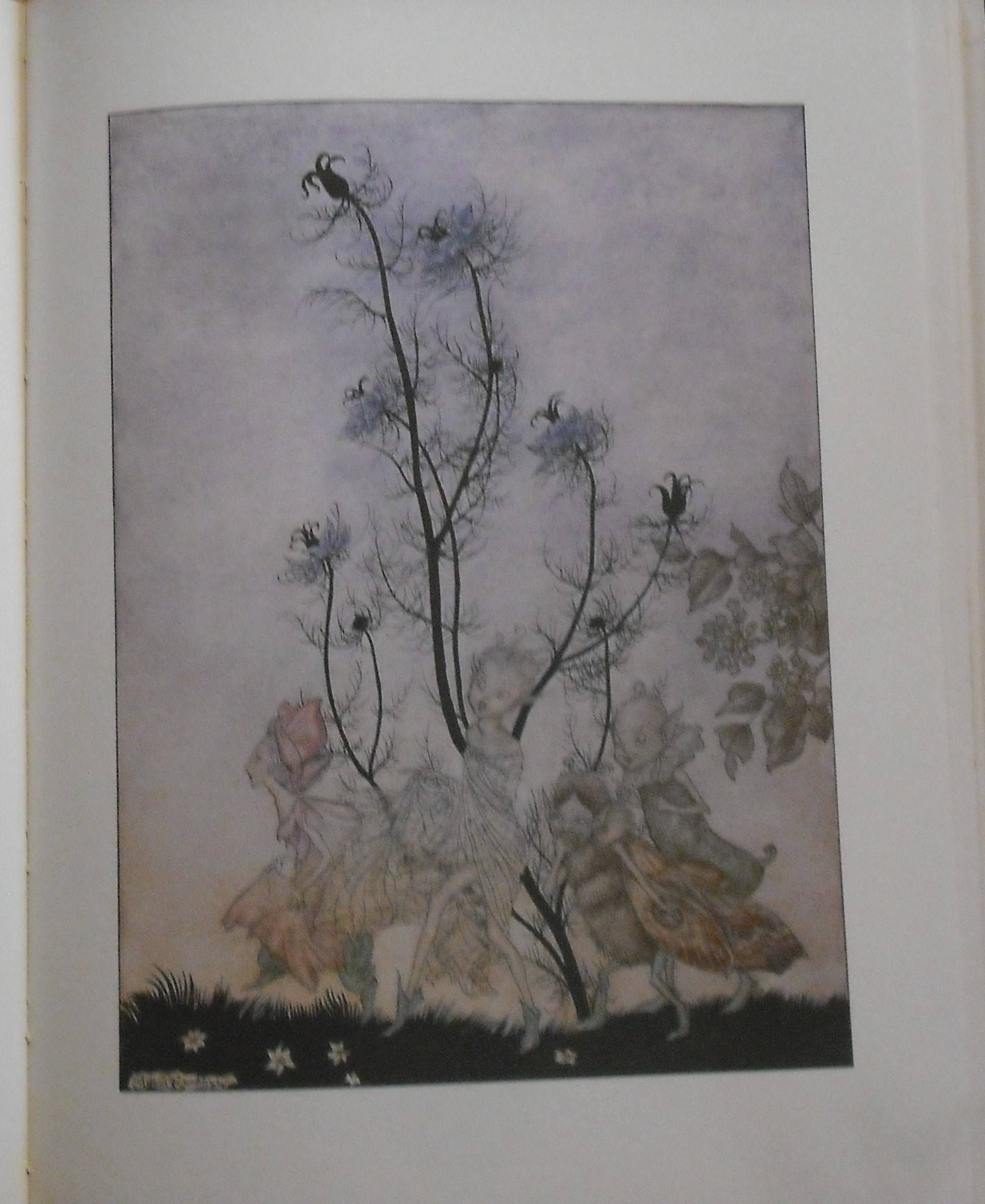
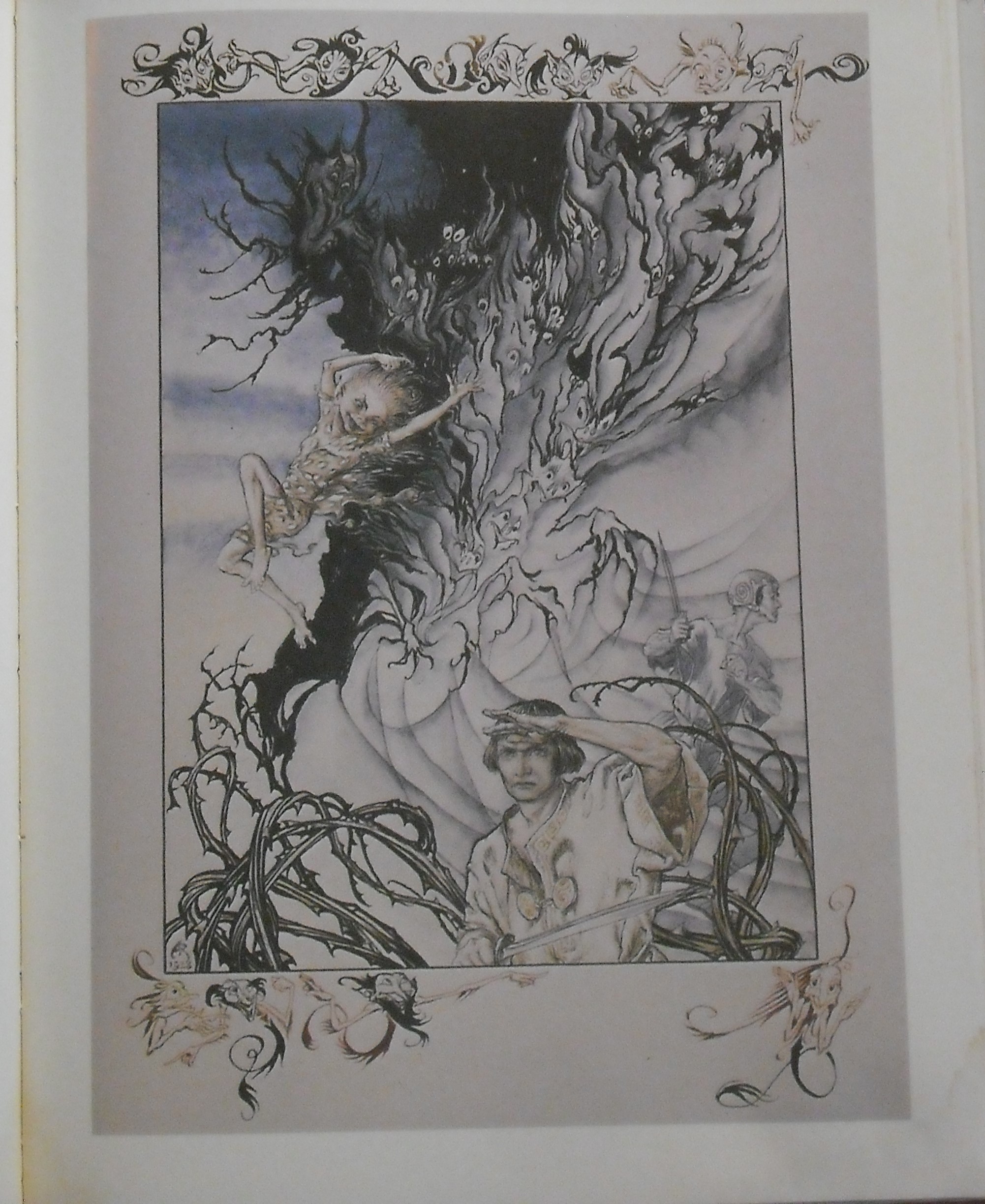
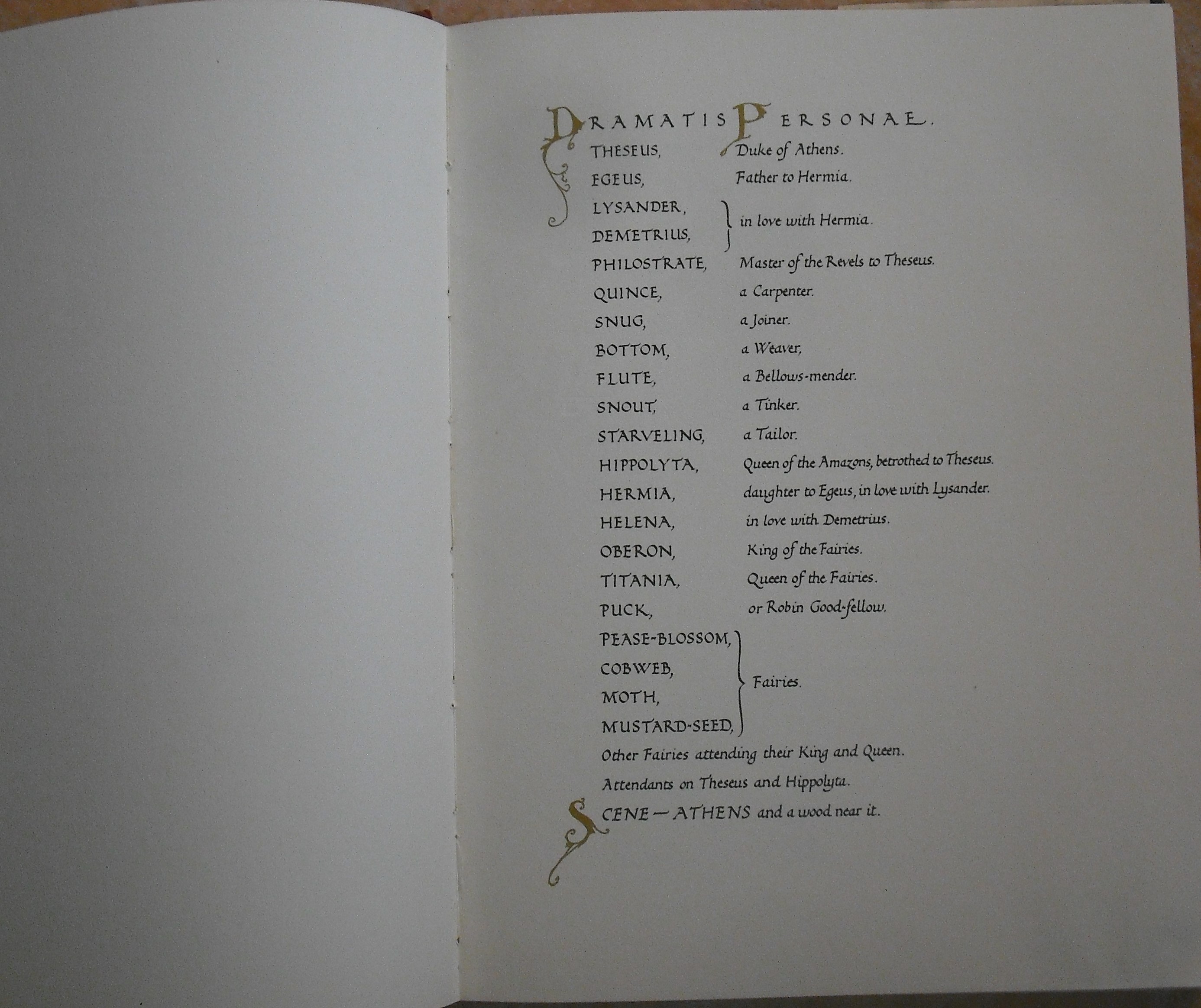
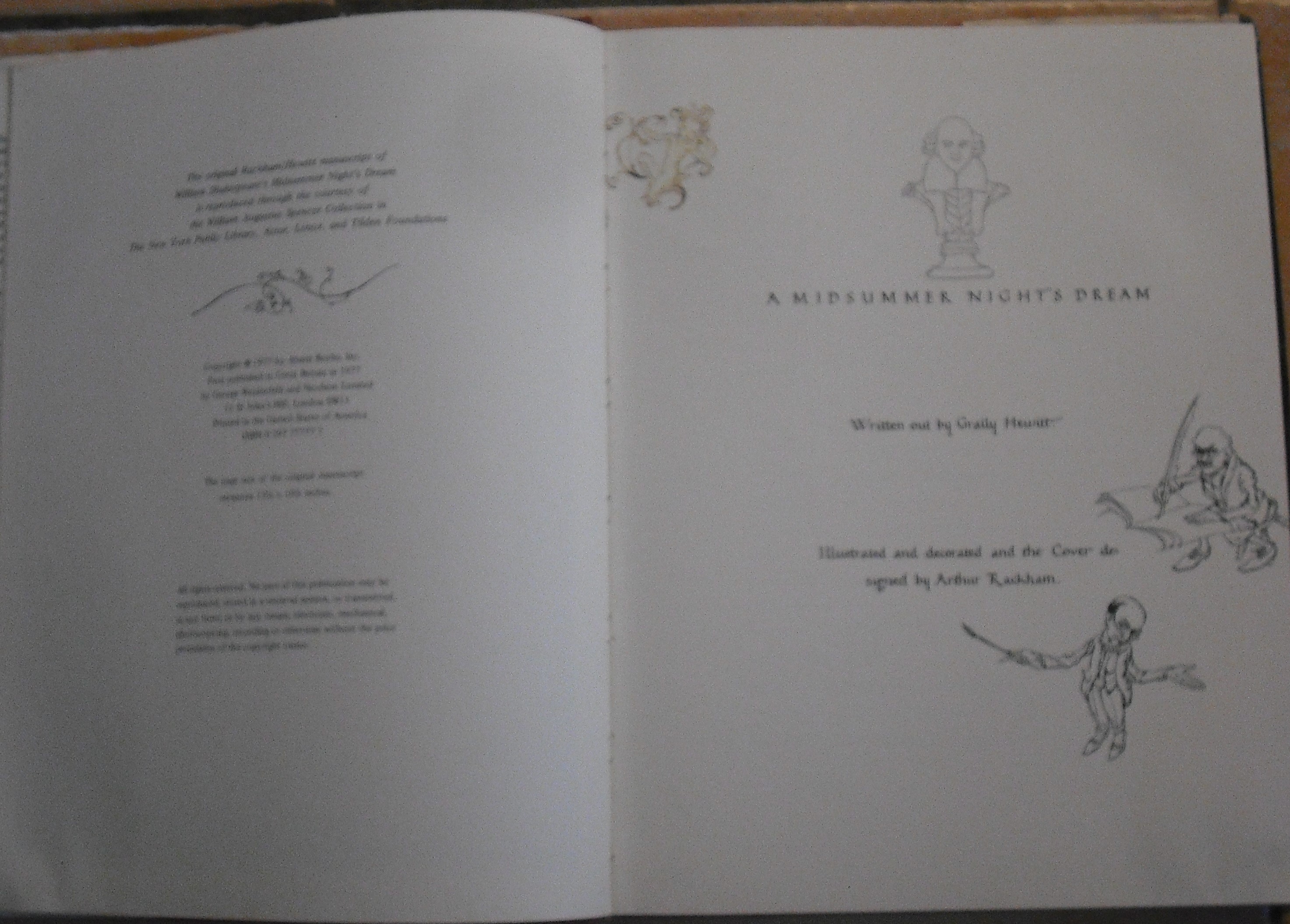
Anyway, the upshot is that afterwards, I had a ferret around on the bookshelves, braving the inevitable dust, to retrieve a copy of the very play. I have had this edition for many years and at this stage its origins are lost in the mists of time. As you can see from my photos, it is an edition beautifully illustrated by Arthur Rackham (1867-1939). Sadly, the jacket is not in the best condition at all. It wasn’t perfect when I acquired it, but several house moves over the years probably have not helped. However, the book itself is still in very good condition and is a lovely book to handle and to read. Suffice to say that although this is a first edition, I doubt if it will make my fortune.

This edition was published from a book commissioned from Rackham by the New York Public Library’s William Augustus Spencer Collection in 1929. Calligrapher and novelist Graily Hewitt (1864-1952) produced the text, while Rackham designed the cover, page decorations and colour plates. The work was released for publication by the Spencer Collection in 1977, published in the US by Abaris Books and in the UK by Weidenfeld and Nicolson. If you want to know more about the gorgeous items in the Spencer collection, the NYPL blog has lots of information.

This is rather a large book to read curled up on the sofa, so resting it on a table is the best approach. The calligraphy is so beautiful to read that it adds much to the experience of reading Shakespeare’s words. Of course, re-reading while the production was still fresh in my mind was an added bonus. I am just going to indulge myself by quoting a few lines from Puck (or Robin Good-fellow) at the end of the play, to close this post.

And I will just mention that I have not forgotten my new crime theme for the blog. More of this goodly matter anon.

If we shadows have offended,
Think but this, and all is mended, –
That you have but slumbered here,
While these visions did appear.

So, good night unto you all.
Give me your hands, if we be friends,
And Robin shall restore amends. [Exit]

Childhood favourite: The Sea Witch Comes Home by Malcolm Saville

This novel by Malcolm Saville (1901-1982) represents another dive into my literary past, as Saville’s Lone Pine adventure stories were once great favourites of mine. I have previously written about the Dimsie books after I retrieved Dimsie Among the Prefects from my mother’s house (call it the Landing Book Shelves Annex). Similarly, I picked up this book on my most recent visit. It is the only Lone Pine book still knocking around the family home but I can’t remember exactly when I obtained it. As far as I remember I read most, if not all of the adventures in the series and used to save up my pocket money to buy the paperback editions or else borrowed them from our local library.

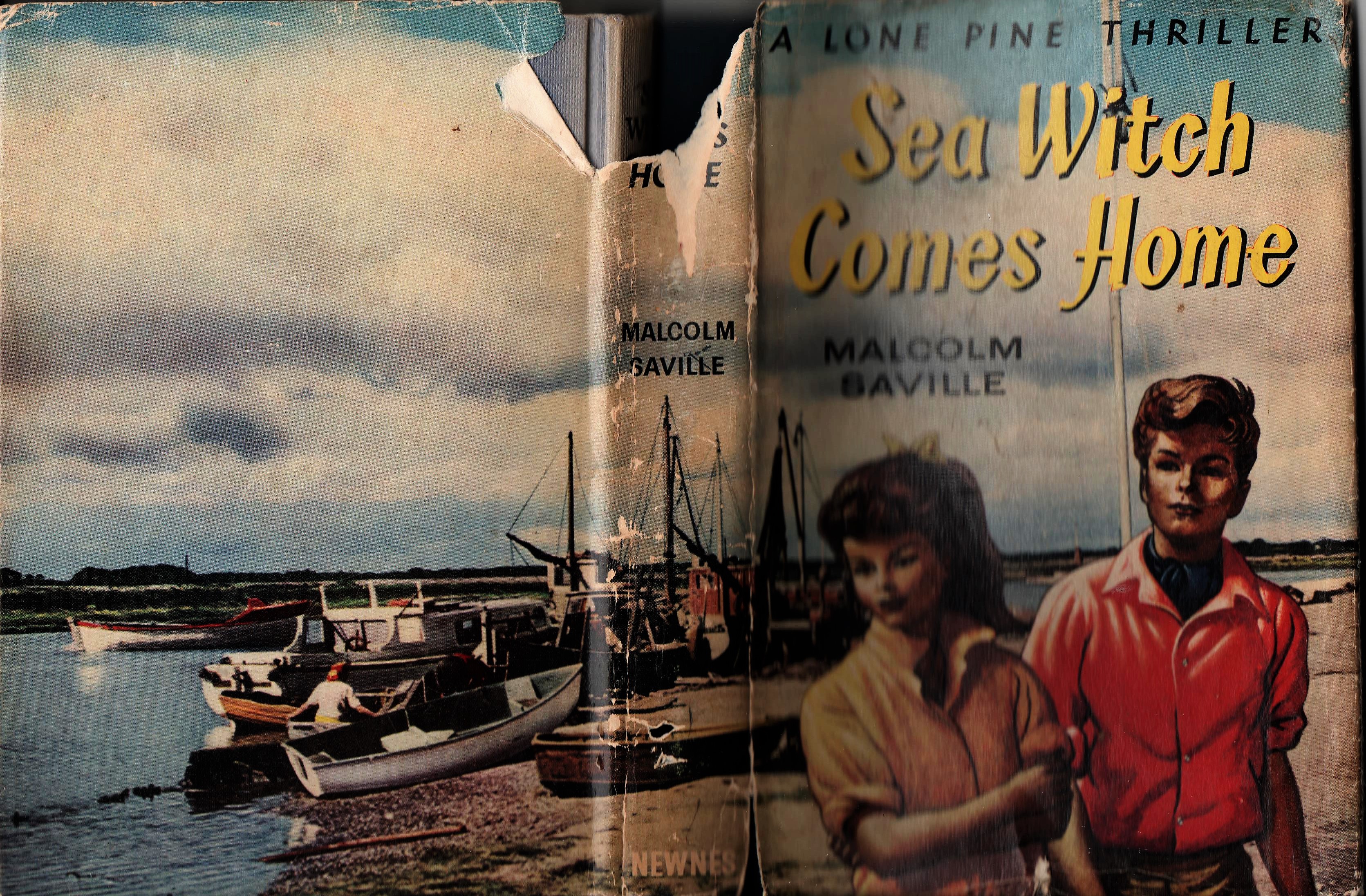
This edition of Sea Witch is a blue cloth-bound hardback, bought as a second-hand copy and with the previous owner’s name stamped inside. It appears to be a first edition (1960) but sadly the jacket’s condition has deteriorated over the years and as you can see from the photo, is quite damaged, so that part of the spine has faded. The book is otherwise in nice condition and the pages have worn the passage of time well. It is a pity that my copy isn’t in better nick as according to ABE Books, a good first edition could sell for as much as eighty-odd pounds. Oh well.

I never read the Lone Pine series in chronological order, the first being Mystery at Witchend (1943), but as each book contained a complete adventure, that never seemed to matter. The books followed the activities of a group of friends who formed a secret society called the Lone Pine Club. The club’s oath was sworn in blood, which was guaranteed to appeal to a child’s love of secret societies. If you recall from a previous post, Dimsie Maitland was a member of the Anti-Soppists society, though I don’t think that any bodily flids were involved in those initiation rites.

On re-reading Sea Witch many years later, I can see both why it appealed to me and why the Lone Pine mysteries followed naturally for me after Enid Blyton’s Famous Five adventure series. The idea of kids having lots of adventures largely without adults (girls got to be part of it too) greatly appealed to me at the time. And as for the thrill of solving mysteries that defeated more experienced hands, well that was the icing on the cake. Now as an adult, it’s slightly mind boggling to re-read and see just how much the kids got up to with just instructions to be home for tea. No mobile phones either!

Several of the Lone Pine books were set in Shropshire, some in Rye in Sussex. My fondness for the Shropshire countryside has its roots in the Lone Pine Stories; I even loved the place-names and wanted so much to visit the Long Mynd and the Stiperstones. Sadly, although I have been to Shropshire on several occasions, I’ve never yet got around to visiting Rye. With its connections to Saville, EF Benson and Henry James, I do feel that a visit is long overdue. The recently installed Blue Plaque, reported in the Rye News, to honour Malcolm Saville provides a fresh incentive to do so.

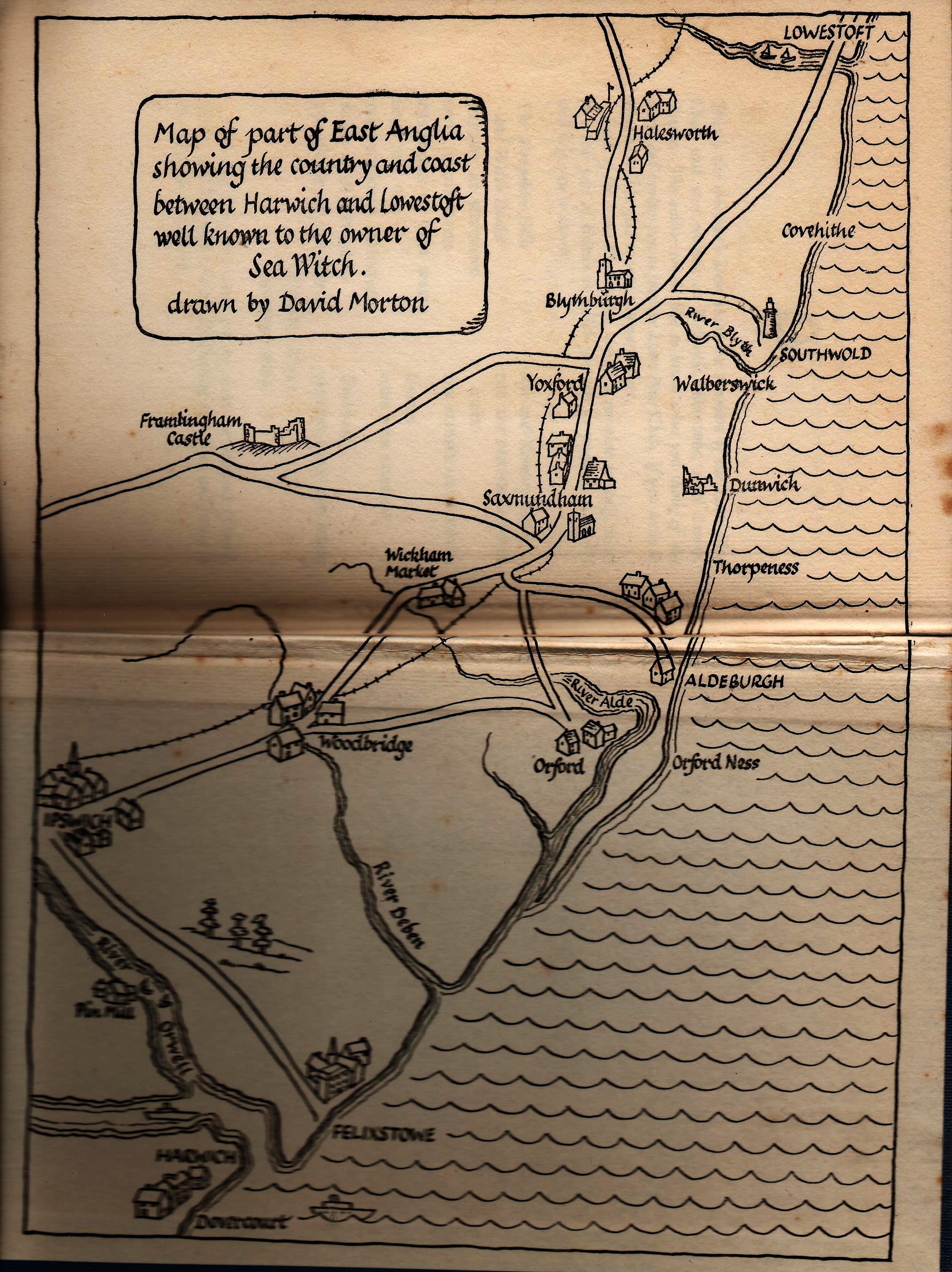
But, returning to The Sea Witch Comes Home, here is a brief plot summary to this Lone Pine adventure for the uninitiated amongst you. This East Anglian-set novel only features three of the club’s nine members, founder member David Morton (16) and his siblings Mary and Richard (Dickie) who are 10-year-old twins. The three head off to a village called Walberswick at the behest of David’s schoolfriend Paul Channing. Paul and his sister Rose are worried about their father who has gone off in his boat The Sea Witch without saying where or why. (And Mrs Morton calmly lets them go off to a house where no adult is around to keep an eye on them!).

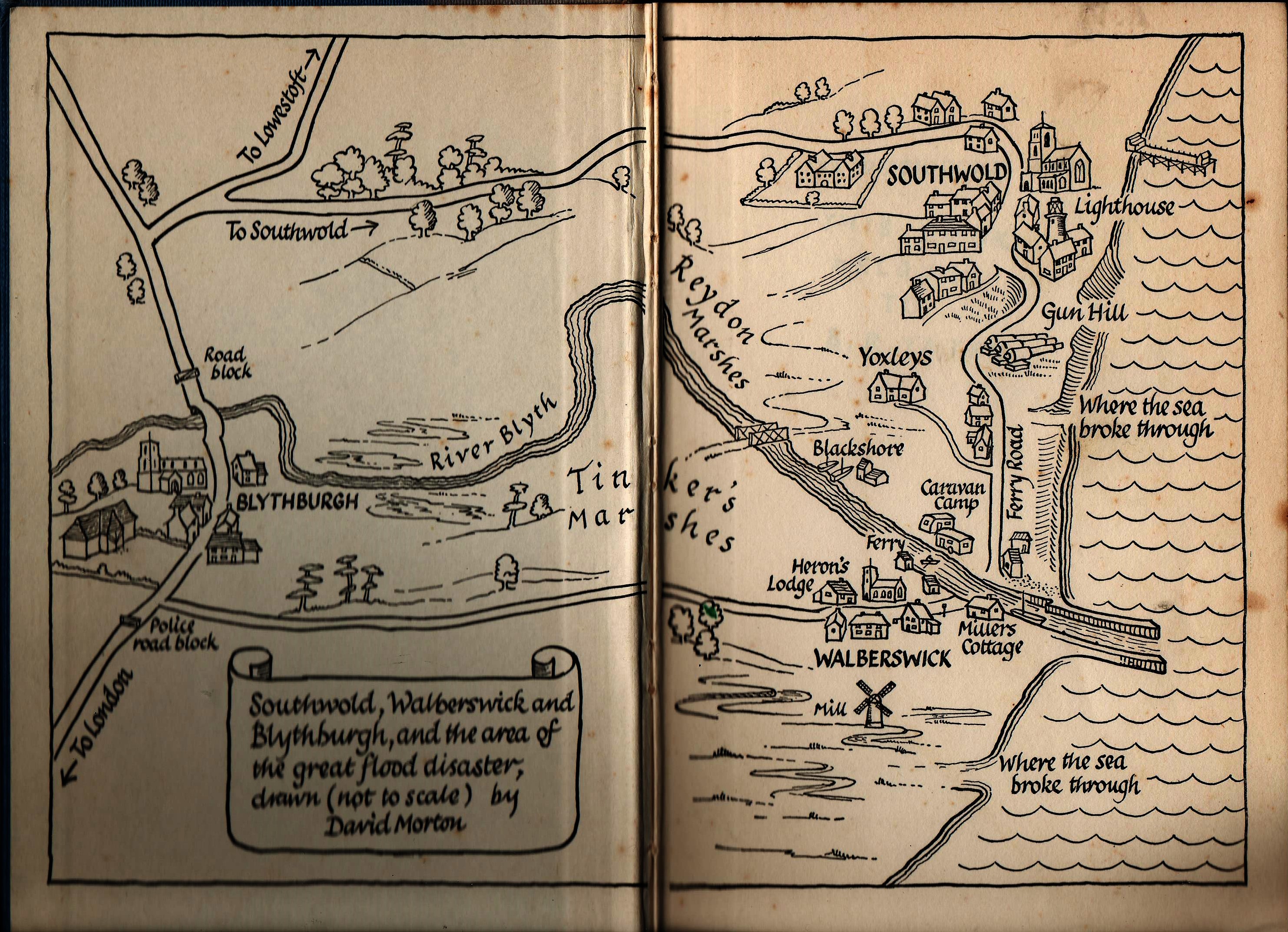
As the children try to find answers, they realise that they are not the only ones trying to find Richard Channing. What is he involved in? As well as contending with inquisitive strangers while seeking answers to the mystery, the friends have to deal with a far more dangerous foe: the sea. The climax of the book features a coastal emergency, when the sea breaks through defences in several places, threatening lives and homes. In his foreword, Saville admits to cheating a little in his timing, as the high tides of the autumn equinox occur a bit later than early September, the time period of the story. It does make a dramatic plot element though. I won’t plot spoil, but of course the young detectives win the day and solve the mystery.

I suppose I can blame both Blyton and Saville for a life-long love of crime and mystery novels. The next stop was Agatha Christie, Conan Doyle and the rest was, as they say… history. If anyone is interested in Malcolm Saville’s Lone Pine stories, as well as the many other books that he wrote, then take a look at the website dedicated to his books, Witchend.com. Also, if you are interested in reprints of some of the stories, check out Girls Gone By Publishers to see their current list.

Ireland Reads Day: Squeezing in a read (or two)

Today’s Landing Tales post is written in support of the Irish Government initiative, #Ireland Reads Day, which is supported by public libraries. So, I want to talk a little about my memories of my early reading life (once upon a time in Birmingham) going back to where it all started, with a quick delve into the Landing Book Shelves. I hope to give you a little insight into what started me off on a lifetime love of books and reading. And of course, today I will certainly be squeezing in a read. Though in fairness, it’s more a case of trying to stop me squeezing in a loooong read…

My relationship with books goes back a long way. Like many people, I can trace that love back to all those old familiar nursery rhymes and songs, many of which will never be forgotten. Then it’s a short step onto children’s poems such as those of AA Milne, whose ‘The King’s Breakfast’ was one of my early favourites. Nowadays, just like the poor old king, ‘I do like a little bit of butter to my bread’ in the mornings! Although, I am also of the view that ‘marmalade is tasty, if it’s very thickly spread’, so I’m at one with the Dairymaid on that issue.

Now, as Paddington Bear afficionados know well, he is also a confirmed marmalade fan, usually keeping a spare marmalade sandwich under his hat for emergencies. Apparently, it’s a well-known fact that bears who come from Darkest Peru like marmalade,

“Where was it you said you’d come from? Peru?”
“That’s right,” said Paddington. “Darkest Peru.”
“Humph!” Mrs. Bird looked thoughtful for a moment. “Then I expect you like marmalade. I’d better get some more from the grocer.”
“There you are! What did I tell you?” cried Judy, as the door shut behind Mrs. Bird. “She does like you.”
“Fancy her knowing I like marmalade,” said Paddington.

If I were to attempt to compile a top ten childhood favourites list, then Paddington may well be at the top. Not least because, as an adult of (ahem, mature) years I can still sit down and chuckle over one of his adventures, which really do stand the test of time. Take a bow, Michael Bond.

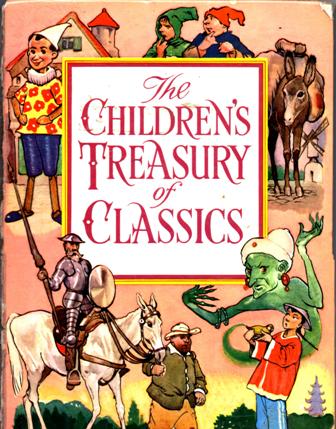
I think that I have probably mentioned on here before, The Treasury of Children’s Classics collection that I had as a child, which still survives, albeit in a very battered state, with the cover selotaped together. It contains a mixture of extracts from classic tales and several poems. It was my first introduction to the brothers Grimm, Hans Christian Anderson, Dickens, Shakespeare (via Lamb’s Tales) the Arabian Nights and Susan Coolidge, to name but a few.

book cover with Aladdin, Pinoccio, Don Quixote
A childhood favourite

But it was the verses that initially drew me into the book, when I was too young to appreciate extracts from Robinson Crusoe and the like. I enjoyed the humorous poems best, such as John Drinkwater’s ‘Washing’, which I am sure struck a chord with many a child. Here’s an extract:

What is all this washing about,
Every day, week in, week out?
From getting up till going to bed,
I’m tired of hearing the same thing said.
Whether I’m dirty or whether I’m not,
Whether the water is cold or hot,
Whether I like or whether I don’t,
Whether I will or whether I won’t.-
“Have you washed your hands, and washed your face?”
I seem to live in the washing place.

Of course, this poem seems particularly innocent and old-fashioned in our Covid era of required hand washing, when handwashing doesn’t just relate to a grubby child in from playing in the garden, who can’t see why a bit of dirt would hurt a jam sandwich.  Or in Paddington’s case it would be sticky paws from eating directly from the marmalade jar.

The themes of washing and general cleanliness link to my final choice for this post (though believe me, I could go on but I have to stop somewhere), which is The Family from One End Street written and illustrated by Eve Garnett (1937).  The family is the Ruggles family, father Joe is a dustman and his wife Rosie takes in laundry:

Mrs Ruggles was a Washerwoman and her husband was a Dustman. “Very suitable too,” she would say, though whether this referred to Mr Ruggles himself, or the fact that they both, so to speak, cleaned up after other people, it was hard to decide.

Mrs Ruggles has a sign outside their little terraced house proclaiming, ‘The Ideal Laundry. Careful Hand Work’ and the house is often full of clothes, steam and folded laundry. Joe and Rosie have seven children, the youngest still a baby so life is busy and full of activity and comic adventures. If you know Alan Ahlberg’s picture book Peepo!, then you would recognise these books as sharing the same working class world of the 1930s and 40s. Clothes drying by the fire, kids playing in the yard and the mother in her pinny doing the chores. Though in Mrs Ruggles’ case, working as we would now term it ‘from home’ as well as doing the family tasks. These stories could be sentimental, dealing as they do with a poor family whose children seem to be constantly taking boots to be repaired, yet who have a happy life. Yet, they aren’t at all saccharine sweet, merely very funny and thoughtful. And Eve Garnett’s black and white sketches speak volumes.

I’ll wrap it up for now, but I’d love to hear about your favourite childhood reads or what you’re reading for #IrelandReads, so drop me a line below if you’d like to do so. Now, I will just go and #SqueezeInARead!

The Benefactress by Elizabeth von Arnim

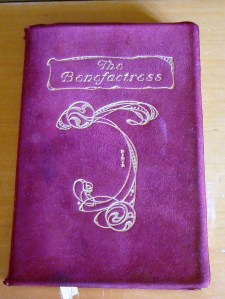
The Benefactress front cover showing gilded title & decoration

The Benefactress

I have been searching around on The Landing to find ideas for a new series of blog posts. Obviously, at this stage my projected spring Renaissance has turned into a pre-Christmas Renaissance. So here goes…

As I was scouring the shelves, I once again realised that we have a nice selection of older books, quirky titles and interesting finds. Some of these are books for dipping into merely, others for a straightforward read. In the latter category I have picked out a book that I acquired many years ago and I am ashamed to say, that I have not got around to reading before now. This is a lovely 1911 pocket-sized edition of The Benefactress by Elizabeth von Arnim.

For the sake of the honour of The Landing I decided that it was about time to remedy the omission and read The Benefactress. The snag with reading something so old (and to me rather precious) is that I felt that I dare not just shove it in my bag to read at lunchtime. And as for my fondness for reading in the bath…well some things are just not very wise. Not that I have actually yet dropped a book in the bath (maybe dipped the odd corner here and there) but there’s always a first time. Reading an older book does give a different quality of experience, due to the touch and feel of the book. I’ll just say a few words about this edition before telling a little about The Benefactress for those of you who don’t know the story.

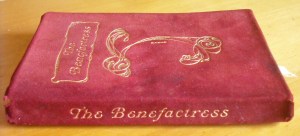
This little book goes back to my Birmingham days, so I’ve had it for well over twenty years, but sadly I can’t remember what book fair or shop this volume came from. Its cover is very similar to that of a poetry chapbook that I have mentioned in a previous post, a sort of suede like texture but I don’t think it is actually leather. Maybe someday I will take it to an expert who will be able to tell me something about the material and how best to care for it (I may have mentioned before that dusting is not my strong suit). I love the elegant gilt swirl of the cover design, which is echoed on the end papers. Unfortunately, the ribbon marker has seen better days, but I still keep it out of a sense of completeness. The page edges have browned with age and there is gilt on the top edges but not the others. I don’t think it’s rubbed off; rather it looks as if they were never gilded in the first place. Judging from the publishing details this edition was published by MacMillan as part of its 7d series (1911), with the first edition being 1901.

But now to the story: The lovely and charming Anna Lestcourt is twenty-five when the story opens and should be full of all of the optimism of youth. However, Anna is financially dependent upon her rich sister-in-law (wife to her brother Sir Peter), a former Miss Susie Dobbs of Birmingham. As was not unusual at the time, there was a trading of new money for an ancient name and family home. All of this leaves Anna on Susie’s hands to marry off successfully, but so far to no avail. Anna remains resolutely unmarried, but not for the want of trying on Susie’s part. Anna’s fortunes take a turn for the better when her late mother’s brother comes on a visit from Germany and takes a liking to his niece. Subsequently he bequeaths her one of his estates, along with its income, which he hopes will secure her a good German husband.  Anna, however has other ideas, not being much sold on the good German husband idea. She forms the plan of opening up her new abode to several distressed gentlewomen, (who would live at her expense) much to Susie’s bafflement. Once in Germany, Anna makes the acquaintance of her new overseer, the local pastor and her nearest neighbour, Axel Lohm, with mixed results. Perhaps not surprisingly, the plan to fulfil the role of a benefactress does not go entirely according to plan, but I won’t plot spoil. Suffice to say that human nature will out. I will leave you to discover whether or not the marriage to a GGH comes to pass.

As I was reading the first part of the book, I found myself developing a certain sympathy for Anna’s sister-in-law Susie. Now this may have been a case of Brummie lasses sticking together, but I felt aggrieved on her behalf as Von Arnim portrayed her in a definitely unflattering light:

And the Dobbses were one and all singularly unattractive—a race of eager, restless, wiry little men and women, anxious to get as much as they could, and keep it as long as they could, a family succeeding in gathering a good deal of money together in one place, and failing entirely in the art of making friends.

Clearly, one could not come from the mercantile classes in Birmingham and be in any way cultured, socially adept or indeed philosophical (her husband was a philosopher). At the same time of course, her money came in very useful to save the aristocratic Lestcourt family from penury and to restore the family pile. Naturally too, Anna deplored Susie’s vulgar taste in furnishings. Thankfully Von Arnim did give Susie the occasional good line, “Really,” added Susie, twitching her shoulder, “you might remember that it isn’t all roses for me either, trying to get someone else’s daughter married.”

And she has a point; who would want to be trying to marry off a sister-in-law who doesn’t even want to be co-operative. It must have been particularly galling for Susie, since it was Anna who had all of the social cachet that she lacked.

Anna Lestcourt is however a far from heartless girl, who does come to understand that Susie’s position is not a happy one, seeing as she does that, ‘No one cared for her in the very least. She had hundreds of acquaintances, who would eat her dinners and go away and poke fun at her, but not a single friend.’ Yet at the same time, Anna resents been required to do the one thing that that might bring some cheer into Susie’s lonely life. Poor Susie would have loved a wedding to plan for and access to all of those elite hostesses who have so far snubbed her efforts.Front cover & spine showing gilded title & decoration

In The Benefactress, Von Arnim has given us a fascinating mix of characters with decidedly mixed moral standards, from whom Anna learns much in the course of her social experiment. It’s a long time since I read any von Arnim books, the most recent being The Solitary Summer, read a couple of years ago and this is a very different read. I did enjoy the story, possibly enhanced by the delights of finally reading my delightful little edition (despite my misgivings about Von Armin’s rather cruel characterisation of Brummie Susie) and I will no doubt read it again in about twenty years.

I’m not going to promise another blog post soon, though I will try to get back on track. But in the meantime, happy reading!

Daphne du Maurier’s letters to Oriel Malet

As regular readers of this blog will know, I have been following the Month of Letters February challenge for the past few years, I think since its first year. I missed last year, but I am back on course for 2018. In honour of Month of Letters, I usually try to write a letter themed post at this time, and so here is this February’s offering. I also hope to give an update on my letter writing progress too as the month goes on.

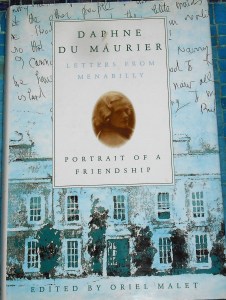
Letters from MenabillyMy letter themed post this time features one of my all-time favourite writers, Daphne du Maurier in correspondence with a fellow writer, Oriel Malet. The collection, edited by Oriel Malet is entitled Letters from Menabilly: Portrait of a Friendship (Weidenfeld & Nicholson, 1993). I have had this collection for some while and I don’t think I have ever got around to reading it properly. It was published in the same years as Margaret Forster’s biography of Daphne du Maurier, whom Oriel Malet credits in her acknowledgments. I bought the biography the same year it came out, but I think Letters from Menabilly came to me some years later as a second-hand bargain. The letters interspersed with Malet’s commentary chart the course of a thirty-year friendship between the women and their families beginning with their chance meeting in the mid-1950s.

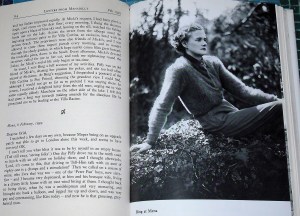
Oriel Malet begins the book by talking about how, when and where she and Daphne du Maurier first met and how their relationship developed. She was still a young writer at this point whereas du Maurier was very successful and well-known. Malet at this point had heard of du Maurier but not read any of her books. They shared an American publisher, Doubleday, and first met at a London party hosted by the publisher’s wife Ellen Doubleday. They had shared a mutual dislike of social gatherings and being forced to meet new people, but when they found themselves waiting outside the Doubleday hotel suite for the hostess to arrive, they struck up an unforced conversation. Neither woman introduced herself and it wasn’t until the party began that Oriel Malet realised to whom she had been speaking. She described Daphne rather poetically thus, ‘she reminded me of a figurehead at the prow of a ship; alert, poised, looking into the distance yet perhaps laughing inwardly and no more at ease in so worldly as setting than I was myself’. If you look at this photo from the book you can see what she meant. They sneaked away from the party together and talked while Daphne packed for her return to trip to Cornwall. And the rest as they say, was history. The letters cover many topics and events in the women’s lives, but I just want to focus on one of the conversational threads for this blog post.Portrait of Daphne du Maurier

Literary advice

I was particularly interested in Daphne du Maurier’s generosity in giving advice to the younger writer. Over the course of the years the two women discussed writers (both of them were Katherine Mansfield fans) and writing in both general and specific terms. In one of the early letters in the collection, du Maurier gives Malet advice on a book that she is working on, saying ‘You don’t have to have a ‘plot’; it sounds like Guy Fawkes in his old cloak, creeping with a lantern’. The imagery is amusing but she goes on to explain her point, elaborating thus, ‘You don’t even have to have action  (think of Proust). But you must have a real reason for it all, a reason for the things you want to say’. Eminently sensible advice from a seasoned professional. In a later letter after reading a draft of a short story, du Maurier urges Malet to consider its potential as a novel,

I read your story going up in the train, and was absorbed by it. I love the way you write, and the things you write about, but my criticism would be that this atmosphere and story are wasted on a short story – you should develop it into a novel … I think you have the potential material here for a lovely long and interesting book.

The letters and Oriel Malet’s memories of her visits to Menabilly also weave in the progress of du Maurier’s own work. On one such visit, Malet recalls crossing a field and being afraid of a resident bull. Du Maurier was however more concerned with a flock of seagulls, remarking how frightening it would be ‘if all the birds in the world were to gang up together and attack us…..They could you know’. She was proved right in the disturbing short story ‘The Birds’ (from The Appletree, Gollancz, 1952) which was filmed by Alfred Hitchcock in 1963.

I was also intrigued by the importance of the Brontës’ early writing about the fictional world of Angria and Gondal. In du Maurier-speak, ‘to Gondal’ meant to pretend or to make-believe and the expression crops up several times during the course of the correspondence. In August 1963, Daphne wrote to Oriel,

If I pass a place I once lived (like at Hampstead), I often do a Gondal, whereby I go into it just as if it were still mine, and take my coat off, and somehow settle down, and then try to imagine the amaze surprise of the new owner coming in, and how one would behave in the Gondal just as if they were not there, and one was still in possession.  …

Another thing I Gondal about, is supposing one suddenly went and rang at a person’s house, who was a Fan- …

Du Maurier was fascinated by Branwell Brontë and the book she wrote about him, the Infernal World of Branwell Brontë appears to have been simmering in the background for many years. She was very knowledgeable about the Brontë family and visited Haworth with Oriel after being asked to write a preface for a new edition of Wuthering Heights in 1954.  Oriel later received a letter in which Daphne says the Macdonald Classics editor claimed that ‘he had never read anything before that gave him such a vivid and convincing impression of her [Emily’s] work and personality’. I was amused to note that the literary tone of this letter finished on a prosaic note however, mentioning a friend’s assertion that the Channel boats would go on strike as they were owned by British Railways. Daphne anxiously enquires of Oriel, ‘Do you think this is true?’ Clearly even best-selling writers have to be practical.

A note on the ‘in’ language in the letters

The first thing a reader notices in reading any collection of letters such as this, is that a private world is laid open for perusal. I would recommend not neglecting to read Oriel Malet’s helpful glossary of the du Maurier family’s expressions and nicknames before you start the letters, or you will be forever dodging back and forth to clarify the meaning of sentences, especially Malet took on some of these expressions and uses them in her reminisces. I found it strange to be grappling with family language because it did at times make me feel that I was an unwanted intruder into a private world. There is also the disconcerting feeling that it is all a bit childish for adults to be using what sometimes seemed like nursery language. For instance, Du Maurier refers to having a period as having a ‘Robert’ and ‘to wax’ meaning sex. On the other hand, her term ‘brewing’ for working on a story or plot makes perfect sense and conjures up a sense of the author intently and productively mulling over her characters and their actions.

Having said all of that, I found much to enjoy in the letters and the accompanying contextual passages. In fact, I am struggling to suppress an urge to re-read all of the Daphne du Maurier books I have ever read and to catch up on those I have mysteriously missed out reading to date. Another blog series methinks. Now on my mental TBR pile are books by Oriel Malet, as I must confess that I have never read any of her books.

I have also come across a post about Daphne and Oriel on a blog called Something Rhymed, which looks at female literary friendships.

Do drop me a line if you are a Du Maurier fan too!


Diary of a Provincial Lady

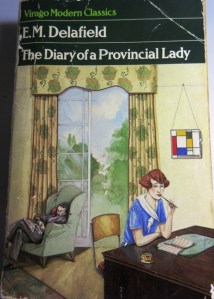
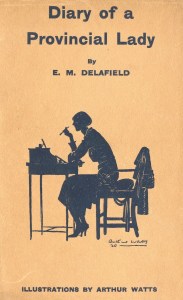
For this, my first post of the year I want to introduce the The Diary of a Provincial Lady (E.M. Delafield) to anyone who hasn’t come across her before. I have been meaning to read the book for ages (hence the need for this challenge and this blog in the first place) and I did finally get around to it last year. Although it isn’t a 2018 read, I wanted to talk a little about it before I put it back on the shelf. My edition is a Virago paperback (1984) which comprises four diaries of the Provincial Lady. It also contains an excellent introduction by Nicola Beauman. I have discovered that Persephone Books offer a lovely reprint, using the original illustrations by Arthur Watts and with an afterward by Nicola Beauman. This edition sorely tempts me (see illustration below).

Cover of The Diary of a Provincial Lady

The Provincial Lady began life as a series of articles for a weekly feminist magazine, Time and Tide when Delafield was well established as an author, already having eighteen books under her belt. The first Diary of a Provincial Lady was published in 1930, followed in 1932 by The Provincial Lady Goes Further, The Provincial Lady in America (1934) and The Provincial Lady in Wartime (1940). My internet searches have also yielded the information that our PL also went to Russia (published 1937), this book slotting in between America and Wartime. That must be next on my wants list! I have read through all four books in my volume, but in this post, I will confine myself to the first volume to give you a flavour of the Provincial Lady and her world.

Before talking about our lady diarist, I will just sketch in a few details about the author. E.M. Delafield is the pen name of Edmée Elizabeth Monica de la Pasture (1890-1943) whose mother was a well-known author. This explains the transition from ‘de la Pasture’ to ‘Delafield’ when she came to publish her own work. Her father was a Count, descended from a family fleeing the French revolution; Delafield went on to marry Arthur Dashwood third son of a baronet and they eventually settled in Devon. Delafield’s Provincial Lady draws on her own provincial life and experiences in this part of the world, however the husband and children in the books were apparently only very loosely based on her own husband and offspring. Her first novel, Zella Sees Herself (1917) was published after Delafield had spent most of the First World War as a V.A.D. She went on to become a very successful author before her untimely death at only fifty-three.

The diaries humorously detail the ordinary life experiences of the un-named Provincial Lady, dealing with servants, school, children, balancing the household budget and those all important social duties. The characters include the snobbish and wealthy Lady Boxe, Our Vicar’s Wife, a couple of old school friends, various neighbours and visitors. The immediate household consists of husband Robert, daughter Vicky (her son Robin is away at school but makes his presence felt in  occasional unsatisfying letters), French governess Mademoiselle, Cook and Ethel the parlour maid. A common theme in the book is the Lady’s endless efforts to balance the financial books. Receipts go missing, the contents of the cash box is never what it should be and polite letters arrive from suppliers and bank managers requesting settlement. Great aunt’s diamond ring is regularly pawned (though at a suitable distance from the village).Illustrated Provincial Lady

I was surprised how many little incidents struck a chord, despite the 1930s setting and the fact that the social background of the character is somewhat removed from my own. Here is she espousing modern parenting by discussing the question of the existence of Hell with her daughter Vicky:

Am determined to be a modern parent, and assure her that there is not, never has been, and never could be, such a place. Vicky maintains that there is, and refers me to the Bible. I become more modern than ever, and tell her that theories of eternal punishment were invented to frighten people … (Query: Are modern children going to revolt against being modern, and if so, what form will reaction of modern parents take?)

While reading the diary entries on the vexed question of Christmas shopping, I was amused to note that her caustic reactions to the cost of gift ideas given in magazines in 1930 are eerily similar to my own (most recently given voice to in reading gift guides in 2017 Christmas supplements). Her gift guide makes suggestions ‘individual and yet appropriate-beautiful, and yet enduring’. It goes on to say, ‘Then why not Enamel dressing-table set, at £94 16s 4d or Set of crystal-ware, exact replica of early English cut-glass, at moderate price pf £34 17s 9d?’ The Provincial Lady’s response is a tart ‘Why not, indeed?’ After briefly surveying the section for ‘Giver with Restricted Means’ (5 guineas) she settles for a ‘one-and-sixpenny calendar with picture of sunset on Scaw Fell, as usual’. During an exhausting shopping trip to London she agonises over a ‘really handsome’ card for her old school friend Cissie Crabbe against an ‘almost invisibly small diary’. She eventually settles on the diary as it will fit into an ordinary sized envelope. The glamour of Christmas shopping on a limited budget!

Finally, I note that our diarist has the eternal discussion with her offspring whether hand washing before meals ‘is, or is not necessary’. She notes in an aside:

(Mem: Have sometimes considered -though idly- writing letter to the Times to find out if any recorded instances exist of parents and children whose views on this subject coincide. Topic of far wider appeal than many of those so exhaustively dealt with).

This reminds me of a John Drinkwater poem that I knew as a child called ‘Washing’ , which begins ‘What is all this washing about, Every day, week in, week out?’ It’s nice to know that some thing never change! All that washing business baffled me too.

I did actually read all four books straight through, which was probably not the best idea. As Beauman points out in her introduction, the diaries were not meant to be read straight through, so repetition of phrases and events is noticeable as you go on. However, I don’t think that detracts from the humour of the books, or the sharp observation that Delafield applies to the mundane round of life. I have since found myself dipping back to read entries here and there which is a better way to read the diaries I think. These are books you could return to over and over again for escapist humour with a dash of vim.

Now all I need to do is to track down the remaining volume for my collection.

Best wishes for a Happy Reading Year to one and all! Drop me a line below if you have any New Year reading goals.

Picture Credits: Additional image from Persephone Books online shop.

A Victorian Crime Wave

For the last few weeks, I have been indulging in my own mini crime wave, wallowing in two collections of short stories. The first anthology, The Oxford Book of English Detective Stories, which I brought back from a visit to mum in October, I don’t think I have ever read before. Once finished with that crime spree, I felt compelled to re-read my Victorian Tales of Mystery and Detection (OUP, 1992) bought and read in the year of publication but not looked at since. In addition to these short stories, I have been reading a couple of Maigret novels belonging to He Who Put The Shelves Up, but I will concentrate on the Victorian Tales anthology for this post.

Where do I begin the conversation about my rather guilty pleasure of detective over-indulgence? There is indeed a sense of a shameful, but delicious pleasure in reading just one more story, and then maybe one more very short one. Like eating one more chocolate from the selection box, you know you probably shouldn’t do it, but you do it anyway. I roved amongst the stories picking titles that grabbed my attention or choosing unfamiliar authors. I deliberately didn’t read the book cover to cover, but dipped in and out, reading whatever story my fancy lighted upon. Clearly, this upset the chronological structure of the book, designed to demonstrate the development of features in the detective story. I also kept popping back to read snippets of Michael Cox’s excellent introduction. However, finally the sad realisation dawned that I had finished the last story, no more left. On a more cheerful note, I have re-discovered stories and authors and created a few leads to follow up on (see the end of this piece).

I want to pick out a few female crime writers and detectives to talk about, continuing a theme that I have written about before, when I wrote about women crime writers of the Golden Age of Crime. To begin with, in Victorian Tales, I re-discovered a Baroness Orczy story that featured her ‘man in the corner’ amateur detective, solving a seemingly impossible crime. When I first came across ‘The Fenchurch Street Mystery’ back in 1992, I had only known Emmuska Orczy (1865-1947) for her Scarlet Pimpernel romps of which I was a great fan. Twenty-odd years later and I still haven’t read any more of the crime stories. The one in this anthology was originally published as part of a series called ‘London Mysteries’ (I assume this was a magazine series, but there is no more information in the sources section) and later reprinted in The Old Man in the Corner (1909). This was the un-named character’s first appearance in print. Here, the thin, quiet man presents a solution to a case that has apparently baffled the police. The entire story takes place in the corner of a bar, as the old man drinks his milk and knots and unknots a piece of string, while he unravels the seemingly baffling crime.

This slideshow requires JavaScript.


As the old man declares, ‘There is no such thing as a mystery, in connection with any crime, provided intelligence is brought to bear upon its investigation’. When his companion dares to suggest that many crimes baffle the police at present, the old man damningly comments, ‘I never ventured to suggest that there were no mysteries to the police’. As you can tell, he is no great fan of the police and he only appears to take an interest in crime as an intellectual puzzle. He declares that ‘As often as not my sympathies go to the criminal who is clever and astute enough to lead our entire police force by the nose’.

In two other stories in this collection, lady detectives take control of the crime solving. One of the detectives, created by Catherine Louisa Pirkis (1839-1910) goes by the rather un-detective sounding name of Loveday Brooke (clearly, her parents did not envisage her future career). In ‘Drawn Daggers’ (1893) Miss Brooke tackles a case of a valuable missing necklace, the loss of which appears to be connected to anonymous threatening missives containing sketches of daggers. She deals with the case with admirable efficiency. This story was originally published in a magazine called Ludgate Monthly and later reprinted in The Experiences of Loveday Brooke, Lady Detective (1894).

Unlike our previous detective, Loveday Brooke is a professional private detective. The plot introduces Miss Brooke and her colleague Mr Dyer as they disagree about elements of the case before them. Mr Dyer irritably declares that ‘When a young lady loses a valuable article of jewellery and wishes to hush the matter up the explanation is obvious’. In return, Miss Brooke explains to her sceptical colleague, ‘Sometimes the explanation that is obvious is the one to be rejected, not accepted’. Perhaps not surprisingly the outcome of the case proves her correct, as Loveday painstakingly examines the drawings, interviews household staff and then pre-empts the next move by the crime’s conspirators to conclude the case.

Our second lady detective is equally efficient. In ‘The Arrest of Captain Vandaleur’ (1894) Florence Cusack does the crime solving honours in a gambling themed case. This is a collaborative piece by Lillie Thomasina Meade (1854-1914) and Robert Eustace (1868-1943). Michael Cox’s introduction describes Mrs Meade as ‘formidably prolific’ but it is not clear from the bibliography whether any more stories featured Miss Cusack. From the context of this story, I am unsure if Miss Cusack acts in a professional capacity or as an amateur lady detective. She seems comfortably off, as we meet her in the well-stocked library of her house in Kensington Park Gardens. In the course of the story, it is clear that she has informants and ‘channels I need not detail’ as she phrases it so we can assume that she is an experienced detective, even if an amateur one.

However, we do know that the Criminal Investigation Department called has called her in to assist in solving a horserace betting fraud. This fraud case has a connection to a friend’s husband who has developed a gambling mania. The story particularly intrigued me because of the subject of the crime. Gambling and horseracing do not immediately spring to mind as familiar subjects to Victorian spinster ladies. Nevertheless, Miss Cusack is obviously quite au fait with various confidence tricks and shady characters. Even so, even she is stumped at the meaning of the only real clue and cannot see how the betting fraud is perpetrated. She admits that ‘For five continuous hours I have worked at those few words, applying to them what I already know of this matter. It has been of no good.’ Naturally all ends well, but I won’t reveal the who and the how of it. Miss Cusack did the brainwork backed up by the brawn of Scotland Yard.

To finish my crime spree I will mention my recent discoveries of follow–up reading material, thanks to a quick search on ABE Books. You can buy reprinted editions of Loveday Brooke’s Experiences from the very reasonably priced (Dover Publications, 1986) to the eye wateringly expensive (first edition from Hutchinson, 1894 at £2,675.66). I am sure that you can guess where my inclination lies but I will have to make do with cheap and cheerful. I have also found The Old Man in the Corner: Twelve Mysteries, published by Dover Publications (1980). It is worth mentioning here that Orczy also wrote detective stories featuring Lady Molly of Scotland Yard, found on ABE in various editions (maybe a future blog post). Lastly, Lillie Thomasina Meade was indeed a prolific author and many early editions of her books (she also wrote school stories for girls) are still available, some as print on demand books. I spotted one POD title, which appears to be a collection of her mystery stories written in collaboration with Robert Eustace. Whether these feature Miss Cusack is not clear from the seller’s notes.

In short, I have plenty of ideas for future forays into female Victorian crime writers. Now, I think I will just go and write out my Christmas wish list…

Picture credits: Wikipedia (except for the image of my own copy of Victorian Tales)

The Long Summer of Reading (but not Blogging…)

Well, my unintended summer break from The Landing has proved to be much longer than I would have wished. Somehow, just getting back into the blogging frame of mind has proved remarkably difficult. Not so, my book-reading frame of mind I am thankful to say. I would go so far as to say that reading wise, this has been a moderately profitable summer. A few longstanding members of the TBR pile have bitten the dust, most enjoyably I might add. This has also encouraged a couple of related re-reads to add to the literary tally.

I find that I can spend ages planning how to read more efficiently around the Landing Book Shelves, but then at other times (such as the last few months), the reading just flows without any thought or strategy. Maybe it was the influence of summer, but as I said, I have been having a reasonably prolific mow through the shelves and stacks of books at Landing Towers and I feel quite virtuous as a result. So what did I actually read then, I hear you cry. I will attempt to give a reasonably coherent run-down, unless you merely want to skip to the gallery below for a pictorial view. I will just give a brief over view of my summer’s reading (in two parts) then I hope to get back into the swing of TBR pile blogging properly.

A brief gallop through the shelves (part one)

After a few literary adventures in the 16th and 17th centuries, ending up you will recall with the dramatic execution of Sir Walter Ralegh, I have unintentionally continued to travel further in time. I was not planning this chronological direction, but after embarking on a biography of novelist and diarist Frances (Fanny) Burney (1752-1840), I simply went with the flow. The biography of Fanny Burney: A Biography (Claire Harman, 2000) was another of this year’s Trinity Book Sale purchases, so almost doesn’t qualify as an item on the TBR pile (not by my usual standards of longevity anyway). Reading this excellent biography prompted me to re-read a novelised version of Burney’s life that belongs to my mum (I know, this is not technically not on the TBR pile at all), A Coach for Fanny Burney (Florence Bone, 1938). Reading this as a teenager was the first time of encountering the redoubtable Fanny Burney, as well as literary luminaries Samuel Johnson and Hester Thrale who befriended the debut novelist. As you can see, the book is now somewhat ‘foxed’ in condition but still perfectly readable. Returning to it after all of this time, I found the author’s style rather flowery and sentimental, though the story was still an enjoyable read.

This slideshow requires JavaScript.

A slim volume belonging to The Bookworm was my next choice, Lady Susan (Jane Austen, probably written in 1794 when she was still a teenager). This entertaining tale was a logical read to slip in here as Jane Austen was an admirer of Fanny Burney’s novels. From there, I moved on to Words & Pictures: Writers, Artists and a Peculiarly British Tradition (Jenny Uglow, Faber and Faber, 2008). I can’t remember buying this book, but it is a withdrawn library book so I must have bought it at a library sale. I do know that it has been awaiting perusal for some while. In three sections, Uglow looks at John Milton (1608-1674) and John Bunyan (1628-1688); William Hogarth (1697-1764) and Henry Fielding (1707-1754) and William Wordsworth (1770-1850) and Thomas Berwick (1753-1828). I like Hogarth’s work, but  I had never come across Thomas Berwick, who developed new techniques in wood engraving (see the illustration for an example). Reading the first pair of studies reminded me that I have never read Pilgrim’s Progress, which I last thought of doing while writing a blog post about Little Women. If you recall, each sister received a copy from their mother as a Christmas gift. You see, no sooner do I get through a bit more of the TBR pile than I realise that there is still much more to read!

Here endeth the first catch-up post – more to follow soon (I hope!)

E F Benson: Mapp and Lucia Revisited

In the last few months I have been becoming reacquainted with Emmeline Lucas (Lucia) and Elizabeth Mapp. A Christmas present of the complete 1985/6 London Weekend Television series on DVD prompted my excursion into nostalgia-land. The Bookworm and I have watched the series of ten episodes twice already by now and I am sure that this will not be the last of the Tilling sessions by any means. Benson based Tilling-on-Sea on his home town of Rye, in Sussex and Miss Mapp’s home Mallards on his own Lamb House (now owned by the National Trust). There is a more recent Mapp and Lucia series from 2014, but I haven’t yet got around to watching. It would have to be good indeed to stand up to Geraldine McEwen and Prunella Scales in the starring roles.

Every time you watch McEwen (Lucia) and Scales (Mapp) in action, to say nothing of Nigel Hawthorn (Georgie Pillson), you find something new; perhaps something funny, but also (as in the best comedy) some sadness. Moreover, the costumes and sets are an absolute joy to look at and lust over. Lucia’s outfits in particular are wonderfully elegant, although she does go over the top with her choice of headgear at times. She certainly wouldn’t get lost in a crowd, but presumably that was her intention. It isn’t only the women who get to wear exciting creations, as both Georgie Pillson and Algernon Wyse are rather natty dressers indeed, both having a nice line in waistcoats.

Having revelled in the television version after a gap of so many years, I have been re-reading some of the ladies’ adventures, beginning (not in the correct order) with Miss Mapp (1922, 1990). At the beginning of the book, Benson describes the forty year old Elizabeth Mapp in this way, ‘Her face was of high vivid colour and was corrugated by rage and curiosity; but these vivifying emotions as preserved to her an astonishing activity of mind and body…Anger and the gravest suspicions about everybody had kept her young and on the boil’. Obviously incorrigible curiosity and suspicion can be excellent for both mental and physical health, although I am not sure whether the spied-upon neighbours would have benefited to the same degree.

Alongside this account of life in Tilling, I have been reading short story collection Desirable Residences (1991) so I have been having a three-pronged Benson attack on my summer reading schedule. These stories originally published in magazines such as Windsor Magazine, Good Housekeeping, The Storyteller and Lady’s Realm range from 1896 to 1935. The title story in the collection (1929) is sadly the only Mapp and Lucia tale in the collection. It describes the Tilling-ites’ thrifty habit of letting out their homes for the summer and moving into a cheaper house for the duration. This is how it works:

Those who live in the largest houses with gardens, like Miss Elizabeth Mapp, can let them for as much as fifteen guineas a week, and themselves take houses for that period at eight to ten guineas a week, thus collaring the difference and enjoying a change of habitation, which often gives them rich peeps into the private habits of their neighbours. Those who have smaller houses, like Mrs Plaistow, similarly let them for perhaps eight guineas a week and take something at five: the owners of the latter take cottages, and the cottagers go hop-picking.

A wonderful holiday letting system indeed; it is one that Elizabeth Mapp in particular exploits to the full. Miss Mapp is careful to ensure that garden produce will be included in the rent she pays, so that she can lay in sufficient store of fruit for the winter. This seasonal house exchange is of course, how the music loving Lucia first came to Tilling from Riseholme, when she took Miss Mapp’s house, Mallards for July and August. This prompted her eventual relocation and her new role as the leader of Tilling’s exclusive society (thus displacing the out manoeuvred Miss Mapp). The rest, as they say is history.

I now feel compelled to re-read the later adventures detailing the battles between the social leaders, on which the television series was based. Perhaps I will put the inestimable Lucia at the centre of a future blog post, thus giving me a perfect excuse to read more Benson! Maybe I will also catch up with the more recent BBC Mapp and Lucia series over the next few months.

Watch this space for more Tilling tales…

Additional picture credit (shot of Rye): Steve Knox at English Wikipedia


Jane Austen: Letters to Cassandra

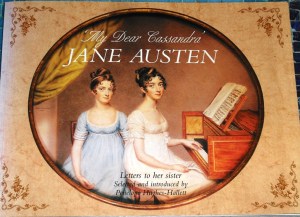
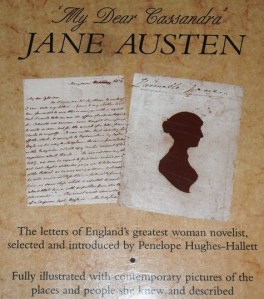
While continuing to keep up with the A Month of Letters challenge (now successfully completed), I have been browsing the bookshelves to remind myself what letter collections I have tucked away. Possibly one of the most famous letter writers in literary history was Jane Austen, whose main correspondent was her elder sister Cassandra. Perhaps it is more correct to say that, Austen’s letters to her sister have survived, whereas others have been lost (Cassandra destroyed many letters before her own death in 1845). After Cassandra’s death, the surviving letters passed to her great niece Fanny Knight and in due course, Fanny’s son published these letters in 1884.Jane Austen Letters

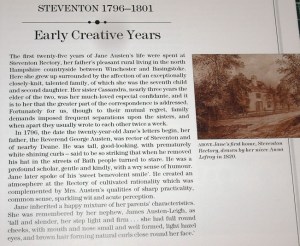
It is a sample of these letters that are published in My Dear Cassandra: Letters to her Sister (selected and introduced by Penelope Hughes-Hallett). The book is fully illustrated and features notes to contextualise the letters and excerpts from Austen’s fiction. It is a lovely book to own, though I have to confess that I do not remember when or from where I bought my copy. This collection was published as a hardback gift edition for Past Times in 1990 (paperback 1991) and it is clearly not intended to be a comprehensive, scholarly edition. However, as an introduction to Jane Austen, her letters and her world it is an excellent choice. As you start to read, you can see how Austen garnered the material for the novels yet to come. The reader can follow up references for further biographical reading, although this edition pre-dates Claire Tomalin and David Nokes’ biographies of Jane Austen (1997).

As you might suppose, this collection of letters has lain on The Landing TBR Pile for some years, so it is about time that I perused a few of the letters. I did not intend to read straight through, but of course, as the letters are presented chronologically, you read on to find out what happened next, as in any good novel. Not surprisingly, there are gaps in the story however, when they didn’t exchange the twice-weekly letters, due to being together. For instance, from 1801- 1805, there is more need of contextual prose in the absence of original letters, to keep the continuity of events flowing. The sisters corresponded when one or other was away on the extended family visits and duties that were common in that period. The one thing that is hard to appreciate is the frequency with which letters were delivered in the 1800s. We think that we are well connected now, but it is amazing to think that you could once have had an evening postal delivery. Back Cover Illustration

The problem with reading someone else’s letters is that you are peeking into to a different life and don’t know the dramatis personae. Add to that, a different century and an alien social milieu and even with the helpful notes (and they can inevitably only go so far) it can be difficult to put flesh on the incidents and people mentioned. Even so, what comes over is that Jane Austen was an observant student of human nature and enjoyed regaling her sister with various goings-on. She clearly had a great affection for family and friends but she enjoyed poking fun at various people.

Sometimes there seems to be a sharp contrast between her mocking of acquaintances, and her affectionate regard for her family. This letter from 1798, has an almost cruel throwaway comment about a neighbour, yet displays doting affection for her three-year-old nephew:

Mrs Hall, of Sherborne, was brought to bed yesterday of a dead child, some weeks before she expected, owing to a fright. I suppose she happened unawares to look at her husband.

We are very glad to hear such a good account of your patients, little and great. My dear itty Dordy’s remembrance of me is very pleasing to me – foolishly pleasing, because I know it will be over so soon. My attachment to him will be more durable. I shall think with tenderness and delight on his beautiful and smiling countenance and interesting manners till a few years have turned him into an ungovernable, ungracious fellow.

Her trademark humour is there in the line about the likelihood of the boy growing up much changed, but it is not as barbed as her comment about the bereaved Mrs Hall. I wonder what this woman was to Jane Austen that she felt the need to be so flippant. Maybe however, this was merely misfired humour in a family letter, which would never have seen the light of day if its author had not become famous. In a later letter, Jane Austen writes of how amusing Cassandra’s latest letter was, so I cannot help wishing that I could read it too. I assume that Cassandra’s letters were lost, but I have not researched this yet.

Inside TextTo finish, I will give you a snapshot of Austen’s experience at a dance in 1799, which conjures up vivid impressions of her fictional country balls:

I do not think I was very much in request. People were rather apt not to ask me till they could not help it; one’s consequence, you know, varies so much at times without any particular reason. There was one gentleman, an officer of the Cheshire, a very good-looking young man, who, I was told, wanted very much to be introduced to me; but as he did not want it quite enough to take much trouble in effecting it, we never could bring it about.

I wonder whether this young man regretted in later years, that he could not boast of having once danced with the famous author. How does that song go, ‘I’ve danced with a man, who’s danced with a girl, who’s danced with the Prince of Wales’ (Herbert Farjeon, 1927).

I definitely have more letters stashed away on The Landing, so perhaps I will have another delve later in the year. I don’t really need the excuse of A Month of Letters to read other people’s letters. Meanwhile, I will have a root around for the subject of my next blog post…