The New Year Resolution that wasn’t

The germ of this first blog post of 2022 is a resolution that I probably ought to make this year, should have made in previous years and in all likelihood will never in fact make. And if I was mad enough to make it, I would almost certainly have broken it before the end of the first week in January. So what is this dread resolution then?

It is: Not to start another book before finishing the one I’m reading and therefore not to end up with several books on the go most of the time. I would just read one book at a time, finishing it before starting the next one in the pile (or the next one that I came across). I could go as far as to say that I wouldn’t even borrow or buy another book until ready to read. (Of course, there are still many unread books here on The Landing, but that’s another resolution altogether, for another year entirely).

It does sound a very simple proposition, but I’m afraid one that would be doomed to failure were I to attempt it. Moreover, in all honesty, would I really want to make and stick to such a draconian resolution?  I do have moments of frustration when I feel that things are getting a bit silly and that I have too many books underway, but most of the time it works for me. I do generally enjoy reading in this way, moving between different genres. Though sometimes I get ‘stuck’ as it were with one book, so that it slips further and further down the reading pile as my attention moves elsewhere. It may then languish on the side-lines for a while as another book makes the running. Occaisonally I give up on a book, but mostly I come back with renewed interest.

Many of the books that leap ahead in my reading programme are library books, spotted while I shelve my section. I have recently begun to feel that I should cut down on library borrowing and return to the reading matter in hand. But feeling hasn’t yet been transformed into action. It is just so tempting to borrow yet another book, that I know that I will then start reading at lunchtime or tea break and thus add into the bookish merry-go-round.

The multiple reads situation has been compounded by my recent move into audio books. In particular, the mp3 Playaway versions that I have taken to listening to on the bus. I find that I cannot read on buses so audio books have proved very successful as an alternative. My commuting books tend to be mostly crime fiction as I find that this genre tends to liven up the tedium of travel. However, it can be irritating to have to try to zone out the travel announcements during the crucial plot points.

Here is a rough list of my current partly-read stash:
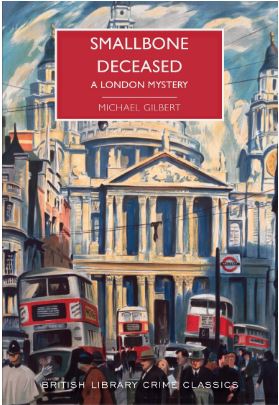
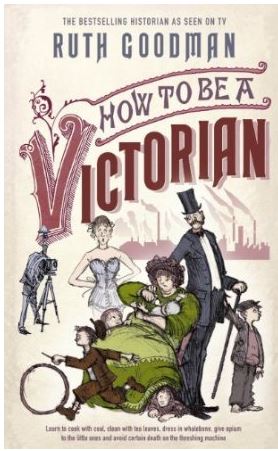
How to be a Victorian by Ruth Goodman. This is one that I’m reading in the evening, alternating with Smallbone Deceased by Michael Gilbert (1950) as a lunch and tea break read. The Victorian history is a fascinating trip through Victorian domestic life from a historian who has tried out many of the household chores herself, wearing an authentic corset to boot. The author has also tried making up some of the homemade toiletries and remedies, with some success apparently. I’d be a bit dubious about some of the medicinal preparations though!

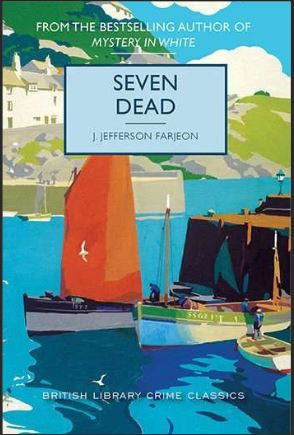
Smallbone Deceased is a murder mystery set in Lincoln’s Inn Court, with a dead body discovered in a deed box. I have read quite a few novels from the British Library Crime Classics series, snapping them up whenever I spot one. I’m afraid that these crime novels are a big driver of my multi-read habit! Before I had finished Smallbone, I had requested (and begun reading) a copy of Seven Dead by J Jefferson Farjeon (1939). As the title suggests, this locked room mystery (always a favourite type) begins with the discovery of seven murder victims in a country house.

I have been listening to The Word is Murder by Anthony Horowitz on my morning and evening commute this week. It’s the first in the Hawthorne and Horowitz crime series and is also the first of any of Horowitz’s books in my reading history. This is very entertaining, so I think I will follow the series a little further. The next one is now on reserve, again in an audio version. Rory Kinnear is the series narrator, doing a fine job of bringing the characters to life.

The Morville Hours: The Story of a Garden by Katherine Swift. This has been on the part-read pile since before Christmas, a victim of a new glut of library books. The book tells of the development of Swift’s garden at the Dower House of Morville Hall (a National Trust property) in Shropshire, begun in 1988. I hadn’t read very far before I decided that I would like to visit it one day.

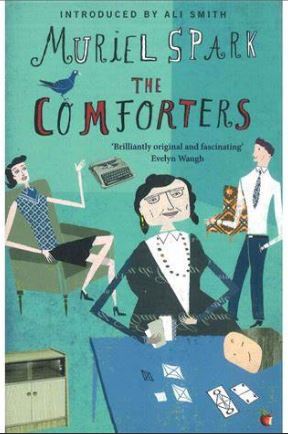
The Comforters by Muriel Spark (1957) was her first novel. This 2009 edition has an introduction by Ali Smith. Are you entitled to say that you’ve started a book if you’ve only read the introduction? Just asking.

I think that’s enough to be going on with for the time being. Of course, I haven’t mentioned the stack of library books yet to be begun, nor my Christmas gifts, nor yet, the books that I bought last autumn from The Last Bookshop in Camden Street, Dublin which still lie unread on my bedside table…

Does anyone else enjoy having several books on the go at once?
Pondering on those interminable book lists

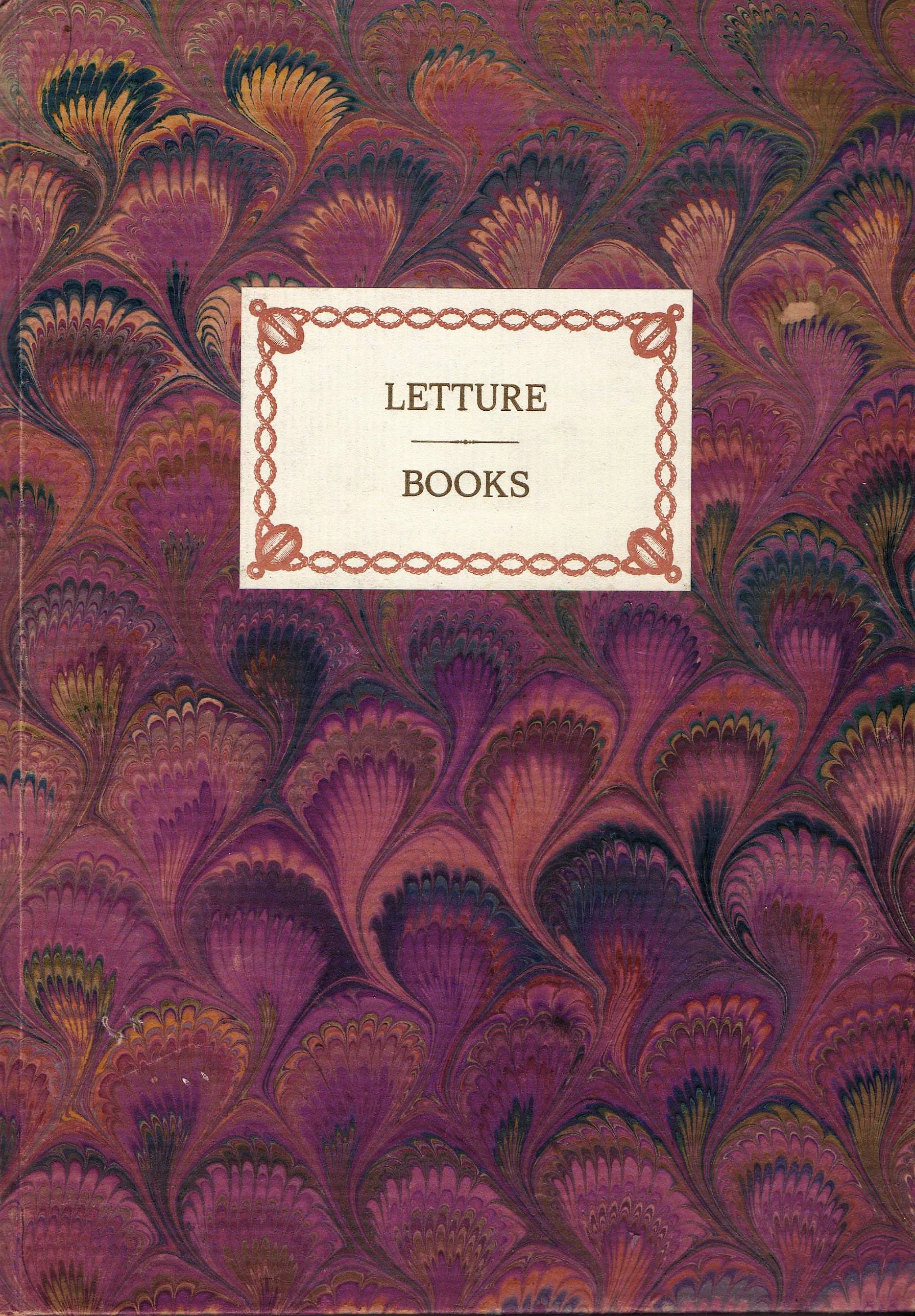
Cover of my book of books
Book of Books

Yet again, I have to account for a long blogging gap on the Landing Book Shelves, as it has been a few months since my last optimistic post. Yet again, I am trying to get back into a reasonable writing routine. In fairness it’s not that I haven’t been writing (or reading for that matter) but that I have been writing letters and emails instead of blog posts. In addition to that are bits of writing for work so I have been attempting to keep my hand in. Sadly, it means that the Landing has been getting neglected and dusty once again. And of course, as I mentioned in my last post, technically the Landing Book Shelves doesn’t exist anymore, being now an imaginary landing. No stairs, no landing, but of course still book shelves, which is the main thing. As is inevitable in a move, much has been relocated and many books are still not really in their ideal place. 

As a form of book blogger procrastination, I have recently been downloading my library borrowing history for the last few years. It’s as good an occupation as any for an autumn evening and my rationale (excuse?) for doing this is that I am going through a phase of puzzling flashes of déjà vu about odd bits of plot and conversation. Had I read this particular book before and forgotten most of it? It is unnerving to think that I may have completely forgotten having read a particular book, so I thought that I would remind myself of what I have read (or at least what library books I have read) in recent years. It’s taken me a while as I have been combing through the list taking out DVDs and books for my fellow readers in the house (they know who they are!)

In addition to this list, as I’ve mentioned before, I used to jot titles in a couple of old notebooks, of my reads each year but that lapsed as a regular habit a few years ago. Hence my interest in my library account history. Having downloaded the library list, I am now not quite sure what to do with it. Somehow, retaining a digital list doesn’t seem to be in keeping with the original notebook list going back into the early 1990s. It lacks a certain bookish charm shall we say. But, the thought of transcribing a couple of hundred or so titles into a notebook is daunting. To add to this digital list, I am accumulating yet another digital list (footprint?) of the audio books that I have downloaded from the library website. Now this list only dates back to earlier in the year so it is much shorter (at least at the moment!).

And finally, let me not forget to mention the list of books that I have yet to read. This is worse than the TBR pile, but it has at least the advantage of taking up less room in the house than a physical stack of books. It does however exist in a variety of places, which makes it a rather slippery thing to audit. I have an official notebook for titles that I come across, but in reality, I tend to jot them down in any notebook that comes to hand. This means that I come across random jottings, months or even years after the fact. Occasionally these notes can be very cryptic, if I only had a bit of information to hand and not complete title, author, publisher etc. Even more cryptic are the dread scraps of paper and Post It notes tucked away for safe keeping!

So, what purpose these lists? And should I just stop keeping them up?  Who is going to be interested in my reading archive? The problem is that I think I would miss compiling my reading lists, even if keeping them up has become patchy in recent years. The lists provide a literary trip down memory lane now and again. It amuses me to remind myself of what I was reading for instance, in 1993, which is the year of my earliest entries. Off the top of my head, I wouldn’t have been able to tell you what I read in any given year, but once I look at the list, it all comes flooding back to me. Well mostly. Sometimes I simply have no recall of a particular book. I was also relieved to pin down one suspected case of déjà vu: I had previously caught snatches of the audio version at my mum’s house.  Phew!

To sum up the situation, I have lots of lists about books (both actual, virtual, read and unread) and I have no idea whether this is a good, necessary or sensible thing or not. Any thoughts?

Ireland Reads Day: Squeezing in a read (or two)

Today’s Landing Tales post is written in support of the Irish Government initiative, #Ireland Reads Day, which is supported by public libraries. So, I want to talk a little about my memories of my early reading life (once upon a time in Birmingham) going back to where it all started, with a quick delve into the Landing Book Shelves. I hope to give you a little insight into what started me off on a lifetime love of books and reading. And of course, today I will certainly be squeezing in a read. Though in fairness, it’s more a case of trying to stop me squeezing in a loooong read…

My relationship with books goes back a long way. Like many people, I can trace that love back to all those old familiar nursery rhymes and songs, many of which will never be forgotten. Then it’s a short step onto children’s poems such as those of AA Milne, whose ‘The King’s Breakfast’ was one of my early favourites. Nowadays, just like the poor old king, ‘I do like a little bit of butter to my bread’ in the mornings! Although, I am also of the view that ‘marmalade is tasty, if it’s very thickly spread’, so I’m at one with the Dairymaid on that issue.

Now, as Paddington Bear afficionados know well, he is also a confirmed marmalade fan, usually keeping a spare marmalade sandwich under his hat for emergencies. Apparently, it’s a well-known fact that bears who come from Darkest Peru like marmalade,

“Where was it you said you’d come from? Peru?”
“That’s right,” said Paddington. “Darkest Peru.”
“Humph!” Mrs. Bird looked thoughtful for a moment. “Then I expect you like marmalade. I’d better get some more from the grocer.”
“There you are! What did I tell you?” cried Judy, as the door shut behind Mrs. Bird. “She does like you.”
“Fancy her knowing I like marmalade,” said Paddington.

If I were to attempt to compile a top ten childhood favourites list, then Paddington may well be at the top. Not least because, as an adult of (ahem, mature) years I can still sit down and chuckle over one of his adventures, which really do stand the test of time. Take a bow, Michael Bond.

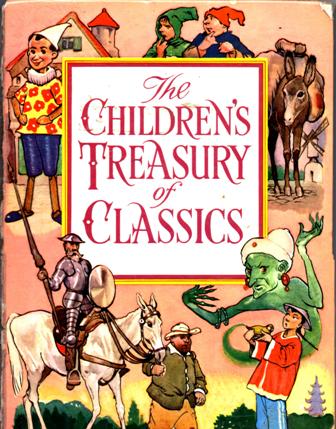
I think that I have probably mentioned on here before, The Treasury of Children’s Classics collection that I had as a child, which still survives, albeit in a very battered state, with the cover selotaped together. It contains a mixture of extracts from classic tales and several poems. It was my first introduction to the brothers Grimm, Hans Christian Anderson, Dickens, Shakespeare (via Lamb’s Tales) the Arabian Nights and Susan Coolidge, to name but a few.

book cover with Aladdin, Pinoccio, Don Quixote
A childhood favourite

But it was the verses that initially drew me into the book, when I was too young to appreciate extracts from Robinson Crusoe and the like. I enjoyed the humorous poems best, such as John Drinkwater’s ‘Washing’, which I am sure struck a chord with many a child. Here’s an extract:

What is all this washing about,
Every day, week in, week out?
From getting up till going to bed,
I’m tired of hearing the same thing said.
Whether I’m dirty or whether I’m not,
Whether the water is cold or hot,
Whether I like or whether I don’t,
Whether I will or whether I won’t.-
“Have you washed your hands, and washed your face?”
I seem to live in the washing place.

Of course, this poem seems particularly innocent and old-fashioned in our Covid era of required hand washing, when handwashing doesn’t just relate to a grubby child in from playing in the garden, who can’t see why a bit of dirt would hurt a jam sandwich.  Or in Paddington’s case it would be sticky paws from eating directly from the marmalade jar.

The themes of washing and general cleanliness link to my final choice for this post (though believe me, I could go on but I have to stop somewhere), which is The Family from One End Street written and illustrated by Eve Garnett (1937).  The family is the Ruggles family, father Joe is a dustman and his wife Rosie takes in laundry:

Mrs Ruggles was a Washerwoman and her husband was a Dustman. “Very suitable too,” she would say, though whether this referred to Mr Ruggles himself, or the fact that they both, so to speak, cleaned up after other people, it was hard to decide.

Mrs Ruggles has a sign outside their little terraced house proclaiming, ‘The Ideal Laundry. Careful Hand Work’ and the house is often full of clothes, steam and folded laundry. Joe and Rosie have seven children, the youngest still a baby so life is busy and full of activity and comic adventures. If you know Alan Ahlberg’s picture book Peepo!, then you would recognise these books as sharing the same working class world of the 1930s and 40s. Clothes drying by the fire, kids playing in the yard and the mother in her pinny doing the chores. Though in Mrs Ruggles’ case, working as we would now term it ‘from home’ as well as doing the family tasks. These stories could be sentimental, dealing as they do with a poor family whose children seem to be constantly taking boots to be repaired, yet who have a happy life. Yet, they aren’t at all saccharine sweet, merely very funny and thoughtful. And Eve Garnett’s black and white sketches speak volumes.

I’ll wrap it up for now, but I’d love to hear about your favourite childhood reads or what you’re reading for #IrelandReads, so drop me a line below if you’d like to do so. Now, I will just go and #SqueezeInARead!

Springtime for Miss Read (and Mrs Griffin)

Cover of Mrs Griffin Sends her Love

A Country collection…

This latest post is going to be a spring-themed blog post, to continue the recent seasonal bent on The Landing’s sister blog, Curiously Creatively. It is also another of those literary digressions where I sideline my TBR Pile in favour of a library discovery (or in this case a re-discovery of sorts). For anyone who came across the Miss Read (real name, Dora Saint) ‘Thrush Green’ or ‘Fairacre’ books many years ago, to discover a relatively new publication is a great find. As is my wont, I was browsing in the local library despite the presence of plenty of unread volumes on my shelves. Having spotted Mrs Griffin Sends her Love in my favourite section for serendipitous discoveries (AKA the ‘Just Returned’ shelf), I threw caution and the TBR pile to the winds. I may have also picked up a couple more books in addition, but let us not go into that little matter now.

Mrs Griffin Sends her Love is a collection of short pieces and articles compiled by Dora Saint’s daughter Jill and her former editor Jenny Dereham, to mark what would have been Mrs Saint’s 100th birthday in 2013. Some of the pieces were originally published elsewhere, some only discovered after Dora Saint’s death. They are a mixture of essays, humorous articles and extracts from longer works. The anthology includes articles on education (originally for the Times Educational Supplement), as well as pieces taken from Tales from a Village School and Time Remembered. Included also is part of a projected book on ‘The Village Year’ and some diary extracts from 1963, begun while Dora and her husband were housebound due to the heavy snow that winter. Just for the record, it has to be said that Mrs Griffin does not get a very big part, given that she provides the collection’s title

My favourite pieces are the ones about village school life: particularly the extracts from Time Remembered and a set of articles gathered under the heading ‘The Joys and Perils of Teaching’. As you might imagine it is the telling of the perils that is the most entertaining to read. In one article entitled ‘Scriptural Matters’ one youngster observes ‘Why didn’t God make us knowing everything? It would have saved a lot of trouble’. Saint describes her own early years as a pupil at a village school after her family moved from London to the Kent countryside. She reminds us how boring school life could be, and how the smallest things could be a fascinating distraction to pupils: ‘Small pieces of pink blotting paper, torn from the precious three-by-four allowed, were surprisingly nice to eat, and occasionally an obliging fly would settle on the arid desk top and create a diversion’.

Dora Saint had a real love of the natural beauties surrounding her on her walk to school as a youngster new to the countryside. The descriptions of the flowers and fauna are a joy to read and it is clear that Saint loved the country sights from a very young age. She recalls her very first experience of arriving in Kent, ’I discovered dog violets and harebells in the North Downs countryside, as well as old friends like buttercups and daisies’. However, Saint was not enamoured of all aspects of country life. She disliked seeing, ‘poor dead rooks hanging upside down from sticks among the crops, their black satin wings opening and shutting macabrely in the wind.’ I can’t say that I blame her, it must have been an unnerving sight for a young child.

Cover of The Year at Thrush Green

Two more Miss Read books …

Having picked up this library book inspired me to have a root around on The Landing shelves and see what Miss Read books I could come up with to re-read. Miss Read is one of the authors that I discovered many years ago, courtesy of my mum’s reading tastes and I borrowed several from our local library as a teenager. We have a couple of Miss Read titles here on The Landing, so I have just been dipping into The Year at Thrush Green, looking at the seasonal changes that she describes. Taking the February entry, here is her observation of signs that spring is beginning in Thrush Green,

Soon yellow primroses would star the woods, and the daffodils would blow their trumpets in the gardens of Thrush Green. Yellow, gold and green, spring’s particular colours, would bring hope again after the bleak black and white of winter.

Miss Read also has an eye to the spring garden, as she describes the vicar wandering in his garden one bright March morning, seeking respite from a particularly trying parishioner. Blackbirds and thrushes are busy looking for food, while daffodils and narcissi promise better things to come and ‘polyanthus plants turned their velvety faces to the morning sunshine, bright yellow, orange, red and a deep mauvish-blue’. Add an almond tree scattering blossom and you have a very inviting seasonal snapshot.

Her evocation of the colours and imagery of spring scenery is delightful. By the merry month of May, ‘the roses were showing plump buds’, wisteria ‘drooped massive tassels against the Cotswold stone’ and along the lanes was ‘cow parsley frothing each side as far as the eye could see’. I particularly like the wisteria analogy as it is one of my favourite climbing plants and there are some lovely examples to enjoy around my part of Dublin.

I think that I will now head into June (in a literary sense if not in reality) and see what is growing in the hedgerows and gardens. I might even catch up with a few Thrush Green inhabitants at the same time. There sure to be a bit of gossip circulating…

Drop a line in the comment box if you are a Miss Read fan!