Following on from the Birmingham related topic of the last post, here is a Dublin flavoured piece to continue the city theme. This is one of those ‘out and about’ pieces that I haven’t done for a long time, though it does have a connection with a book. Inspired by the new Bank Holiday for St Brigid (spring in the air, etc) I began to think about what cultural and historical activities I might undertake this year. A sort of spring resolution as opposed to the New Year variety. This in turn reminded me about one activity that I did with a friend over a year ago, but never got around to mentioning on the blog.
So, several months too late here goes:
On a very pleasant autumn Sunday afternoon I found myself strolling in Dublin city centre, taking part in one of the Henrietta Street walking tours. In case you haven’t come across these Dublin City Council tours before, they focus on the city’s northside Georgian architecture, beginning with Henrietta Street where Georgian Dublin first began to take shape. This street was the earliest development by the Gardiner family, laid out in the 1720s and was named for Henrietta, Duchess of Grafton. The historic building walk was a first for me (thanks Natalie); it was a good introduction to Henrietta Street, somewhere I had never visited. You can book tours of the restored 14 Henrietta Street, which is something that is still on my ‘to do’ list (see above!) Have a look at the museum website for further information as there are usually various events on during the year.
In their heyday, large properties such as those on Henrietta Street housed the families of Members of Parliament attending to their duties and enjoying Dublin’s social whirl. However, changes came about after the Act of Union, which moved parliament from Dublin to London. So the seasonal demand for townhouses was lost; gradually the area’s residences housed members of the legal profession instead. Large Georgian houses such as 14 Henrietta St eventually ended up being divided into tenements for multi-occupancy in the late nineteenth century. The Henrietta Street Museum charts these changes and tells the stories of those that lived there over 300 years of habitation.
The Georgian architecture tour was an excellent introduction to the layout and growth of the Georgian northside, from an engaging and knowledgeable guide. Afterwards I did wish that I had taken notes along the way, but at the time it was enjoyable just to stroll along and listen. We covered quite a bit of ground (literally as well as historically) so I think that stroll probably counted as my daily exercise.Thankfully the weather was kind to us too.
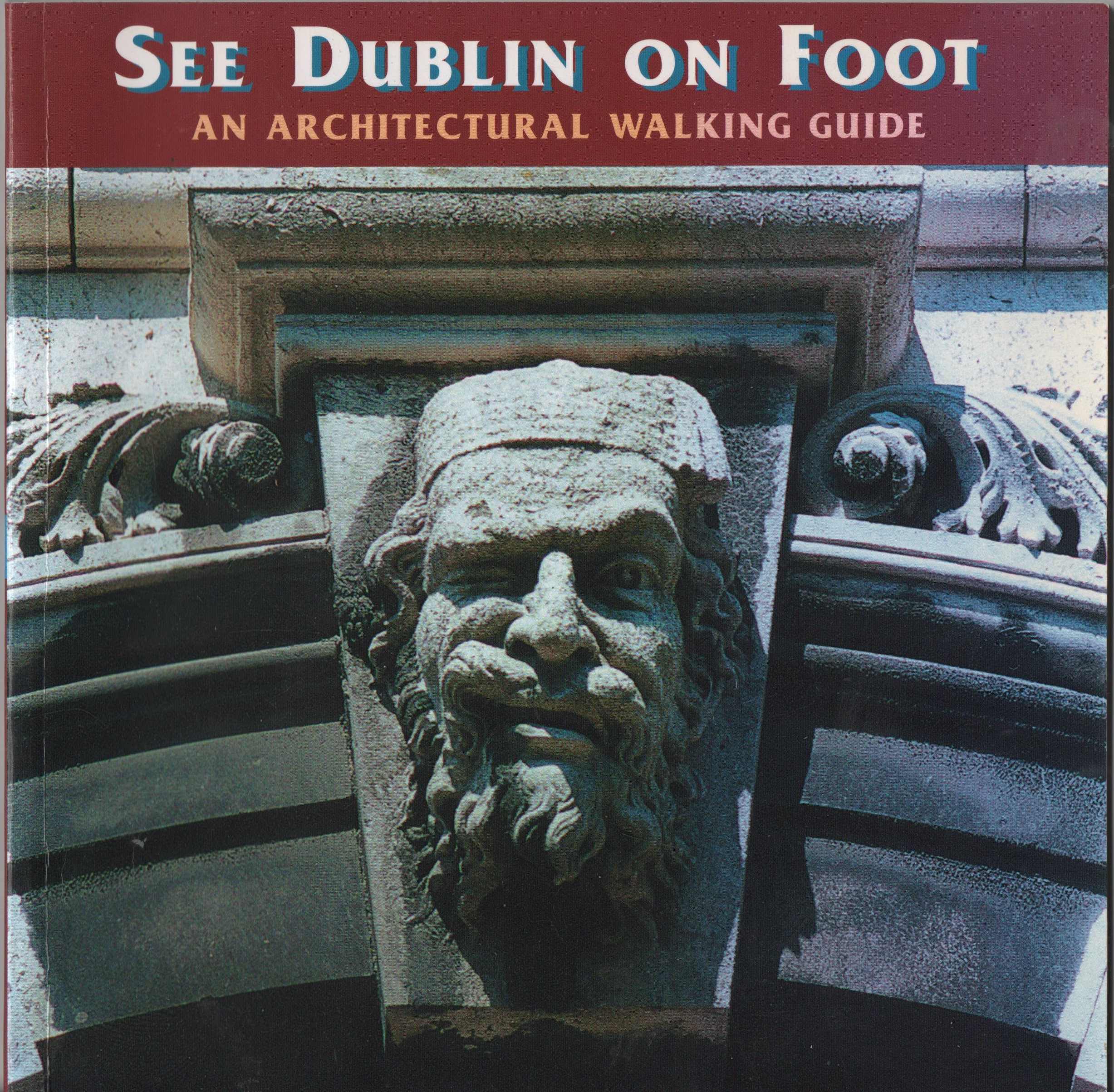
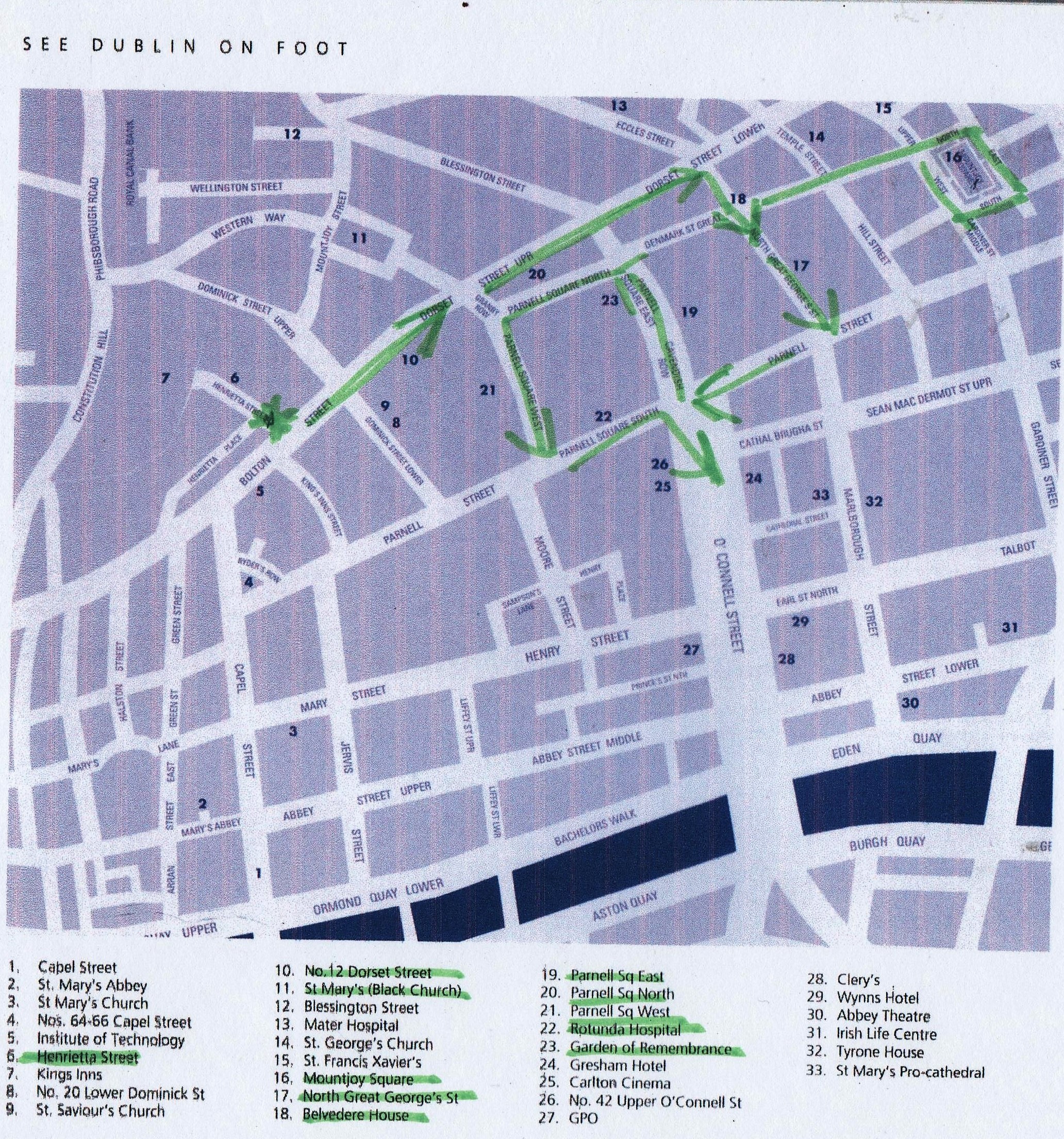
Later on, after getting home, I had a delve into my copy of See Dublin on Foot: An Architectural Walking Guide (Julie Craig). I’ve mentioned this walking guide previously on the blog, when I bought it way back in 2012. It was published by Dublin Civic Trust in 2001, so some of the information is now a little out of date (think Clery’s demise to start with) but I don’t think that an updated edition is available yet.
I was able to read up a bit more on those northside city streets and to plot out on the map where we had been walking. If you look at the map that I have scanned in you will see that we had a good tour of Gardiner’s Dublin (the route I have marked isn’t entirely flowing, but you get the idea). The architectural guidebook gives details of who originally lived in Henrietta Street, so reading that was a nice supplement to the tour. I’ll just mention a couple of residents noted in Craig’s book: Number 7 was built and lived in by Nathaniel Clements, Teller of the Exchequer and MP (1730); he also built numbers 4, 5 and 6. Apparently the first recorded occupant of number 14 was Richard, Third Viscount Molesworth in 1755. However, since that book was written further research may have identified an earlier resident. This house was built by Luke Gardiner as part of a terrace block with numbers 13 and 15 in the early 1740s.
Further Reading
In the Henrietta Street website shop, three new books on the area are now available, published by Dublin City Council Culture Company. Between them, the books cover the rise and fall of Henrietta Street and the people who lived there (from 1750-1979). Each book is by a different author: Georgian Beginnings by Melanie Hayes; Grandeur and Decline by Timothy Murtagh and From Tenement to Suburbia by Donal Fallon. I haven’t yet had a look at them, but plan to do so.
I will let you know if I manage to make a visit to see the interior of 14 Henrietta Street. Has anyone else been to see it? I would love to hear your thoughts on the experience.


 Tales From the Landing Book Shelves
You must be logged in to post a comment.