This novel by Malcolm Saville (1901-1982) represents another dive into my literary past, as Saville’s Lone Pine adventure stories were once great favourites of mine. I have previously written about the Dimsie books after I retrieved Dimsie Among the Prefects from my mother’s house (call it the Landing Book Shelves Annex). Similarly, I picked up this book on my most recent visit. It is the only Lone Pine book still knocking around the family home but I can’t remember exactly when I obtained it. As far as I remember I read most, if not all of the adventures in the series and used to save up my pocket money to buy the paperback editions or else borrowed them from our local library.
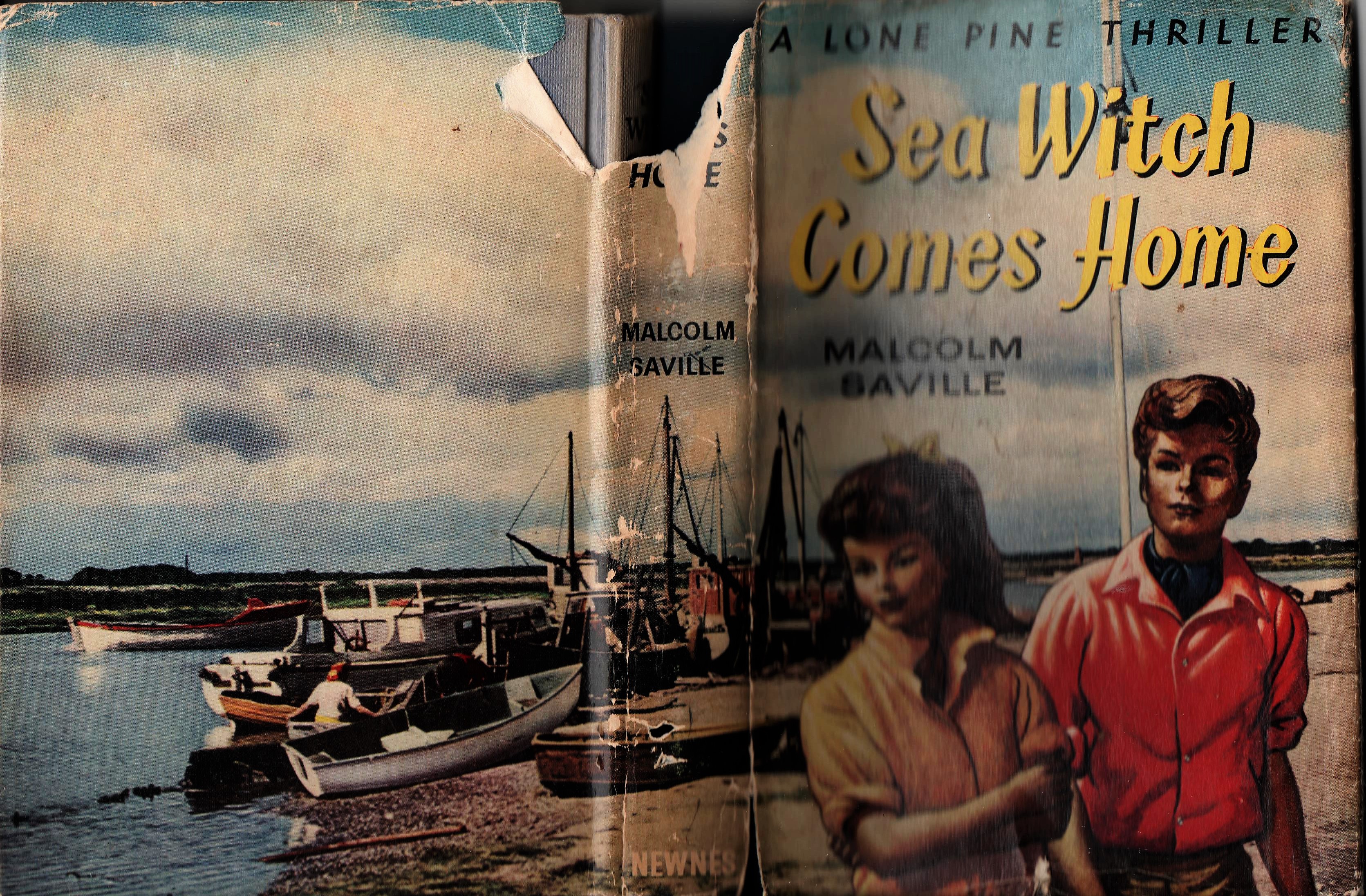
This edition of Sea Witch is a blue cloth-bound hardback, bought as a second-hand copy and with the previous owner’s name stamped inside. It appears to be a first edition (1960) but sadly the jacket’s condition has deteriorated over the years and as you can see from the photo, is quite damaged, so that part of the spine has faded. The book is otherwise in nice condition and the pages have worn the passage of time well. It is a pity that my copy isn’t in better nick as according to ABE Books, a good first edition could sell for as much as eighty-odd pounds. Oh well.
I never read the Lone Pine series in chronological order, the first being Mystery at Witchend (1943), but as each book contained a complete adventure, that never seemed to matter. The books followed the activities of a group of friends who formed a secret society called the Lone Pine Club. The club’s oath was sworn in blood, which was guaranteed to appeal to a child’s love of secret societies. If you recall from a previous post, Dimsie Maitland was a member of the Anti-Soppists society, though I don’t think that any bodily flids were involved in those initiation rites.
On re-reading Sea Witch many years later, I can see both why it appealed to me and why the Lone Pine mysteries followed naturally for me after Enid Blyton’s Famous Five adventure series. The idea of kids having lots of adventures largely without adults (girls got to be part of it too) greatly appealed to me at the time. And as for the thrill of solving mysteries that defeated more experienced hands, well that was the icing on the cake. Now as an adult, it’s slightly mind boggling to re-read and see just how much the kids got up to with just instructions to be home for tea. No mobile phones either!
Several of the Lone Pine books were set in Shropshire, some in Rye in Sussex. My fondness for the Shropshire countryside has its roots in the Lone Pine Stories; I even loved the place-names and wanted so much to visit the Long Mynd and the Stiperstones. Sadly, although I have been to Shropshire on several occasions, I’ve never yet got around to visiting Rye. With its connections to Saville, EF Benson and Henry James, I do feel that a visit is long overdue. The recently installed Blue Plaque, reported in the Rye News, to honour Malcolm Saville provides a fresh incentive to do so.
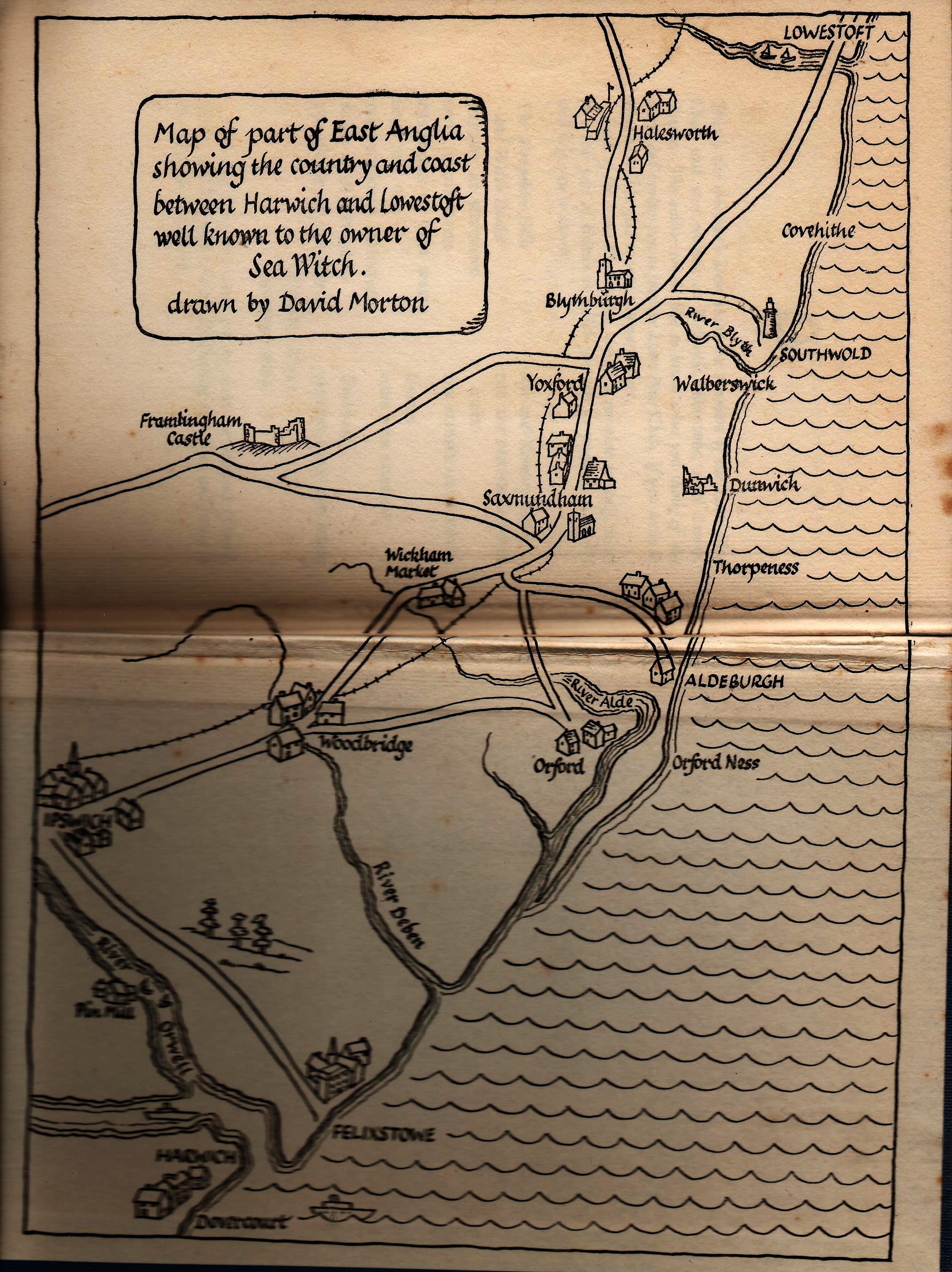
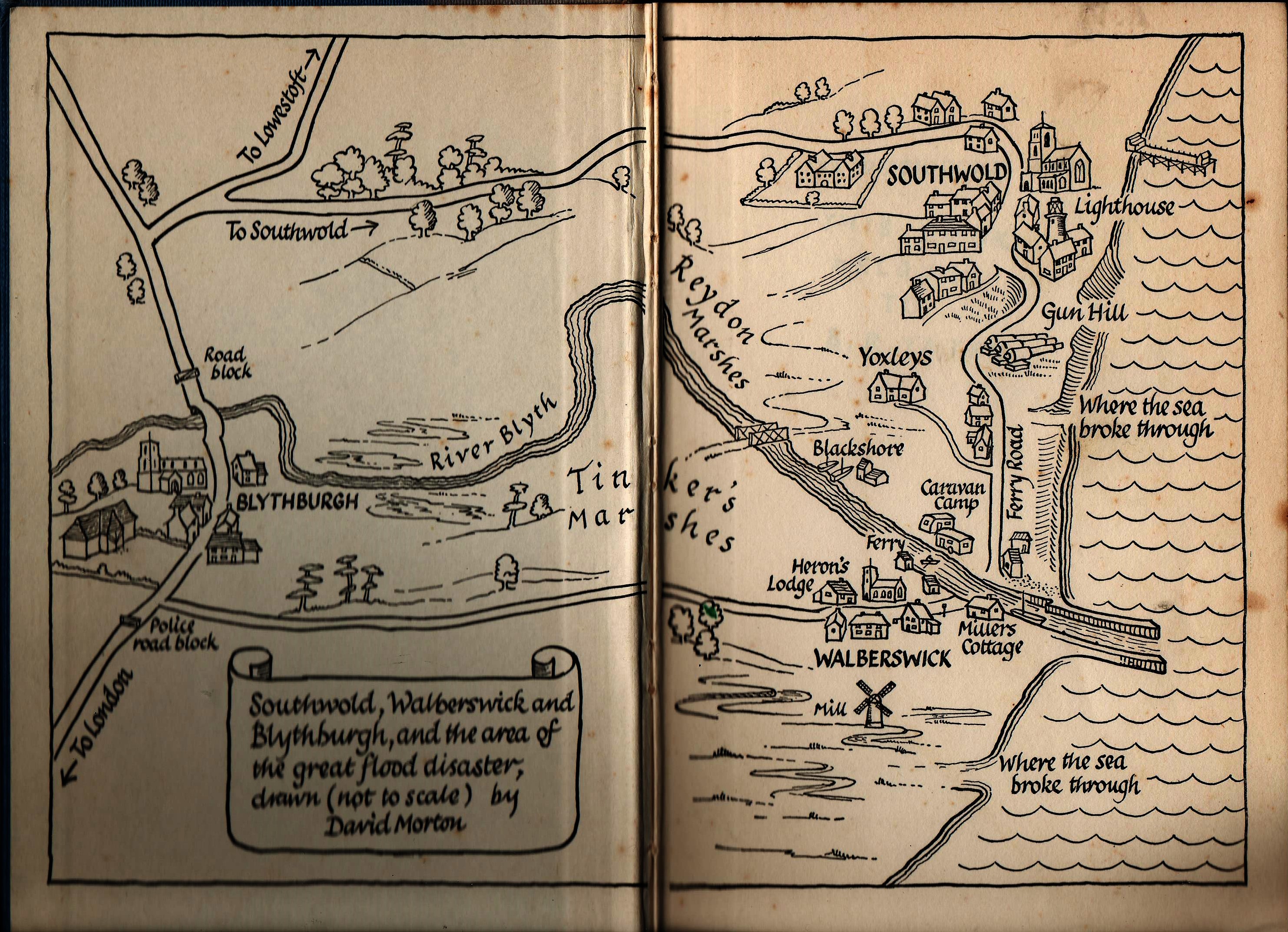
But, returning to The Sea Witch Comes Home, here is a brief plot summary to this Lone Pine adventure for the uninitiated amongst you. This East Anglian-set novel only features three of the club’s nine members, founder member David Morton (16) and his siblings Mary and Richard (Dickie) who are 10-year-old twins. The three head off to a village called Walberswick at the behest of David’s schoolfriend Paul Channing. Paul and his sister Rose are worried about their father who has gone off in his boat The Sea Witch without saying where or why. (And Mrs Morton calmly lets them go off to a house where no adult is around to keep an eye on them!).
As the children try to find answers, they realise that they are not the only ones trying to find Richard Channing. What is he involved in? As well as contending with inquisitive strangers while seeking answers to the mystery, the friends have to deal with a far more dangerous foe: the sea. The climax of the book features a coastal emergency, when the sea breaks through defences in several places, threatening lives and homes. In his foreword, Saville admits to cheating a little in his timing, as the high tides of the autumn equinox occur a bit later than early September, the time period of the story. It does make a dramatic plot element though. I won’t plot spoil, but of course the young detectives win the day and solve the mystery.
I suppose I can blame both Blyton and Saville for a life-long love of crime and mystery novels. The next stop was Agatha Christie, Conan Doyle and the rest was, as they say… history. If anyone is interested in Malcolm Saville’s Lone Pine stories, as well as the many other books that he wrote, then take a look at the website dedicated to his books, Witchend.com. Also, if you are interested in reprints of some of the stories, check out Girls Gone By Publishers to see their current list.


 Tales From the Landing Book Shelves
You must be logged in to post a comment.