Ian Harrow

Gaugin to himself

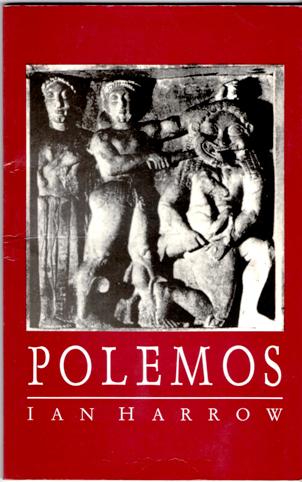
Jacket of Polemos

Eperon Press, 1998

      (1897)

The girl sits on a stone to watch
Salt water brush her sturdy feet,
Cleansing thighs of dust from the road.
Her lips, with faint sea-fruit bouquet
Show, mocking and inflamed, the risk
Was yours. Swift as a day that life
When she asked you to let her go
And you felt the relief of one
Almost sacredly cast down…Here
Suddenly, your longing to be
Disappointed! What else schedules
Of days for, wandering unfree?
Mark with your secreta the sites
Of ghosts; take your place, a cornered
Wolf in a wreck of squealing cats.
More thrown back than resurrected.

My rationale for choosing today’s poem is that as I was typing up the post about Alan Murphy’s verse on Marc Chagall my thoughts strayed to my days studying art history at the University of Central Lancashire. Ian Harrow was one of my lecturers when I started the course in September 1998. It seems a frighteningly long time ago now. I remember choosing Chagall as an essay topic in one of the modules that Ian taught but I have so far stopped short of digging the paper out of my archive. Probably best to let sleeping essays lie.

I’ve had this collection for a while, though I bought it after I had graduated. I’ve chosen the poem on Gaugin, partly to continue the art related theme generally and partly because of the specific topic.

A few years ago He Who Put the Shelves Up bought me a study of Gaugin’s work in Tahiti, Gaugin’s Skirt by Stephen F Eisenman (Thames and Hudson, 1997).  Eisenman’s fascinating book looks at Gaugin’s relationship with Tahiti, depiction of women, colonialism and contemporary Tahitians. Having being prompted by my poetry musing to pick it up again I might add it to my ever growing summer holiday list.

Ian Harrow has  a new collection published this year called Words Take Me (Lapwing Press). I’ve read a couple of poems from this collection on Poetry PF so take a look at the link.

Apologies for the late posting today – I was busy doing a bit of blog maintenance behind the scenes. Now to get working on tomorrow’s choice….
James Joyce

Happy Bloomsday!

As promised my choice of James Joyce’s verse today will mark today’s event (though Bloomsday seems to have begun to stretch out over a few days as though it refuses to be confined by a mere twenty-four hours). I probably won’t actually be doing anything Bloomsday-ish though, as I will be at the Dalkey Book Festival for a couple of the Kids’ events. I just hope the weather is kind to us. But back to James Joyce…

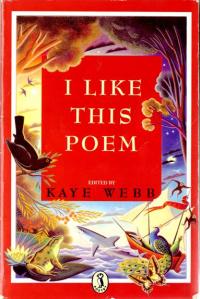
For this poem I am returning to one of the anthologies I have used before, selected by Kaye Webb from children’s suggestions of their favourite poems.

Chamber Music

book cover of I like this Poem by Kaye Webb

Another #Poetryinjune choice


Lean out of the window,
Golden hair,
I hear you singing
A merry air.

My book is closed;
I read no more,
Watching the fire dance
On the floor.

I have left my books:
I have left my room:
For I heard you singing
Through the gloom.

Singing and singing
A merry air.
Lean out of the window,
Golden hair.

I was surprised to see that this poem was from James Joyce; it doesn’t strike me as the sort of piece he would write. It has such a gentle, tender story book quality. But then I have to confess to not being a very experienced Joycean so perhaps my impression is wide of the mark. The poem was originally the title poem of a collection of love poems published in 1907 by Elkin Matthews.

Joyce later said to his wife, ‘ When I wrote [Chamber Music], I was a lonely boy, walking about by myself at night and thinking that one day a girl would love me.’  There is also a more earthy tale about a connection with chamber pots which may or may not have any basis in fact. Appropriately enough, considering the date today,  In Ulysses, Leopold Bloom reflects, ‘Chamber music. Could make a pun on that.’

The young reader who put forward this choice in the anthology said it was, ‘because it reminds me of the best fairy tales, such as Rapunzel singing from a turret window at dusk…It is reassuringly old-fashioned and chivalrous…quietly inspiring and my favourite poem’. (Charlotte Woodward in I like this poem). One of the aspects I love about this collection is reading the comments made by the children (I wonder where they all are now – do they still read poetry?) showing their engagement and enthusiasm with the written word.

I’ll leave you to enjoy the rest of your weekend, wherever you are. Regards to all James Joyce aficionados celebrating Bloomsday.

Alan Murphy on Marc Chagall

Catalogue for Marc Chagall exhibition

Spotlight on Chagall

The back story of today’s #PoetryinJune choice of Alan Murphy is that yesterday I heard from a friend about a major exhibition of Marc Chagall’s (1887-1985) work that has just moved to Tate Liverpool. The timing couldn’t be better as I usually go over to the UK on a summer visit. I realised with a vague sense of shock that it was as long ago as 1998 that I went to London to see ‘Chagall, Love and the Stage’ at the Royal Academy. It was a stunning experience so I am keen on fitting in a trip to Liverpool with our summer travel plans.

This then leads me to Alan Murphy, whom we first saw at one of the Mountains to Sea Festival events at the County Hall a couple of years ago. I bought his collection The Mona Lisa’s on our Fridge (2009) which the author kindly signed for my daughter. Apart from the title poem, the book also contains two other art related poems; one on Picasso and one on Chagall. I will just quote the first and last verses to give you an idea.

According to Marc Chagallbook cover of The Mona Lisa's on our Fridge

How does it rain if the rain runs upwards?
 -in the mind of Marc Chagall.
How can a bun turn into the sun?
 -by the power of Marc Chagall.
And when does a town recline on a cloud?
 -when its world is Marc Chagall’s.

So doff your hat but hold on to your head;
Just lose your logical limits instead,
And gamely greet green, orange and red
 -the music of Marc Chagall.

My 1998 exhibition guide says of Chagall’s Russian – Jewish background that ‘An intense belief in the supernatural and miracles was part of everyday life’ and this is expressed in his paintings. Alan Murphy’s poem beautifully translates Marc Chagall’s scenes into words and puts over the sheer delight and exuberance of the paintings where ‘gravity wanes and withers’ (2nd verse). If you had never seen a Chagall painting, this poem would be a great introduction as it conjures up the surreal world that you find in his art. Alan Murphy is an artist as well as a writer and I think that his engagement with art comes across in this poem in a way that children can appreciate. Adults (well me anyway) can enjoy the fun with art too; there’s a also great poem entitled Pablo Picasso in this collection which is fitting as he and Chagall were artistic rivals.

Alan Murphy is based in Co Waterford and has published a second volume of poetry for children Psychosilly in 2011.

I hope you’re having a good weekend so far. After today’s piece on Chagall, drop by tomorrow for a poem to commemorate Bloomsday.

Update August 2013:

I did actually get to see the Tate Liverpool exhibition this month and bought the catalogue which I have featured in a blog post on Chagall. 


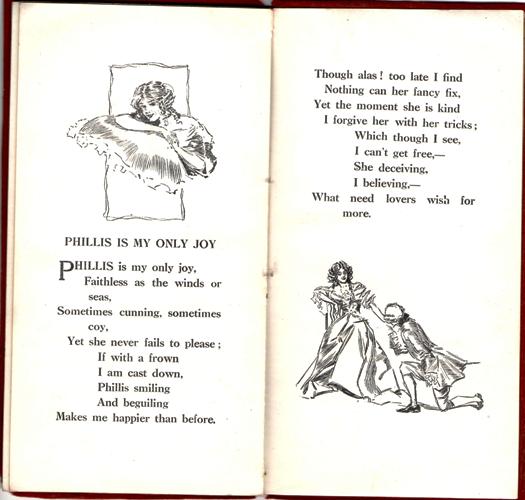
Sedley’s Faithless Phillis

After yesterday’s nod towards the Yeats Day celebrations I have moved in a rather frivolous direction and have a short poem from a Restoration poet, Sir Charles Sedley (1639-1701). This is one of the poems I mentioned as being in my little mini red book called Come Live with Me, along with Christopher Marlowe’s Passionate Shepherd.

text of poem by Charles Sedley

Faithless Phillis

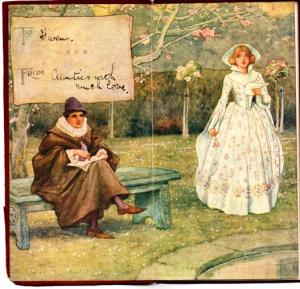
One of the things I love about this book are the decorated front and end papers and this is a scan of the front of the book, showing a dedication to a previous owner. So, not only do I wonder who the faithless Phillis might have been; I also wonder who Gwen was, who once owned this book and then gave it away at some point.

Frontspiece illustration of a poet and lady

Poet and his Lady

You might also be interested in knowing a little more about Sir Charles who was one of Charles II’s ministers, ending up as the Speaker of the House of Commons.  He also got up to various activities of a roistering nature as I discovered courtesy of a lovely history blog Two Nerdy History Girls. Look away now if you’re easily shocked. I believe Samuel Pepys had something to say on the subject, so I must look that reference up. Pepys also lives on the Landing Book Shelves and is a very old resident on the TBR Pile. Tackling his diaries would be a Reading Challenge all by itself so I will probably save him for another year.

I’ll now go away and work on an idea for tomorrow’s choice of poem for #PoetryinJune. Any favourites so far? Let me know if you have one.

W.B.Yeats

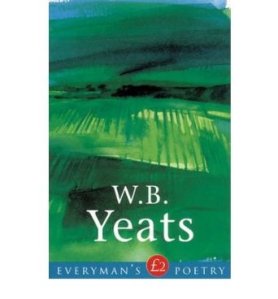
Having reached day thirteen of my #PoetryinJune Reading Challenge, we come to another literary festival marking the life of a famous poet. I have therefore decided to choose a poem by W.B. Yeats (1865-1939) in honour of Yeats Day today. This was originally the title poem from the Cuala Press volume (published in 1904) that I mentioned in my feature on Lily and Lolly Yeats. I have copied the text of this short poem from my Everyman’s Poetry edition which contains a selection of verse spanning Yeats’ career.

I first encountered Yeats’ work on my ‘O’ Level literature syllabus, which was more years ago than I care to remember. We also studied W.H. Auden and Wilfred Owen’s poetry, though sadly I don’t have a copy of the text-book. Since Auden has already had a spot in my #PoetryinJune series, I should certainly make room for Owen at some point this month. But in the meantime I hope you enjoy this evocative piece from W.B. As someone who tries to attract our stripey furry friends to the garden, I love the thought of the bees humming in the flowers in this scene. The contrast of the lime-tree flowers with paper flowers a few lines later seems to me to point up the beauties of the country.

book cover of Yeats Selected Poems

Everyman paperback edition, 1997

In the Seven Woods

I have heard the pigeons of the Seven Woods,
Make their faint thunder, and the garden bees
Hum in the lime-tree flowers; and put away
The unavailing outcries and the old bitterness
That empty the heart. I have forgotten awhile
Tara uprooted, and new commonness
Upon the throne and crying about the streets
And hanging its paper flowers from post to post
Because it is alone of all things happy.
I am contented, for I know that Quiet
Wanders laughing and eating her wild heart
Among pigeons and bees, while that Great Archer,
Who but awaits His hour to shoot, still hangs
 A cloudy quiver over Pairc-na-lee.

There’s lots going on in Sligo today to honour its former resident and his creative siblings. The Yeats Society in Sligo was formed in 1958 ‘to promote appreciation of his poetry and other writings, and an awareness of the other members of this talented family‘. The society, based in the Yeats Memorial Building has been running both a summer and a winter school for several years as well as being involved in many other literary and cultural activities.

Click on the Press Release Link for more information about the Second Annual Yeats Day events in Sligo which runs from 8am until late.

Now, I must go and peruse the shelves for tomorrow’s #PoetryinJune verse…

Robert Louis Stevenson

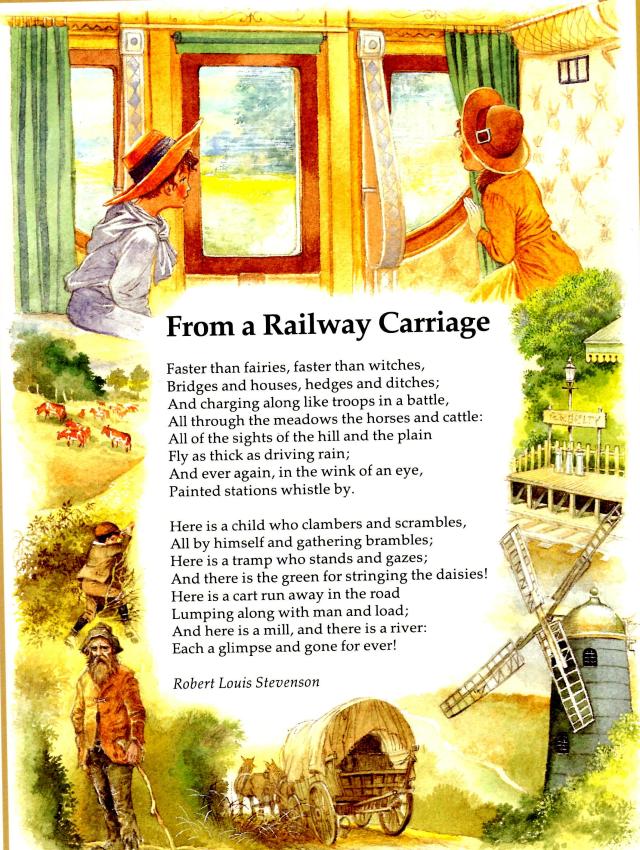
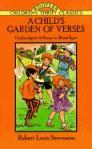
Yesterday I promised you one more poem about trains and here it is, right on time, from Robert Louis Stevenson’s (1850-1894) A Child’s Garden of Verses. This collection was originally published in 1885 under the title Penny Whistles. We have a nice Dover Publications edition (1992) with black and white illustrations but I have scanned the poem from an illustrated anthology, as the verse’s page has such an attractive border design.

The illustrations in A Children’s Book of Verse (Brimax Books 1978) are by Eric Kincaid and the poems selected by Marjorie Rogers.  This is a wonderful collection of poems, ‘Travel to the end of the rainbow, soar with eagles, fly to the moon, shiver with Old Jack Frost, delight in the animal kingdom, tremble in the underworld, dance with the fairies at the bottom of the garden or watch the seasons change’…you can also go on a train journey….

Text of Stevenson's Poem from a railway carriage

A wonderful train journey…

I like so many poems in A Child’s Garden of Verses that I opted for From a Railway Carriage since it had the dual effect of tying in with the previous train poems as well as meaning that I didn’t have to make a difficult choice. The collection encompasses many themes of childhood, such as playing games, going to bed, exploring and imaginary places. Poems such as My Bed is a Boat, The Land of Counterpane and My Shadow are timeless in their evocation of childish concerns.

And here’s a little extra one (simply because it amuses me):

book cover of A Child's Garden of Verses

Childhood…

Auntie’s Skirts

Whenever Auntie moves around,
Her dresses make a curious sound;
They trail behind her up the floor,
And trundle after through the door.

(number xv in the Dover edition)

The verse conjures up a wonderful image; I hope that auntie never got her skirts caught up in the door…

I’ll leave you with a link to the Robert Louis Stevenson Website which is a comprehensive source of information on RLS and his work.

Look out for more #PoetryinJune verse tomorrow!

Old Possum: TS Eliot

Now, you may have thought ‘Ah ha, this is going to be a poem about a cat’. And you would indeed be right but it is also a poem that continues the train theme that I began yesterday. There are many magnificent cats (I might mention Cat Morgan, I might mention Mr Mistoffelees) in T.S. Eliot’s poems but only one ‘Railway Cat’ and that is the incomparable ‘Skimbleshanks: The Railway Cat’ Here’s the first part of Eliot’s poem:

text of T.S. Eliot's poem SkimbleshanksOld Possum’s Book of Practical Cats was first published by Faber in 1939 and re-published with additional poems in 1954.  Apparently T.S.Eliot first wrote the cat poems during the 1930s and included them in letters to his God children under the name ‘Old Possum’. Lucky kids! An illustrated edition of the Practical Cats (drawings by Nicholas Bentley) was first published in 1940 and re-titled in 1974 as ‘The Illustrated Old Possum’. More recently Axel Scheffler has illustrated Old Possum (2009) but I have a great fondness for Bentley’s cats in preference.

In this poem, there is again a great rhythm for reading aloud as the sense of the train journey up to Scotland is evoked. Mind you, I think T.S. Eliot was taking a few liberties with the night mail service, since I seem to recall from the GPO film that it carried no passengers. I believe there used to be a sleeper train travelling up and down but whether that carried mail or not, I doubt if it had as dedicated an employee as Skimbleshanks: The Railway Cat.

Book jacket of Old Possum's Practical Cats The first Old Possum cat that I recall was ‘Macavity: The Mystery Cat’ which I remember my mum reciting to us when we were young. I’ve had a couple of copies of Old Possum’s over the years and this present book  replaces one that mysteriously went astray during a house move (a case of the ‘hidden paw’ perhaps?).

I’m thinking of squeezing in one more train poem tomorrow on #PoetryinJune before moving onto a new topic so look out for that tomorrow. Meanwhile, any comments about your favourite poems on trains, cats or anything else would be very welcome!

Now, back to T.S. Eliot (AKA Old Possum…)

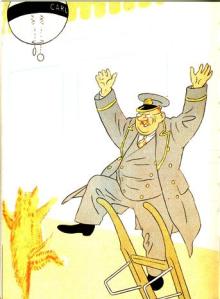
Skimbleshanks and the stationmaster

Skimble and the stationmaster


Letters and Trains: Auden

The Night Mail by W.H. Auden (1907- 1973) combines two of my favourites things, letters and train journeys. It was written to accompany a General Post Office (GPO) film made in 1936 about a London, Midland and Scottish Railway (LMS) mail train from London to Scotland. In the film, the music was composed by Benjamin Britten and The Night Mail was recited by John Grierson.

As the poem was written to tie in so closely with a train journey it has a great rhythm for reading aloud.  At this point in the poem, the Night Mail train has almost reached Glasgow, with postal workers beavering away on board all night. My dad used to be a postman (though he never worked on the night mail train) and I ordered the DVD of the film for him a couple of years ago (see a clip below) as a Father’s Day gift.

Of course, the fascinating thing about this poem is that it shows just how much people would have relied on the post for all sorts of things that we receive digitally these days. But where’s the romance in an email?

I’ve taken this poem from a collection that I picked up in a charity shop in Dublin a few years ago. It’s an interesting collection in that the editor Kaye Webb (1914- 1996) made her selection from around 1,000 recommendations from children so it is genuinely a children’s poetry book. I may return to it later in the month as it contains a few old favourites of mine.

The Night Mail (part III)

book cover of I Like this poem

Puffin Books, 1979

Letters of thanks, letters from banks,
Letters of joy from girl and boy
Receipted bills and invitations
To inspect new stock or visit relations,
And applications for situations
And timid lovers’ declarations
And gossip, gossip from all the nations,
News circumstantial, news financial,
Letters with holiday snaps to enlarge in,
Letters with faces scrawled in the margin,
Letters from uncles, cousins, and aunts,
Letters to Scotland from the South of France,
Letters of condolence to Highlands and Lowlands,
Notes from overseas to Hebrides –

Written on paper of every hue,
The pink, the violet, the white and the blue,
The chatty, the catty, the boring, adoring,
The cold and official and the heart outpouring,
Clever, stupid, short and long,
The typed and printed and the spelt all wrong,

And I love the last lines – they always make me a little teary –

And none will hear the postman’s knock
Without a quickening of the heart,
For who can bear to feel himself forgotten?

I thought I’d include a clip from the original GPO film that features the poem. This is the final section of the film:

Credits: clip taken from YouTube with thanks (uploaded June 2008 by Stephen Dowd)

Now, go on – write a letter to someone today!

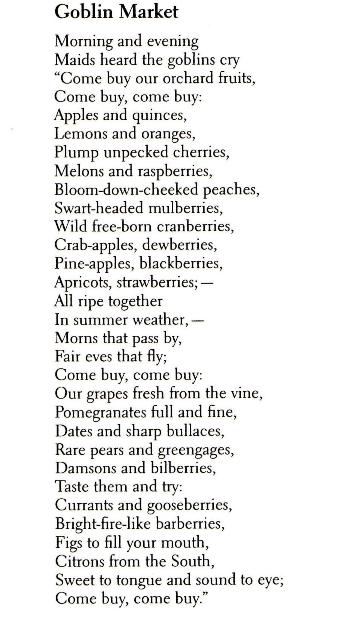
Goblin Market

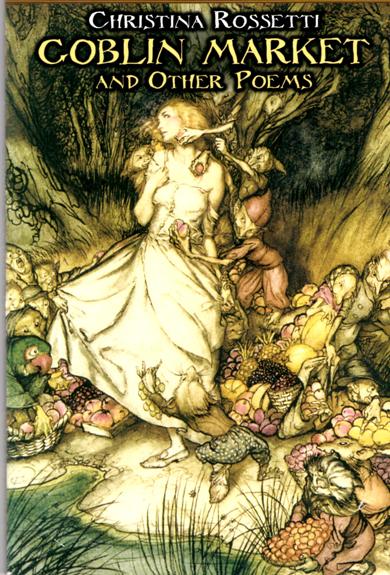
This will be the last fairy or other-worldly related poem for a while at least (honest). ‘Goblin Market’ does however, not only tie in with the themes of enchantment on recent days, but also because Christina Rossetti (1830-1894) inherited the mantle of Britain’s most famous female poet from Elizabeth Barrett Browning when she published this poem in 1862. I’ll talk more about Rossetti in a future post, but in the meantime here is a piece from her best known work.

Dover Thrift Edition, 1994

Dover Thrift Edition, 1994

I have only included a small part of Rossetti’s  long poem and I decided to scan in the text from my daughter’s edition of Goblin Market as the type seems pretty clear. Let me know if it doesn’t seem to work with your browser. I mentioned the Dover editions previously and I am a big fan of this publisher’s reasonably priced classic re-prints.

rossetti

Of course, all of those luscious sounding fruits are only there to tempt the unwary, in this case two sisters named Laura and Lizzie who hear the call of the goblins touting their wares. Their cries of ‘come buy, come buy’ have an effect on one of the sisters but I won’t tell you which one just in case you don’t know the tale. Do read it if you get the chance.

That’s all from my Poetry in June sequence for today, I’ll leave you to the remainder of your weekend – but watch out for goblins selling unusually juicy produce if you are visiting any farmer’s markets today… 

Christopher Marlowe

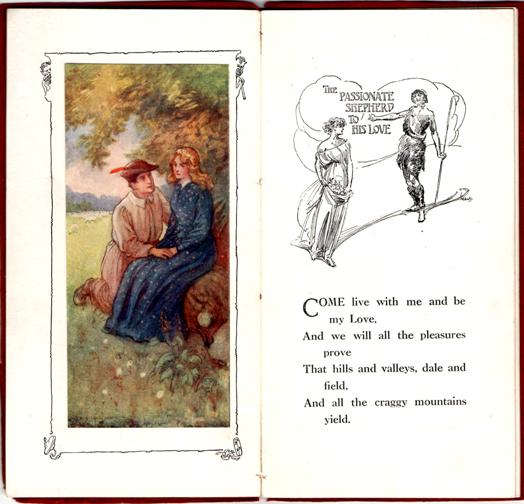
Today’s featured poem comes from Christopher (Kit) Marlowe (1564-1593) to coincide with Marlowe Day which is celebrated in Canterbury by the Marlowe Society every year. I have The Passionate Shepherd to his Love in more than one anthology, but my favourite example is the one illustrated here. There are just two further poems in this mini-collection which has no date, just the words:

Book jacket in red suede

An intriguing volume

London & Glasgow
Collins Clear-Type Press
on the title page. No editor or illustrator (line drawings and colour plates) is credited either so I have always been quite intrigued by it. The cover is red (though rather worn now) with a nice suede-like texture though I don’t know what material it is actually made from. It is another of my book sale acquisitions from several years ago and it has survived both house and country moves since taking up residence with me.

I have scanned part of the poem and its illustration to give you an idea of the style of the reproduction and I might include the remaining two poems (by different writers) later in the month. The Marlowe Society has plenty of information on Marlowe’s life and career and also discusses its position on the on going debate about the question of the authorship of Shakespeare’s plays. A few years ago I read Tamburlaine Must Die (2004) an excellent novella by Louise Welsh about the mysterious events surrounding Marlowe’s untimely death. Nobody will ever really know what happened but various writers have put forward their theories based upon what little evidence exists.

I know I’m beginning to sound like a school reading list in these posts, with suggestions for further reading but I find it difficult to resist the temptation to pass on ideas for a good read. Bearing that in mind, you could give The Reckoning: The Murder of Christopher Marlowe (1992) by Charles Nicholl a try.

First verse with illustration of two lovers

Beautifully illustrated

The final verse reads:

The Shepherd swains shall dance
        and sing
For thy delight each May-morn-
        ing:
If these delights thy mind may
      move,
Then live with me and be my
      Love.

 8th June is Marlowe Day – see you tomorrow for more Poetry in June.