The Swerve

The Swerve:

This book was mentioned previously in a post that I have re-blogged from Interesting Literature. The writer of Book Shares subsequently urged me to get around to reading The Swerve, so I may have to move it up the pecking order a little. This also means yet again tackling the technical issue of reading books that aren’t actually part of the Landing Book Shelves TBR Pile.

But, I’m pretty sure I gave myself a generous exclusion clause…TBR Pile? What TBR Pile?!

bfootgrrl's avatarBook Shares

I always thought I received an above-average education from my rural Pennsylvania high school and from the state college just a few miles away. After all, many people I met after college didn’t seem to know much or care about literature, music, art, language, or history, not to the extent that I did. Yet, as I made my way in the world, I learned that I was sorely deficient in one area: classical antiquitySwerve_TipIn_FINAL.indd. I had no clue whether Virgil was Greek or Roman; whether Aristophanes wrote in the same century as Sophocles or Euripides, much less what they wrote; who sent the big wooden horse into Troy; why Rome was a republic but all the leaders seemed to be emperors; what Plato said that was different from Socrates; and I hadn’t even heard of Herodotus, Thucydides, Polybius, or Lucretius.

I picked up some info along the way, and…

View original post 711 more words

Landing Author: Bethany Dawson

Today’s post contains a guest piece from debut author Bethany Dawson with whom I first made contact via good old Twitter (@storiesbybeth). I was given a copy of her novel My Father’s House (Liberties Press, 2013) by the publishers earlier this year, and upon reading it, I was very impressed by its literary quality.

For those of you who haven’t read My Father’s House, the novel’s plot centres on Robbie Hanright’s return from Dublin to his family home in County Down when he learns of his father’s illness. Robbie turned his back on the family farm, his parents and two sisters to make a new life for himself a few years previously.

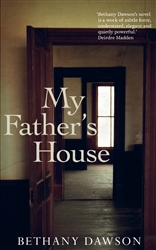
book jacket of My Father's House

An Evocative Image..

As the narrative unfolds we learn more about what he left behind and why he chose to do so. Time has moved on since Robbie fled to Dublin and things and people have changed back home so he has much to absorb and to reflect upon. Robbie meets faces from the past and has to come to terms with his actions. But will he learn from the past?

This is a deceptively quiet novel where the focus is upon relationships with family and friends. The reason I say ‘deceptively’ is because there is a huge depth of emotion conveyed within an ostensibly straightforward series of events. The effect builds throughout the novel to satisfying effect. The layers of the characters are gradually revealed and I found that the more I knew about them, the more I wanted to know. I don’t want to reveal too many of the plot details so I won’t tell you any more.

Bethany Dawson has written a piece especially for The Landing in which she discusses her characters and her readers’ responses to them:

Muddling through: characterisation in My Father’s House

I have found peoples’ response to the characters in My Father’s House very interesting. One reader said she finished the novel feeling sad that there hadn’t been a happier ending. Another said she wished the main character, Robbie, had just ‘grown a set’.

My fascination with people and how they relate to one another is the centre from which my book flows. Several thousand words into my original manuscript I felt as though I knew my characters pretty well. By the end of the three years it took to complete the writing of the novel, I had spent far too much time with them.

Robbie is the kind of man I hoped would be better but always left me feeling slightly disappointed. His relationship with his father, John, is complex, and both their Northern Irish identity and the shadow of sickness intensify the difficulties they have connecting. I found it wonderfully challenging to write scenes with the two of them. The culture of sweeping things under the carpet means so little is actually said and at times I found the tension unbearable.

Robbie’s mother is a refreshing example of someone who took the opportunity to change. A few readers found her transformation from dowdy housewife to a woman with a young lover who keeps ostrich feathers on her dresser quite amusing.

I wanted readers to see their brothers, sisters, fathers, mothers and grandparents reflected in my characters. Although the story is a work of fiction, there are truths reflected in it with which most people can identify. In general, the characters muddle through a very difficult time and try, quite unsuccessfully at times, to work out how to relate to one another. By the final page of the novel some things are resolved but most are not, and in this way I hope I have been true to how the majority of real life stories come to an end.

BIO

Bethany Dawson

Bethany Dawson

Bethany Dawson released her debut novel My Father’s House last month. She completed a Master of Philosophy in Creative Writing at Trinity College, Dublin in 2007. She works as the Assistant Editor of The Zimbabwean, an independent newspaper produced in the UK. She currently lives in Belfast, Northern Ireland with her husband and son, but has spent time living in both Zimbabwe and South Africa.

Bethany blogs at http://www.storiesbybethany.blogspot.ie/ and if you want to take a look at the Liberties Press website, she has recorded a promotional video for My Father’s House.

Many thanks to Bethany Dawson for contributing to The Landing

Photo credit: Carl Whinnery

UPDATE – June 2013 –

Bethany Dawson is featured in this month’s edition of The Gloss magazine talking about living and travelling in South Africa. You can click on The Gloss website for an extract of the article.

Dolls on The Landing: Helen Clare

After writing a piece recently on Tara’s Palace for the Irish News Review I thought I would squeeze in a dolls’ house related post to further indulge my memories of childhood fantasies. Was I the only child who wished that some magic spell would turn me small enough to be able enter toy houses and shops? I doubt it very much. The dolls’ house stories by Helen Clare were entirely responsible for my particular fantasy. I so much wanted to be small enough to visit the doll’s bungalow that my dad had made for my birthday. Alas, it wasn’t to be!

In Five Dolls in a House, (first published 1953) Elizabeth however, does exactly that. Magically she finds herself walking up the path to the front door and knocking. As she does so, she hears the voices of the dolls within:

And without thinking twice about it, Elizabeth walked into the house. She said nothing (she was too surprised) but followed the red-cheeked person into the house. 

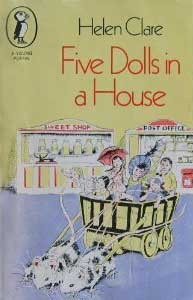
Five Dolls in a House

Puffin edition, 1964, reprinted 1978.

If you have never met the dolls in Elizabeth’s dolls’ house then let me briefly introduce you:

Vanessa (she of the red cheeks) is rather bossily in charge of the household and is the daughter of a Duke (allegedly);

Jacqueline is the French paying guest who possesses lovely lace underwear;

Jane is a very sweet-tempered doll who always wears a long green nightdress:

Lupin by contrast is always clad solely in a blue woollen vest with a lot of dropped stitches;

Amanda is the lively, mischievous one who quarrels with Vanessa;

And last, but by no means least, is the monkey living on the roof who has been known to dress up as a duchess on occasion.

They all have lots of adventures with Elizabeth (in the guise of Mrs Small the landlady) including getting measles, acquiring two white mice to pull a trap and spring cleaning in their own inimitable style. I’m sure that Vanessa would have loved Tara’s Palace. She would have thought it ‘most genteel’, coming as she did from a castle (Cranberry Castle in fact).

I think all of the stories are now out of print, but they are well worth tracking down. My mum found the copy we have in Oxfam in Birmingham and we were lucky enough to spot even more adventures at last year’s Trinity College Book Sale.  All of the stories are complemented by Cecil Leslie’s delightful line drawings.

Do you have a favourite dolls’ house story? Let me know…

Naipaul and a Quick Landing Eight Recap

As I am feeling very spring-like this on this lovely sunny morn, I will embark upon a fresh assault on the remaining titles on my Landing Eight challenge list.  Put it down to the sense of anticipation from knowing that the month of May is only hours away around the corner.

Just to recap for those of you not paying attention at the back, here is the original list:

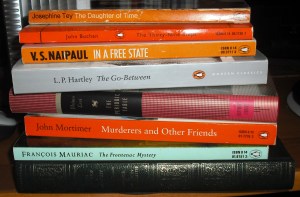
A pile of classic novels

Progress…


The Daughter of Time Josephine Tey (Orange Penguin)

The Frontenac Mystery François Mauriac (20th Century Classics Penguin)

The Go-Between L P Hartley (Penguin Classics)

In a Free State V S Naipaul (Orange Penguin)

The Periodic Table Primo Levi (Everyman)

The Diary of a Nobody George & Weedon Grossmith (Guild Publishing)

Murderers and Other Friends John Mortimer (Orange Penguin)

The Thirty-Nine Steps John Buchan (Orange Penguin)

I have now reached the exciting final stages of this challenge which dates back to last summer (was it really that long ago?), with only two more books to read. What happens after completion of my task is anyone’s guess at this stage. I will have to come up with a fresh mechanism for tackling the unread books on The Landing I suppose. Though as I have mentioned in a previous post, I do have a plan to defect to The Bedroom Bookshelves during the summer to finish reading Dorothy Dunnett’s Niccolo series.

In a Free State

Next choice…

In the meantime I will be settling down to read  V.S. Naipaul’s In a Free State which we have in an Orange Penguin edition from 1983 (reprint of the 1973 edition). It was originally published in 1971 by Andre Deutsch and won the Booker Prize of that year. In this volume the novella ‘In a Free State’ is preceded by two shorter pieces ‘One out of Many’ and ‘Tell Me Who to Kill’ and all of these pieces are bracketed by a prologue and an epilogue. In a more recent Pan Macmillan edition from 2011, the title piece is published on its own, a decision endorsed by the author as his preface makes clear.

This is not only a so far unread book, but also an as yet unread author for me so will be a first on two counts. It may well be that I should have begun with one of Naipaul’s earlier books such as A House for Mr Biswas (1961) but I have to abide by the terms of my challenge. As you probably know, Naipaul has generated as much sharply critical comment as plaudits for his work but I will talk more about that next time I post.

For now, I will just get on with the book! If anyone out there has read it, you’re welcome to drop a line in the comment box with your thoughts. 

And a ‘Happy May Day’ for tomorrow – dancing around Maypoles is optional! 

30 Day Book Challenge – day 9: A book I’ve read more than once

I’ve shared this post, from a great blog that I follow, as it’s nice to see that someone else is a fan of a book previously featured on The Landing.

Maybe one day I’ll get around to a few more Josephine Tey re-reads!

E A M Harris's avatare a m harris

I don’t often read books more than once, but lately re-enjoyed one I’d read years ago.

The book is Josephine Tey‘s Daughter of Time. It was first published in 1951, but in my 77661opinion has aged well and is still relevant and fun.

A detective, Alan Grant, is convalescing in hospital and is bored. A friend suggests that he puts his skills to work on a historical crime. Grant selects Richard III and the question of whether or not he murdered the princes in the Tower.

With friends doing any actual legwork, Grant reassesses the evidence and comes to the conclusion that Richard has suffered from a bad press and was probably not as evil as history (and Shakespeare) has painted him.

I think that today there’s enough doubt about Richard’s wickedness for most people to regard him as possibly maligned. But this is a recent happening and…

View original post 151 more words

Some Literary Facts in Honour of World Book Night

I’ve borrowed this from the brilliant blog Interesting Literature’ as it will serve as a reminder to me that I really must get around to reading The Swerve. It has sat patiently on my bed-side table (does this now make it part of the TBR Pile?) since its purchase a few months ago.

Anyway, here’s wishing you all a happy World Book Day (Night)…

InterestingLiterature's avatarInteresting Literature

Today, 23 April, is World Book Night (sometimes known, confusingly, as World Book Day). It is also the birthday (according to convention; nobody knows for sure) of William Shakespeare, and also the date on which he died, in 1616. On different calendars, Miguel de Cervantes (author of Don Quixote) and William Wordsworth also died on this day, in 1616 and 1850 respectively. In honour of this literary event, we thought we’d compile 23 literary facts about the world of books, poetry, plays, novels, and other bookish delights for you to revel in and share today. We hope you enjoy them!

World1

The first detective novel in English is often said to be The Moonstone by Wilkie Collins (1868). However, The Notting Hill Mystery (which, sadly, doesn’t feature Hugh Grant in Victorian gaiters going around on a killing spree) got there first, in 1862-3. The author of this – the bona fide

View original post 955 more words

Landing Author: Jacqueline Jacques (Part II)

Head and shoulders portrait of Jacqueline Jacques

Jacqueline Jacques

I hope you enjoyed the first part of the Q and A with writer Jacqueline Jacques, published here yesterday. Follow the link to Part I if you missed it and if you also missed my original introduction of Jacqueline’s historical crime novel on Thursday, then click over to that first to catch up with us! I am working on a piece about the book (which I enjoyed very much) at the moment. I really liked the idea of making the main character an artist who, through his role sketching crime suspects, becomes involved in the events which follow. And of course, Walthamstow was a fascinating character in its own right, at the heart of the novel and all the action.

And now, to the second half of my email interview with Jacqueline…

When you decided to go ‘darker’, did you have any idea in which direction it would take your work?  Did the difficult subjects you chose to deal with in Mary Quinn’s life affect you as you worked?

book cover of Victorian street scene

Colours of Corruption

I’ve tried the paranormal and outgrown it.  Horror wasn’t for me, so I guessed that my next novel would probably be crime fiction of some sort. I didn’t want to be bogged down in police procedurals, clues, clever deductions and red herrings, so I set an artist on a voyage of discovery.  He was the one to find out how ordinary, law-abiding people could become the victims of unscrupulous predators.  I hadn’t, at that point, read any crime fiction apart from Stef Penney’s The Tenderness of Wolves, so I fell back on my own studies in sociology, on various news stories, on a story structure recommended by the crime writer, Michelle Spring, and on my imagination.  Eventually, after the third or fourth draft I knew exactly where I was going.  And yes, I was very moved by Mary’s suffering, what she was forced to do to survive. I wanted to make life easier for her, but I couldn’t.  It was horrible but it happened and I had to record it.

I read on your website that you used to be a teacher.  I wondered if you would ever be inspired to write novels for children as other former teachers, such as Roddy Doyle have done.

Possibly, if time allows, but I have a number of adult novels I should like to write first.
I went to a Kate Atkinson interview recently, in which she was asked what minor character in her fiction she would like to revisit and why?  May I ask you the same question?

I’d be interested to see how little Clara grows up, given the trauma I’ve put the poor child through (I feel a little responsible for her.)  I suppose I might get the chance if I write more books about Archie Price.

Just to close with, can I ask you why you decided to move from the short story form to the novel and will you perhaps go back some day?

I find I need the longer form of story-structure in order to explore and develop my characters and plot.  Short stories cannot always contain all I need to say.  If I returned to short-story writing it would be purely as an exercise, I think, to test myself against a word count or the discipline of making a story believable in a few words. I once heard Beryl Bainbridge say, ‘Why waste characters and a good plot on a short story when you can write a book?’

Many thanks to Jacqueline for taking the time to answer my questions about her work. As I mentioned yesterday, she is in the running for the fiction award in the People’s Book Prize 2013 in which the voting is open until 20th May. As well as being a successful writer, Jacqueline is also an artist and you can check out her website for more information on her work. You could also look up her author page on Honno Press, for earlier novels such as her science fiction novel Skin Deep (2004).

cover showing half of a woman's face

Skin Deep, Honno Press, 2004


Thanks for reading the Jacqueline Jacques interview and don’t forget to drop a line in the box if you have any comments or suggestions for future posts.

Landing Author: Jacqueline Jacques (Part I)

As I promised on Thursday, here are the results of an email interview that I conducted with author Jacqueline Jacques about her new novel, The Colours of Corruption. I have actually divided Jacqueline’s Q and A into two sections as it is quite a long piece and I will post Part II up tomorrow. Since reading the book and working on the questions, I have learnt that The Colours of Corruption has been put forward by Honno Press for inclusion in the People’s Book Prize 2013. There is still time to cast your vote as the polls close on 20th May (I have already cast mine!).
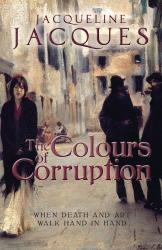
book cover of Victorian street scene

Colours of Corruption

Art plays a large part in The Colours of Corruption.  Can you start by telling us a little about why you decided to make a painter your protagonist?

 I wanted to write a crime novel from the point of view of someone who was neither criminal nor victim, policeman nor private detective.  I don’t know enough about police procedurals to write confidently about them, but I do know a bit about painting and painters.  Listening to Woman’s Hour one day I heard Lois Gibson talking about her work as a forensic artist, drawing the perpetrators of crime from their victims’ descriptions.  I researched further and was astonished at how large a part such artists play, even today, in the solution of crime.  Archie Price, with his extraordinary gift for almost reading a witness’s mind, would have been invaluable to the police, at a time when photography was in its infancy.  Passionate about his painting, he is, at the same time quite naive about the real world and unprepared for the vicious criminals he comes up against.  He has all-too-human frailties, is weak, is charming.  An unreliable hero.  Perfect.

I am a dyed-in-the-wool Brummie, but I still love reading fiction based on London’s many layered past. You said on your blog that Walthamstow features in most of your fiction.  Can you tell us what it is in the place that keeps pulling you back to it in your work?

As a child I felt that it was the best place on earth to grow up in.  It had (still has) an incredible bustle of creativity about it. Easy access to the forest gave me trees to climb, paths to ramble, changing seasonal moods to fire my imagination. There was the wonderful High Street market to explore, the library to feed my soul, the Town Hall grounds to play in, the marshes, the river, Lloyd Park for swings and roundabouts, and London, only half an hour away by train. Why Walthamstow? It was my home and I loved it.

Your engaging and courageous hero, Mary Quinn is an Irish woman whose family had all travelled over to England to find work.  I was wondering if you have any Irish connections yourself.

Probably.  My grandmother spoke of ‘Black Irish’ genes (Spanish Irish) in the family, and of ‘Great Uncle Archie coming over from Ireland,’ but I haven’t done any research on this.  

You really evoke a convincing sense of life in this often sordid part of Victorian England.  How did you set about researching the period?  And I was fascinated by the underground passages.  Did they really exist?

Black and white photo of Jacqueline Jacques

Jacqueline Jacques

 I borrowed books and maps, studied photographs and paintings of the period.  I went for walks on the Walthamstow marshes, through the streets and in Epping Forest.  I trawled the Internet for social history, facts about the police, housing, tile patterns, music hall.  But mostly I relied on my memory. I felt I knew these people; that I’d grown up among them.  I may be a few generations removed from the characters in the book, but we, too, were poor (after the war) and struggled to stay afloat just as they must have done.  My father, who grew up in Walthamstow in the 1920s, once told me about connecting cellars beneath the High Street shops, used by villains on the run from the police.  It may have been a myth for all I know.  My Dad was also a teller of tales. Truth or fiction?  Who knows?  I’m a writer.  I’ll use anything to make a good story.

Following on from the research behind The Colours of Corruption, I was wondering if, while you plotted the novel you knew early in the process where your characters would be at the end of the story.

 I vaguely knew that Archie would be drawn deeper into the criminal network but I had no idea what would happen to the other characters until the very end.  In fact I wrote several endings, none of which worked to my satisfaction.  As I got to know the characters, their histories, their motivations, they more or less told me how they would behave in any given circumstance and I wrote it down.  Sometimes I would drop a fact into the mix, like Mary’s sweet singing voice, or a sword-stick, or a pair of gold cufflinks, just to see where it would take me.  Sometimes it worked, sometimes it didn’t.  It’s a haphazard way of working, but there’s nothing like it for excitement.

I hope you enjoyed that look behind the scenes, more from Jacqueline Jacques on The Colours of Corruption to follow shortly.

Jacqueline Jacques and Victorian Corruption

This is just a quick post to flag up a new guest on The Landing, Jacqueline Jacques who will be answering questions about her new book Colours of Corruption (Honno Press, January 2013).

Jaqueline Jaques

Jaqueline Jacques

Just to whet your appetite, this the publisher’s  synopsis of Jacqueline’s engrossing crime novel, set in Victorian England:

Mary, a desperately poor cleaner, is a witness to murder. Archie, one of the first artists to work for the police, to support his other work, draws the man she says she saw at the scene. Fascinated by her ‘face full of bones’, he persuades her to sit for a portrait, but the man who buys the picture really wants to buy Mary. When he realises he’s betrayed her, Archie takes her to hide with his friends, but doesn’t realise what he’s started. He has no idea how this one woman links his wealthiest clients, the poorest slums, terrible secrets, and a violent thug who is now looking for Archie – the man Mary described to the police.
 
As this gripping thriller uncoils, Jacqueline Jacques paints an intricate, vibrant picture of the layers of Victorian London, where the poor are commodities, criminals have nothing to lose and the rich can buy anything.
 
And the murders go on…

colours_corruption

I plan to post up Jacqueline’s responses to my gently probing questions on Saturday 20th April so stop by and take a look. In the meantime follow the link above to Jacqueline’s website to find out more about the author and her previous novels:

Lottie  (Honno  1997)

Someone to Watch Over Me   (Piatkus 1997)

Wrong Way Up the Slide  (Piatkus 1998)

A Lazy Eye  (Piatkus  2000)

Skin Deep  (Honno 2004)

Sharp eyed viewers may recall that Honno Press has featured on these pages before, as I have previously reviewed one of their classic reprints, Winter Sonata by Dorothy Edwards  for Belletrista.

I’ll be back on Saturday….

Picture credits: Honno Press (with thanks)

Lymond and Niccolò: Dorothy Dunnett

Niccolo set

The House of Niccolo

I was inspired to take down my Dorothy Dunnett books when I read Susan Condon’s recent blog post about re-reading. Dunnett (1923-2001) has written two brilliant historical series, one set in the sixteenth century, the Francis Crawford of Lymond series (1961-1975) and the House of Niccolò series (1986-2000), which takes place roughly a century earlier. In between times, she has also written the Johnson Johnson series of mystery novels and the book that Dunnett considers her masterpiece, King Hereafter (1982).

A school friend, who gave me a copy of Checkmate (paperback 1976) for my birthday one year, unintentionally began my subsequent relationship with Dunnett’s books. My friend Julie bought me the book, knowing that I liked historical fiction, yet not realising that it was the final part of the Lymond series. I did actually read Checkmate before, rather perversely, going back to the beginning with The Game of Kings (1961). I gradually built up the rest of the Lymond saga, acquiring a couple as I recall from a second-hand bookshop in Cardiff.

But here I have to make the shameful confession that I never actually (for various complicated reasons) finished reading the Niccolò series. The last two volumes, Caprice and Rondo and Gemini languish unread on my shelves to this very hour. I have long promised myself a truly mammoth Niccolò binge; ideally this would mean returning to the beginning and starting all over again. I think however, for present practical purposes I will have to content myself merely with backtracking as far as To Lie with Lions and going on from there. Technically these books do not come under the remit of the Landing blog, as they live in our bedroom, but I may give myself dispensation on that point (after all all’s fair in love and reading). And it would be wonderful to return to that world for a summer break from the twenty-first century.

Dunnett Society Logo

Dorothy Dunnett Logo

Because of mentioning my idea of returning to them this summer, I discovered via Twitter that a Dorothy Dunnett Society exists which publishes a newsletter called Whispering Gallery for members. The society is actually a registered charity under Scottish law, founded in 2001 by Dorothy Dunnett. The society aims to promote interest and research into the periods she wrote about and to support the cataloguing and preservation of her papers and research materials, which Dunnett bequeathed to the National Library of Scotland:
“•advance the education of the public concerning the history,  politics, culture and religion of the 11th, 15th and 16th centuries by promoting the study of and research into such subjects generally and into such subjects particularly as they relate to the works of Dorothy Dunnett, and to disseminate to the public the results of such research.
 •foster the appreciation and recognition of the literary works of Dorothy Dunnett.
 •ensure that the manuscripts, letters, reference materials and research papers of Dorothy Dunnett are preserved and are accessible.”

It is incredible to realise just how many Dunnett fans are out there. To finish up with here is a a testimonial from a Dorothy fan. I came across this short clip about Dorothy Dunnett’s Lymond series on YouTube, which was recorded in a bookstore in the States. The interviewee, Anna Kaufman, also discusses another Dorothy, the crime writer Dorothy L Sayers, whom I may well feature on the Landing in the future. There is also an excellent interview with Dorothy Dunnett on the Society’s website, recorded in 1989 for Off the Page.

Now, I must just go and plan the summer’s reading. What will you be reading (or re-reading) this summer?

Video credit: Uploaded to YouTube 24 March 2010

Anna Kaufman, Diesel Bookstore, Brentwood

Logo: taken from the Dorothy Dunnett site

Photo: from Amazon (for technical reasons: camera not charged!)

On final, final note I have come across The Idle Woman’s Literary blog who is also a great Dorothy Dunnett fan if you want to read up a bit. But watch out for unintended spoilers.