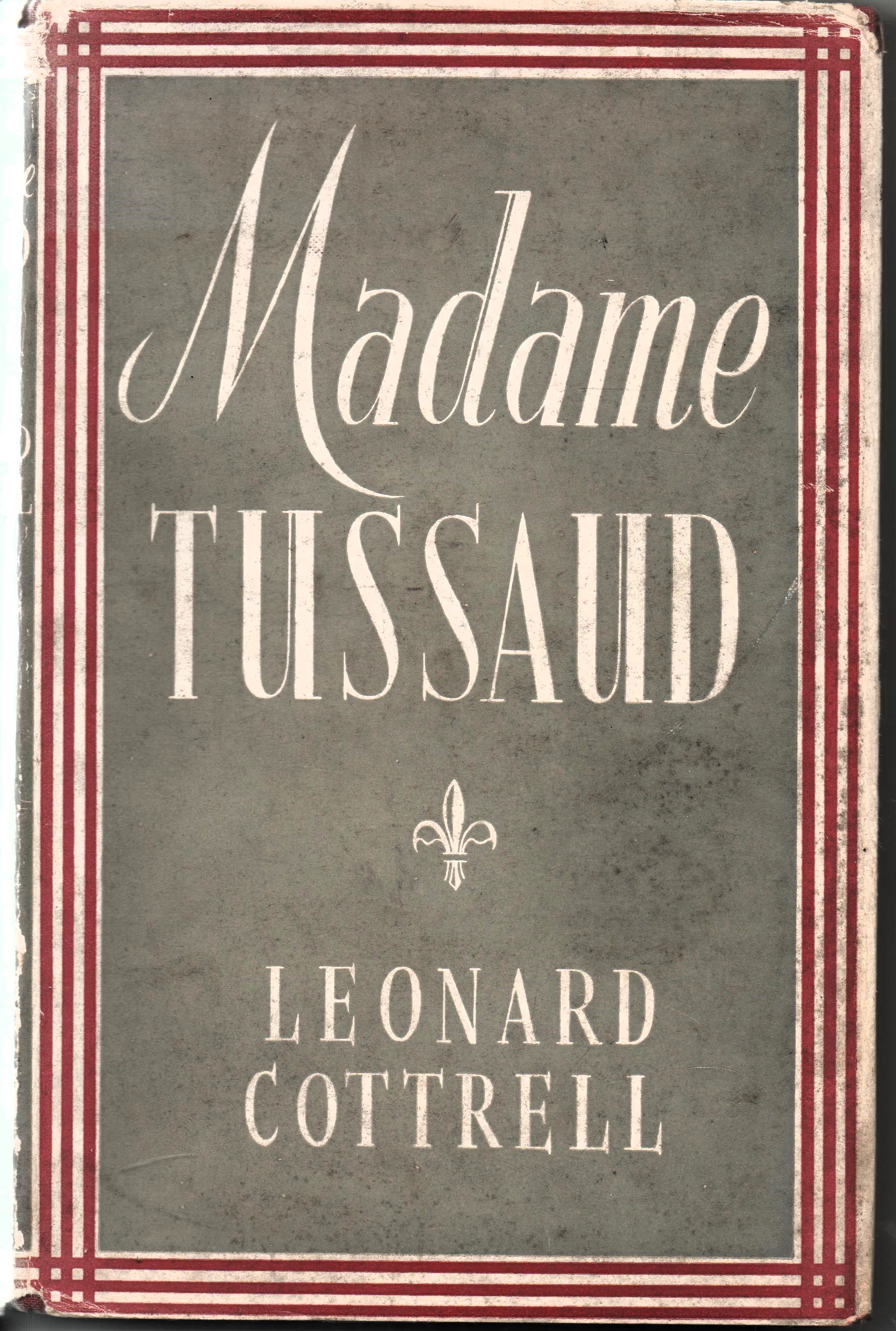
Madame Tussaud by Leonard Cottrell

This short post marks a return to actually featuring a Landing Book Shelves book, after a glut of library book reading. Though I have to point out that it was a couple of library books that prompted me to take another look at a longtime resident of the book shelves. As I mentioned a while ago, I had picked up a library book on the Battle of Waterloo; on the strength of that I borrowed an audio version of An Infamous Army by Georgette Heyer, which has an excellent account of the battle, for a re-read. That in turn led me to dig out my copy of Madame Tussaud by Leonard Cottrell (Evans Brothers Publishers, 1951) which I bought in Liverpool many years ago and have not looked at again since first reading it.

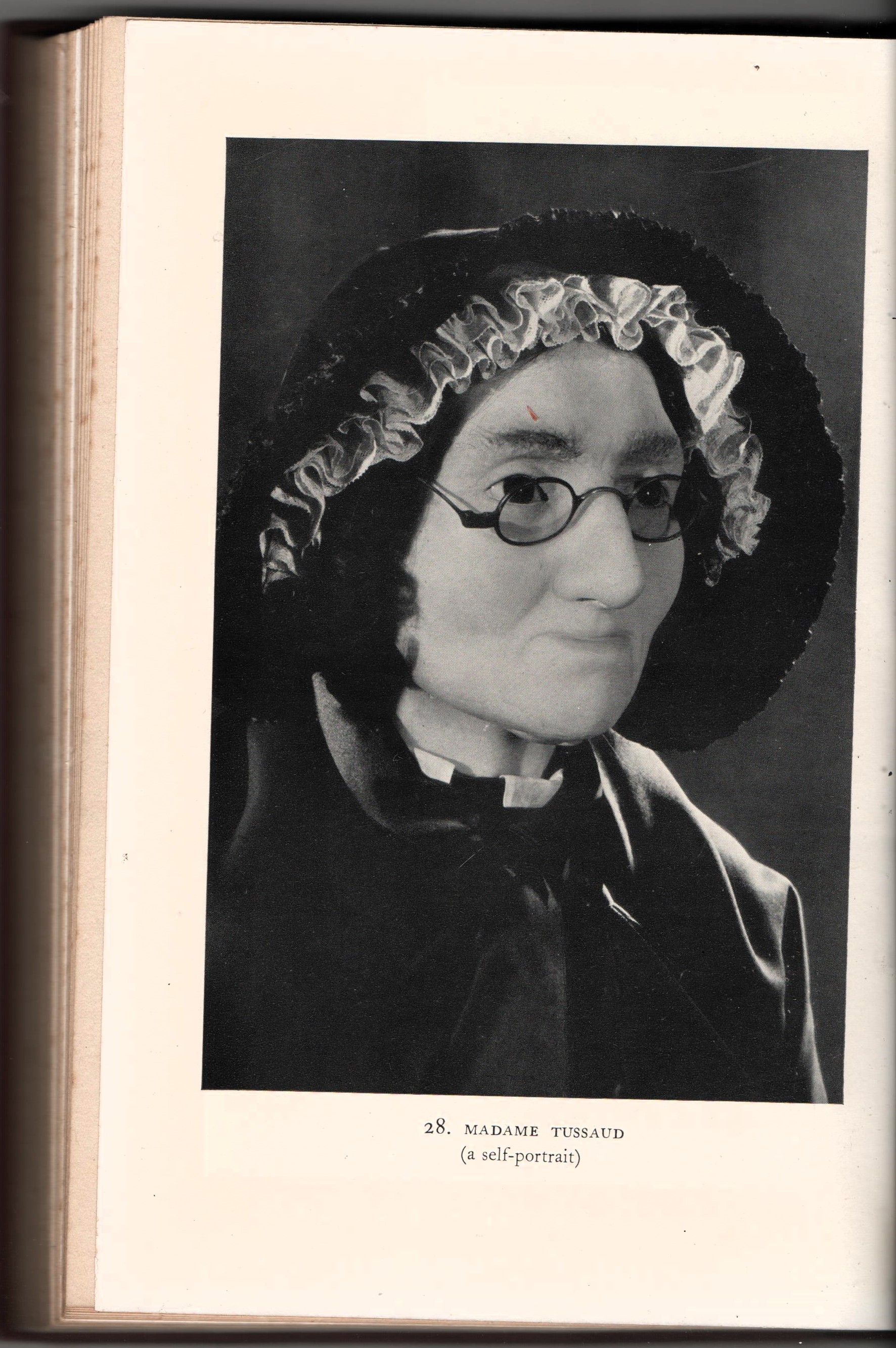
As usual, after searching on ABE Books I have to report that my edition of this book will fail to make my fortune. No pristine first edition for me (although mine is a nice copy with very little damage as you can see from my photos) but in fairness, this doesn’t seem to be such a rare publication so at least I am not missing out on a fortune. According to the pencilled figures inside the front cover, I paid the princely sum of £3.50 for Madame Tussaud, probably around thirty years ago. The book is illustrated with black and white photographs of some of the well-known historic pieces, including a Mme Tussaud’s self-portrait. The front and back endpapers feature maps of Tussaud’s British exhibition tours of her wax portraits between 1802 – 1833.

The book tells the story of her long life and of her famous exhibition, a fascinating story. I think this is due for a re-read this summer, so I will talk a bit more about the redoubtable Madame Tussaud next time.

That’s part of my summer reading sorted anyway!

One Pair of Hands by Monica Dickens

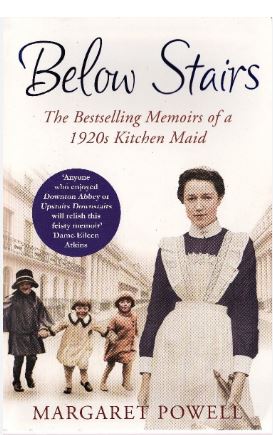
Today’s post sees me slipping back into library mode with One Pair of Hands, a book that I reserved after having heard about it from a borrower. As a domestic service memoir, it caught my attention since I had previously read Margaret Powell’s book, Below Stairs (1968) about her life as a housemaid in the 1920s, as well as Victory in the Kitchen by Annie Gray (telling the story of Georgina Landemare, who eventually became cook to Winston Churchill’s household). Of course, the book by Monica Dickens (1915-1992) really belongs in a different category to the other two, as her middle-class background meant that she had no need to earn a living (or at least, certainly not as a domestic servant)

This is the book jacket of One Pair of Hands, showing a picture of a smiling maid outside a large front door.

The tagline on this paperback edition (2011 reprint) gives a clue to the tone of the book, ‘From upstairs to downstairs in this charming 1930s memoir’. It was originally published in 1939 as the result of a couple of years that Monica Dickens spent working in a domestic service capacity.  Dickens wrote that she didn’t know what to do after her finishing school and debs presentation. She questioned that, ‘there must be something more to life than going out to parties that one doesn’t enjoy, with people one doesn’t even like?’ The upshot of her musing was that she decided to get a job. But as what, she wondered? She was interested in cooking, having attended a French cookery school in London and learnt some basic skills at another cookery school.

The attitude of her chosen domestic service agency towards relevant experience and references seemed to be rather casual. No LinkedIn for CV checking in those days. And as Monica Dickens said herself, she was not really qualified to do anything. Yet this did not seem to stop the agency sending her out to prospective employers. Neither did it prevent several families from taking her on. I was intrigued by the fact that there she was attempting to fulfil the same role that the Dickens family’s cook-general played. When Dickens went to register with an agency the interviewer, ‘hinted in a delicate way that she wondered why I was looking for this sort of job.’ She had to resort to inventing family troubles to be convincing, claiming that her mother was a widow.

As Dickens came from a comfortable middle-class background, so her time spent ‘in service’ could be seen as merely slumming, a way to pass her time. Having said that, she certainly seemed to work hard. After registering with the employment agency, she did a variety of jobs, both live-in and out. Over the course of time, Dickens undertook several roles involving cooking, cleaning, maid’s duties, waitressing at functions and childcare. Several of the homes in which she was employed were suburban houses, with small households, which to me, did not seem to have an obvious need for domestic help. These were of course live-out posts as the houses did not have the capacity for anything else. I wonder if the decision to have staff in a comparatively normal-sized property was from a sense that appearances had to be kept up regardless. It was either that or lose face by scrubbing your own kitchen floor and making your own morning tea I suppose. All jobs seemed to be paid in cash, which I assume was par for the course in that type of work. Having said that, on occasions Dickens ended up having to use her own money to replace breakages. It was fortunate for her that she wasn’t a genuine kitchen maid/cook or that could have been a real financial blow.

There was plenty of chaos during Dickens’ period of domestic service. Inexperience played a large part here. She was self-confessedly not very keen on or good at cleaning. Monica describes one employer, ‘keeping a sharp look-out for signs of dirt and neglect, and me trying to disguise my slovenliness with subterfuge.’ It sounds as though some of the kitchens under her management were in a dire state, though perhaps that was exaggerated for the book. I was wondering whether the names of any of her employers had been changed for publication. She does not indicate that however. Even if she had, I would to love to know if any of her erstwhile employers recognised themselves or their kitchens if they or their friends read the book.

The memoir is humorous (and indeed, charming) detailing Dickens’ various domestic adventures with recalcitrant boilers (‘no woman ought to have to look after a boiler. They’re simply not made that way – it’s like overarm bowling’); exasperating tradesmen, kitchen breakages and pernickety or unpleasant employers. To say nothing of her desperate attempts at effective time management in the kitchen. And crucially, she could walk out of an unsatisfactory job if needs be, knowing that she was not relying on it to put bread on the table, ‘As I felt sure of getting another job, I saw no reason why I shouldn’t decamp before I got into a complete rut.’ Monica was fortunate in occupying a completely different place in the domestic service hierarchy to Margaret Powell (1907-1984) or Georgina Landemare (1882-1978).

Monica Dickens’ experiences do highlight the sheer drudgery of domestic work in those days. This drudgery would also apply to any housewife who had to labour in her own home. Similarly, the memoir shows us the poor working and living conditions that domestic staff would have put up with, not having any choice in the matter. Nobody worried about the kind of mattress the servants slept on. Despite this, Dickens does not seriously critique the structure of domestic service and the vastly unequal relationship between employer and servant. As Margaret Powell, looking back on her service in the 1920s expressed it, ‘We always called them ‘Them’, ‘Them’ was the enemy, ‘Them’ overworked us, and ‘Them’ underpaid us, and to ‘Them’ servants were a race apart, a necessary evil.’

But it was all good material for Monica Dickens the budding writer, as One Pair of Hands was the first book in a long and successful writing career, both for adults and children.

Recipes: from an Old Farmhouse by Alison Uttley

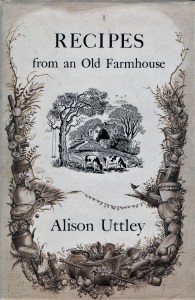
Cover of Recipes from an Old Farmhouse

An evocative image

I wanted to follow up on the last Landing post on foraging-related books with another foody feature. This book is part memoir of a Derbyshire country childhood and part recipe book by children’s writer Alison Uttley (1884-1976), who was best known for her Little Grey Rabbit series and also the Sam Pig books. The recipe book was first published by Faber and Faber in 1966 and I recently treated myself to the copy shown here, which is in very nice condition. Something to cheer me up during the spring Lockdown! It is a beautiful little hard back book decorated with black and white sketches by Pauline Baynes. The drawings complement the text beautifully. Recipes has been reprinted more recently, but I opted for a copy of the original edition and wasn’t disappointed.

Alison Uttley gives us recipes that her mother used in the farmhouse kitchen, including recipes given by friends and neighbours. These were named for the donor, for example ‘Mrs Lowe’s Parkin’. The book is divided into sections with anecdotes, reminiscences and recipes. If you wanted to try out any of the items, you would need to scale down and adapt the recipes as Uttley gives the quantities and methods as they would have been used by her mother at the end of the nineteenth century in the farmhouse oven. So, you would need to figure out the oven settings and alter the timings accordingly. The recipes aren’t laid out as recipes as we would find them in a cookery book nowadays, but they are easy enough to follow. I’m planning to try one or two of the cakes or puddings in smaller quantities.

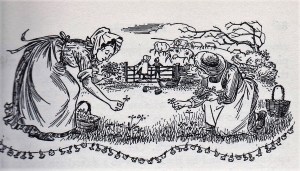
I have found overlaps with my foraging post as in a few of the recipes given, Alison Uttley talks about foraged ingredients gathered by the family. I was particularly taken with her account of the annual cowslip gathering expedition with her mother. They took a clothes basket out with them to fill with blossoms. She describes it beautifully here,

Black and white illustration of the author's mother and the maid picking cowslips, with the children in the background

Picking cowslips

One morning in April my mother would announce that we would pick cowslips for cowslip wine. We would set off after breakfast, the servant girl, my brother, my mother and I, with a clothes-basket, and several smaller baskets. It was exciting to run down the first big field, deep down to the gate that led to the cowslip field. By the gate we left the clothes-basket, and we each took another basket and began to gather the flowers.

It sounds idyllic but it was also hard work for all of them, Uttley describing herself as ‘dazed with stooping to the ground’ after a few hours of picking. It sounds as though the children were allowed to go off and play though, while her mother and the maid carried on for the whole day. But of course, the work didn’t stop there. What Uttley refers to as ‘peeping’ was the next task: removing the flowers from the stalks and calyces. That task must have been mind-numbingly tedious as well as an instigator of repetitive strain syndrome. I find it bad enough picking stalks off fruit for a modest sized batch of jam, so I’m not sure how I would have coped with that mammoth preparation session.

Black and white title page illustration for the chapter on beverages, showing entwined branches with culinary equipment hanging off them.

Chapter title page

I’d actually love to be able to try making a small batch of cowslip wine, but cowslips are quite rare now in Britain and also in Ireland according to Zoe Devlin’s website, wildflowersofireland.net. However, she does go on to point out that the plant has made a comeback in Ireland in recent years, so perhaps it will continue to spread.  In his foraging guide Food for Free, Richard Mabey suggests that the huge quantities of petals used in making ‘one of the very best country wines’ has probably contributed to the flower’s scarcity in Britain. He comments on the ‘devastation that some of these recipes must have wreaked on flower populations’. Thankfully now, you can buy cowslip seeds as well as other wildflower seeds to grow in your own garden and even up the balance a little. I somehow doubt that I will be able to grow enough flowers to make wine, though cowslip growing is to be one of my projects for next year (I have the seeds ready!) As far as beverages are concerned, I think I will have to stick to making elderflower cordial, the only problem there being that the best blooms always grow too high to reach!

I hope to return to the book for another Landing post, when I have had a go at some of the recipes. Meanwhile, I will decide where to go for August’s Landing Tales post when I have scoured the book shelves again!

Are there any Alison Uttley fans out there? Does anyone remember her Traveller in Time, televised by the BBC in 1978? I loved the series then, but wonder how it would stand up now.

(Pauline Baynes illustrations scanned from my copy of Recipes) 

Fanny Burney: Novelist and Diarist

Cover of Fanny Burney: a BiographyFor today’s post, I want to return to one of the books I mentioned in my summer 2017 round-up, a biography of Fanny Burney (1752-1840) to talk about her in a little more detail. I have had a long acquaintance with the novelist and diarist. As I mentioned previously, a novel called A Coach for Fanny Burney by Florence Bone (1938) captured my interest as a teenager. At the time, I had no idea who she was, it was the title that caught my attention (I can’t say it was the cover as the hardback book had long since lost its dust jacket). That book was still tucked away on a shelf in my mum’s spare room, so it came to mind instantly when I spotted Claire Harman’s Fanny Burney: A Biography (Harper Collins, 2000) at last year’s Trinity Book Sale. We could digress at this point and discuss the inevitability of another of my TBS finds finding its way into a blog post, and how this is not actually tackling the TBR Pile proper, but we won’t.

As Fanny Burney came to know everyone who was anyone in eighteenth century literary society (see pictures of Hester Thrale and Samuel Johnson below), she has tended to pop up in other people’s biographies, but this is the first detailed account of her life that I have read. It is a veritable tome indeed but a very readable one at that, covering Burney’s eventful life and times. She could have been a heroine in a novel herself; she married an emigre French aristocrat and soldier Alexandre d’Arblay with whom she lived on a shoestring until d’Arblay had the opportunity to return home to attempt to serve the new regime and reclaim a portion of his property. This resulted in the couple being unable to leave post-revolutionary France for ten years. One story that most impressed me when I first heard it was that in her later years, Fanny heroically underwent a mastectomy without anaesthetic. It almost doesn’t bear thinking about, but the redoubtable Fanny lived to tell the tale and left an account of it for posterity into the bargain.Portraits of the Burney family

Fanny Burney wrote four novels, Evelina (1778), Cecilia (1782), Camilla (1796) and The Wanderer (1814), several plays and also edited her musician father’s memoirs (1832). Her letters and diaries were not published until after her death, the earliest edition edited by her niece Charlotte Barrett and running to six volumes (1842-6). A more recent and comprehensive edition comprises twelve volumes (edited by Joyce Hemlow et al, 1972-1984) in a project yet unfinished. Claire Harman discusses the reliability of Burney’s diaries, her editorship of her father’s papers and the vast quantity of the Burney family’s archives which include letters from her siblings. Harman talks about Fanny’s phenomenal recall for events and conversations, but also acknowledges that she carefully presented a certain image of herself and her family. The family came from relatively humble origins, as expressed in Hester Thrale’s damming comment, ‘The Burneys are I believe a very low Race of Mortals’, furthermore, Fanny was ‘not a Woman of Fashion’. At this point Dr Burney taught music to Mrs Thrale’s daughter, but in later years Fanny attempted to gloss over parts of her family history.

Claire Harman’s biography is so comprehensive that I thought I would take a quick look at one episode of Fanny Burney’s life for this blog post. As both the British and Irish press have been talking about British royal weddings lately, I decided to cast an eye over Burney’s brush with royalty. She was appointed Second Keep of the Robes to Queen Charlotte, a post that naturally was supposed to be seen as an honour to her and her family. Fanny was not initially keen and only agreed to the appointment for her family’s sake. The appointment came about after Fanny made the King and Queen’s acquaintance through Mrs Mary Delaney, a highly cultured woman who was well-regarded by the royal couple. The first time she met George III, he had called unannounced to visit Mrs Delaney and Fanny later described what happened in a letter, likening the incident to a scene in a drama,

It seemed to me we were acting in a play. There is something so little like common and real life, in everybody’s standing, while talking, in a room full of chairs, and standing, too, so aloof from each other, that I almost thought myself upon a stage, assisting in the representations of a tragedy, …

Fanny went on to describe the various roles in this drama, adding her own part as that of ‘a very solemn, sober, and decent mute’.

Even before Fanny was offered her court position, she was having fun with the niceties of court etiquette. This is a snippet from ‘Directions for coughing, sneezing, or moving, before the King and Queen’ which she wrote and sent to her sister Hetty in December 1785.

In the first place, you must not cough. If you find a cough tickling in your throat, you must arrest it from making any sound; if you find yourself choking with the forbearance, you must choke – but not cough.

In the second place, you must not sneeze. If you have vehement cold, you must take no notice of it; if you nose-membranes feel a great irritation, you must hold your breath; if a sneeze still insists upon making its way, you must oppose it, by keeping your teeth grinding together; if the violence of the repulse breaks some blood-vessel, you must break the blood-vessel – but not sneeze…

Fanny goes on to explain that you must not ‘stir either hand or foot’ even if by terrible bad luck ‘a black pin runs into your head, you must not take it out…’

Mrs Thrale & Dr Johnson

I suppose we can only assume that things have changed for the better in court circles since Fanny’s time. When her court appointment was offered, considered and reluctantly accepted, Fanny’s new position paid her £200 a year, she had apartments in Windsor Castle and a footman. Fanny was allowed to have family and close friends to visit but her own freedom to travel was curtailed. Fanny was to be at court for five years, before begging her father to arrange her release from duties. Fanny likened her new commitment to marriage in a letter to her sister Susan saying,

I was averse to forming the union, and I endeavoured to escape it, but my friends interfered – they prevailed – and the knot is tied. What then now remains but to make the best wife in my power? I am bound to it in duty, and I will strain every nerve to succeed.

Fanny’s tenure coincided with the period of George III’s ‘madness’, though that is too large a topic to cover in this post. Suffice to say that Fanny was a first-hand witness of signs of his imminent recovery, when she accidentally encountered him walking with Dr Willis and his attendants one morning. Fanny was apprehensive as the King had been violent at the height of his illness, but he greeted her and questioned her about recent news saying, ‘I have lived so long out of the world, I know nothing!’ as Fanny recorded it. He also kissed her on the cheek, a great lapse of protocol. The whole experience was the ‘severest personal terror’ to Fanny Burney who did not know what to expect. However, she was able to pass to the queen this encouraging report (though as Harman remarks, Fanny no doubt kept the royal embrace to herself).

I will leave Fanny Burney’s court life there, but I hope I have said enough to pique your interest in her life and work. I have to confess that despite reading about Fanny Burney and her literary circle over the years, I have not yet read one of her novels. Another item on my virtual TBR Pile, to go with the actual TBR Pile groaning upstairs!

I hope your 2018 reading is proving fruitful so far. Do let me know what you are reading!
Oscar Wilde and ‘The Woman’s World’

I am beginning the New Year rather late this year as you might have noticed. Clearly, either my body clock has taken a while to kick in or I have been in a state of denial about the existence of 2017 (note also that I am glossing over my blogging inactivity in December). However, I do intend finally to begin my blogging year and return to tackling my Landing Bookshelves Reading Challenge albeit with the usual digressions along the way. As you will know, said digressions tend to be frequent, so my TBR pile is not getting any smaller; and will in fact probably never shrink appreciably. I will just have to live with that, (it’s a hard life!). bookc cover: Wilde's Women

True to form, my first post of the year features a non-TBR book, Wilde’s Women by Eleanor Fitzsimons (Duckworth Overlook, 2016). The sub-title runs: How Oscar Wilde Was Shaped by the Women He Knew, and this was the part that particularly attracted my attention. Wilde is probably more widely associated in the public consciousness with the men in his life, rather than the women. The author has given both his mother and his wife their rightful due in this book. Eleanor Fitzsimons’ exploration of the female angle in Wilde’s life interested me because I have previously read Joan Schenkar’s fascinating biography about his niece Dorothy ‘Dolly’ Wilde (the daughter of Oscar’s older brother Willie and his second wife Sophia Lily Lees). As it turned out, Oscar’s enduring charisma and reputation cast a long shadow over Dolly’s frequently unhappy life. She bore a striking physical resemblance to her famous uncle and consequently spent her life trading upon it. As Eleanor Fitzsimons points out, this tendency caused awkwardness in her relationship with Oscar Wilde’s son, Vyvyan Holland when they finally became acquainted in adulthood. She was said by her mother to have inherited ‘a fair share of the family brains’ but Dolly was perhaps damaged by the weight of expectations put upon her so young.

Of course, properly speaking Dolly Wilde cannot be counted as one of Wilde’s Women (as defined by the terms of the sub-title) since she was born while he was imprisoned and she never actually met him and so represents a rather sad epilogue to the Wilde story. If however we do include Dolly Wilde in an account of the women of Oscar Wilde’s family, then it becomes apparent that his life and work was bookended by two striking and fascinating women. At Oscar’s genesis, we find his mother Jane Elgee Wilde (known by her pen name Speranza) and towards the end of his life, the birth of Dolly, bearing the Wilde mythology onwards. On the face of it, it appears that Speranza provided the seeds of the literary and artistic talent, which blossomed into Oscar and yet which failed to bear fruit in Dolly Wilde. No story is ever that simple however, but such a literary legacy would have been difficult to follow for any descendent. I wonder how Oscar’s sons coped with the pressure of his literary legacy, to say nothing of the effects of losing his presence in their lives after the trial.

Magazine cover: The Woman's WorldThe section of the book that intrigued me the most was the chapter discussing Wilde’s stint as editor of a women’s magazine, an episode that was completely new to me. In April 1887, Oscar Wilde was invited by the publishers of The Lady’s World to revitalise and generally to add celebrity lustre to the struggling magazine. This was an illustrated monthly magazine, on sale for a shilling, which was struggling in a busy market. For instance, The Ladies’ Companion was another illustrated magazine aimed at a similar audience at the same price. Wilde was interested in editing and writing for the magazine but he insisted on a name change, more in keeping with his progressive ideas, hence The Woman’s World. Wilde suggested that the latter was much more suitable for a magazine that wished to be, ‘the organ of women of intellect, culture, and position’. He wanted to create a magazine that talked about what women thought and felt and not merely, about what they wore. I was amused to note that fashion was pushed to the back of the magazine in this brave new venture. Some previously included sections vanished altogether under Wilde’s editorship, such as ‘Fashionable Marriages’ and ‘Pastimes for Ladies’. However, I cannot help feeling a vague curiosity about the nature of those suitably ladylike activities!Cover from The Ladies' Companion

Fashion Plate

From The Ladies’ Companion.

As Eleanor Fitzsimons makes clear, many intellectual and professional women liked and respected Oscar Wilde and were very happy to contribute articles to his re-vamped journal on various important subjects. One topic covered by The Woman’s World was women’s dress and its suitability, practicality and healthiness. Wilde, as well as his wife Constance Lloyd was an active supporter of the Rational Dress Society. In an article for The Woman’s World he wrote,

From the Sixteenth Century to our own day, there is hardly any form of torture that has not been inflicted on girls and endured by women, in obedience to the dictates of an unreasonable and monstrous Fashion.

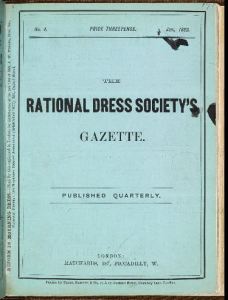
As I am writing this, I wonder what Wilde would have thought of the current UK parliamentary enquiry into the issue of women forced by employers to wear high heels at work. I am sure he could have come up with a riveting deposition to the enquiry on the subject. His idea was that in time, ‘the dress of the two sexes will be assimilated, as similarity of costume always follows similarity of pursuits’. Sadly, it seems this has not yet happened; apparently, women still need to wear heels to do exactly the same job that a man does in flats. We certainly need a witty Wildean epigram for the shoe question.Cover of The Rational Dress Society magazine

As I said above, Wilde attracted many talented female contributors to The Woman’s World including trade unionist Clementina Black, feminist writer Julia Wedgewood, suffragist Millicent Garrett Fawcett and journalist Charlotte O’Connor Eccles. Therefore, not only was women’s dress debated within the pages of the magazine but also the extension of the suffrage to women and women’s right to be educated and to live useful and worthwhile lives. This range of content is what surprised me the most and Fitzsimons has added a great deal to my impressions of Oscar Wilde, with his support for so many radical women writers and activists. It is easy to think of Wilde in terms of witty epigrams and sparkling conversation, without stopping to think about what lay beneath the polished surface.

Sadly, Wilde’s stint as an editor did not last very long; the last edition bearing his name came out before the end of 1889, so he clocked up a mere two years. Fitzsimons makes clear that Wilde did much that was worthwhile in his role, but admits that,’ While his sincerity and sympathy were never in doubt, his suitability to deal with the day-today challenges of bringing out a magazine on someone else’s behalf was’. Turning up regularly to the office and dealing with the minutiae of getting a magazine to press proved to be beyond his capabilities. Tellingly, The Woman’s World did not long survive Wilde’s departure, having reverted to its original style of content without his dynamic input.

Because of reading Wilde’s Women, I am in danger of encountering many literary digressions; I plan to follow up ideas that I have gleaned from the wonderful range of sources used by Eleanor Fitzsimons. My hopes of acquiring a copy of one of the volumes of The Woman’s World was somewhat dashed however when I saw how much a dealer on ABE Books was charging. Perhaps I was naive in thinking that I might be able to buy one for only a few euros…

Credits: Many thanks to Eleanor and the publishers for The Landing’s copy of this book. If you wish to discover more about her work, here is a link to Eleanor’s blog:  https://eafitzsimons.wordpress.com/about/

Additional pictures: As ever, thanks to Wikipedia and also to the website of the British Library.

Arabella Stuart and Bess of Hardwick

I mentioned in the last post immersing myself in some dubious sixteenth century doings. Wreath for Arabella by Doris Leslie (Hutchinson 1948) was the book that started me off on my tour of historical skulduggery. This is one of the spoils from a previous Trinity Book Sale. I feel sure that I must have read Leslie’s books before, but perhaps it’s just that I remember my mum having them from the library (along with Miss Reed and Mazo de la Roche). Doris Leslie (1891-1982) was a British novelist and historical biographer who originally wanted to be an artist, then studied drama and finally discovered a talent for writing, publishing her first book in 1927. I didn’t know anything about her before lighting on a biographical note by the Southborough Society who have put up a blue plaque in Leslie’s honour. She does not seem to be particularly well known today. Although she was writing contemporaneously with Georgette Heyer whose books are still widely available, her books have since slipped through the publishing cracks.

Wreath for Arabella is a lively, well-written fictionalised account of the life of the ill-fated Arabella (Arbella) Stuart (1575-1615), a cousin of Queen Elizabeth I (1533-1603). Both women descended from Henry VII: Elizabeth was his granddaughter (Henry VIII’s daughter) and Arabella his great great granddaughter (her father Charles Stuart was descended from Henry VIII’s sister Margaret of Scotland). Elizabeth apparently favoured choosing Arabella as her successor to the throne, only to change her mind in later years. From her earliest years, Arabella was educated as befitted as princess, studying Hebrew, French, Greek and Latin. In the end, Elizabeth’s choice of successor settled upon another cousin, James Stuart, the son of Mary Queen of Scots, so the careful preparation was to no avail. England was not to have three women (four queens if you count Lady Jane Grey) in a row on the throne after all.

As you might imagine, being a potential heir to the throne was not a particularly safe place to be. In fact, Elizabeth had taken it amiss that Arabella’s parents had married in the first place, due to the likelihood of creating yet another claimant to the throne. Arabella’s grandmothers languished in the infamous Tower of London for a while. In such family circumstances, probably it would be wiser to keep your head down (lest you lose it) and to be of a very shy and retiring disposition. Unfortunately, according to Leslie’s novel, Arabella was anything but shy and retiring and consequently earned the queen’s displeasure on more than one occasion. Elizabeth once sent Arabella away from court for flirting with her current favourite, the young Earl of Essex. More seriously, Arabella was the focus of various Catholic plots to remove Elizabeth from the throne, though admittedly she was not directly involved. Whether that was loyalty or merely the lesson learned from her cousin Mary Queen of Scots’ bad judgment, it is hard to ascertain from the novel. Suffice to say that many political figures would have liked to use Arabella as a pawn in their schemes (see, I told you there was skulduggery afoot).

This slideshow requires JavaScript.

Stuart family history in general has always fascinated me, but as a bonus, Arabella’s story meshes with the most formidable woman of the era (apart from Elizabeth herself that is), her maternal grandmother, and known to history as Bess of Hardwick (1527-1608). From relatively modest origins, Elizabeth Hardwick rose to become the richest woman in England with a penchant for building beautiful houses such as Hardwick Hall. She came very close to being the grandmother of a queen, after engineering the marriage of Arabella’s parents and coming into conflict with her royal namesake. Unfortunately as I have said, Bess’s ambition didn’t allow her to achieve her final goal, but she still left her descendants very well placed in Tudor society. She even managed to survive the other Elizabeth by five years, and lived to see Arabella welcomed at the court of the new monarch James I (VI of Scotland) and his wife Anne of Denmark.

Bess would probably not have been a very comfortable relative to have around, but her drive and her energy were undeniable. Moreover, in an era when women’s role was to play a quiet domestic part, Bess had a public status not common at the time. Bess of Hardwick organised her own life very effectively, as well as those of her extended family, whether they liked it or not. The lady of Hardwick was the one moving the pieces across the chessboard and not the other way around. She married four times, each time carefully moving further up the social scale and acquiring more land and property. Her first marriage to Robert Barlow was very short and both bride and groom were only teenagers. After her husband’s death, Bess married a widower, Sir William Cavendish, with whom she had several children, six surviving into adulthood. After marrying and burying Sir William St Loe within a few short years, her crowning achievement was to become a countess upon her fourth marriage to another widower, George Talbot, Earl of Shrewsbury. She then very shrewdly married two of her children with two of the young Talbots to keep assets within the family. Oh, and in later years she had a very public marriage breakdown. Twentieth century celebs have nothing on Bess!

One of the short live series, Kate Hubbard’s A Material Girl from Short Books (belonging to He Who Put The Shelves Up) is a great introduction to this most fascinating of women. I first came across Bess of Hardwick many years ago via a BBC television programme but I can’t find any trace of it on the usually reliable YouTube. However, you can watch some more recent biographical clips if you want to look. Reading these two books has reminded me that I have yet to get around to visiting Hardwick Hall, so maybe I will manage to fit it in during my next trip over to see the family. I will also keep a look out for more of Doris Leslie’s historical novels (or perhaps not depending on the state of the TBR Pile!)

Meanwhile, I will continue with reading more of my Trinity Book Sale bargains…

Extra picture credits: the Doris Leslie plaque taken from the Southborough Society page (see above)

Another Bit of Memoir: The Perils of Travel

Now that Christmas is nudging a little closer, my thoughts have been turning to sorting out the logistics of popping over to see my parents. This also inevitably brings to mind the various travel related mishaps that I’ve had over the years (late trains, snow, rough seas, flight delays etc.).

I wrote the following piece about one of the times things went awry, for a school newsletter a few years ago and have just been fiddling with it a bit more. It’s another of my attempts (along with The Cake Lady) to experiment with memoir writing.

Stranded in Wales: Our Holyhead Experience

Welsh Flag

Motto: “Cymru am byth”
“Wales for ever

A few years ago, I often travelled from Dublin to Birmingham using the Dún Laoghaire /Holyhead ferry route. After one particular visit to Birmingham, the return trip didn’t go according to plan. My daughter and I had planned to be back in Dublin in time for her dad’s birthday and we duly arrived in Holyhead to catch the last Stena ferry to Dún Laoghaire. But the departure area was strangely, evenly ominously quiet. Did I have the sailing time wrong? I was dismayed to discover that Stena had cancelled the evening sailing; our ferry had been sailing through rough seas on the way over to Wales and had been involved in a slight collision in. While no serious damage had occurred, repairs and safety checks meant that we were not going anywhere in a hurry. There would be no ferry until about 9am the next day; an Irish Ferries boat would then (apparently) be sailing the stranded passengers into Dublin Port instead of Dún Laoghaire. So much for my best efforts at forward birthday planning.

So I found myself in the somewhat daunting position of being stranded in a town I hardly knew with nowhere to stay. Oh, and not forgetting the small (very tired) child in tow. I was at least equipped with the necessary cash for emergencies (whether being prepared for emergencies is a legacy of being in the Brownies or from reading Paddington, I’m not sure but nevertheless, generally I am prepared). After patiently explaining our predicament to my tearful four-year old and then phoning home to break the news of the interesting situation, I set about trying to figure out where we could stay. After ruling out a night on hard moulded plastic seats, I thought that our best option might be to head back to Brum and start afresh next morning. The thought of a proper bed to sleep in was strangely tempting. Unfortunately, a quick glance at the train timetable ruled that idea out of court.

Fortune seemed to be smiling on me when I spotted a pile of glossy leaflets advertising a new bed and breakfast place in town. It looked decent and reasonably priced. The only thing that now remained was to find the address given in as short a time as possible. My daughter was still upset at not being able to get home for daddy’s birthday. I tried to persuade her that being stuck on the wrong side of the Irish Sea from the birthday cake and (her own bed) was a great adventure. At that point, she just wouldn’t buy it and I had no more treats in my armoury to placate her. Call it being prepared for emergencies, but only up to a point (this situation wasn’t covered in the Brownie Handbook). Fortunately, sharing the stimulating experience of being stranded in Holyhead was her elephant (Ella).

We found the address of the B&B without too much difficulty, but there our luck petered out. The sign read, ‘Full up, no vacancies‘. Well it was half term so I suppose this was hardly surprising. I decided that it made sense to ask anyway, since we needed help. The owner would probably be able to point us in the direction of another bed (or so I hoped). The proprietor confirmed that he didn’t have any vacancies, but then asked me to wait and said that he would see what he could do. We promptly crossed our fingers and toes (even Ella the elephant did). His side of the overheard phone conversation involved the explanation that he had a stranded mammy and child. It turned out that he had been speaking to his mother who just happened to run a small guesthouse nearby. To my great relief we were sorted. Then instead of just giving me the address and directions, our newfound friend (I regret that I failed to keep a note of his name) offered to drive us to his mother’s house. I wondered fleetingly whether I was being very irresponsible in getting into a car with a total stranger. But there are times when you have to trust your gut and this was one of those occasions.

I was actually grateful to have had the lift over to the house, as we were both rather tired and dispirited. We then realised that we needed to find somewhere handy to eat as the premises didn’t offer evening meals. It turned out that our most likely option was a local fish and chip shop that boasted a couple of tables for dining in. The only question remaining was whether it would be open on a Sunday night or not. To my amazement, our new landlady’s son then very kindly offered a lift to the chip shop. He even said he would wait to be sure the shop was open before leaving us; this was certainly well above the call of guesthouse duty. I did however feel that I should draw the line at phoning him for the offered lift back. 

My daughter was finally reconciled to our Holyhead adventure by the experience of eating piping hot fish and chips hours past her normal bedtime. Thankfully, I found the way back to the B&B after only one wrong turning. I even managed to find an Aldi (or was it Lidl?) to buy orange juice. Cue a brief moment of self-congratulation upon my innate sense of direction. We were certainly glad to see our beds that night; it had been a very long day and we were still not sure whether we would get home on Irish Ferries’ morning sailing. Meanwhile things had turned out much better than I expected, thanks to the kindness of strangers.

Although we were yet to leave Holyhead to brave the stormy seas on our homeward trek…       

I hope you liked the piece and would appreciate any constructive comments! I’ll be back with a Tolstoy update soon..


From Cakes to Books: a snatch of memoir

celebration cake

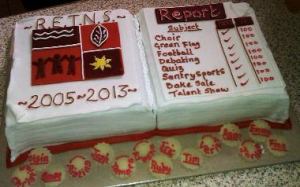
An edible report card…

At the end of the last school term I put my cake decorator’s hat on and made a cake to celebrate the end of primary school for my daughter’s class. My cake decorating past goes back a few years, since long before my bookselling days, and I have tried to put together a short piece about how it began.

Here it is (though no doubt this isn’t the final version!).  I have been working on bits and pieces of memoir for a while; basically tinkering with the same few episodes over and over again. I hope that I will soon feel inspired to move on with my project. I might even manage to connect all of the episodes together into a more or less coherent version of my life at some point.

The Cake Lady: birthdays, weddings and yet more birthdays


Browsing through photos of the celebration cakes that I created during the 1980s brings back memories of another life; when I became known to my regular customers as ‘The Cake Lady’. It made me sound rather like an eccentric Alan Bennett character. By way of contrast I was also dubbed ‘the modern one with the ear-rings’ by an elderly customer, which may or may not have been a compliment.

My enterprising daughter has had the lovely idea of making a cake decorating album. She assembled several years’ worth that had been quietly languishing in a jiffy bag. The album was my Mother’s Day present, labelled Mummy’s Cake Album and prettily decorated with chicks and eggs. I am undecided whether I am more proud of her efforts or my own.

I became a self-employed cake decorator more by accident than design and I never made any money at it. In fact, after dutifully maintaining accounts my turnover was non-existent. I don’t think that’s what people normally mean by tax-free status. No Swiss bank account for me. I was rather dampened to discover that I had actually had a loss making operation. And so the photographs are all that remain of my would-be business empire. Mr Kipling and his ‘exceedingly good cakes’ had nothing to fear from me.

I trained in Birmingham in the late 1970s at what was then known as the Birmingham College of Food and Domestic Arts. It didn’t occur to me then to wonder what those ‘domestic arts’ were but sadly it’s too late to find out now. It felt incredibly grown up to be at college and learning a trade. No more bells; and school uniform was exchanged for bakery whites purchased from the Army and Navy Store. I also bought a splendid set of knives, thermometers and icing tubes, some of which I still have. 

A few years down the line, I was, as they say resting between engagements when I first began to make cakes from home. There was never a grand plan as initially it was something to do while unemployed. In theory, working from home is a fantastic idea: no boss, no commuting, etc. In practice, I found that it often meant that I iced cakes at midnight. I also lived in a flat almost permanently festooned with half decorated cakes and finished cakes awaiting either collection or delivery. Delivering was a bit tricky since I hadn’t passed my driving test. Fortunately, most customers were happy to collect.

Birthday cakes were my ‘bread and butter’ trade but I also made several wedding cakes including a four tier hexagonal of which I was particularly proud. I loved making kids’ birthday cakes, but did become mildly exasperated by traditional ‘pink/girl and blue/boy mentalities. Someone once requested ‘Thomas Tank engine’ for a girl and I felt like cheering. ‘My Little Pony’ cakes were nowhere near as much fun as smoke breathing dragons or even rabbits in hats. But Winnie the Pooh (the EH Shepard version) was always my favourite subject

I began to build a photograph album for prospective customers and even produced a price list. Well, when I say ’I’ actually a friend typed and photocopied it while my sister did the artwork. The tedious part was mine and that was doing the costing; my main problem was judging profit margins. But it helped to have a proper list as I always felt squeamish about asking for money, though I think my prices were reasonable.

While working as a cake decorator I also worked at a delicatessen which also sold my cakes and later I ran my own market stall for a time. A regular customer base for celebration cakes gradually built up. At one point I even went leaflet dropping around the well healed leafy suburbs of Birmingham to drum up business. Another outlet for my cakes was acquired when an American acquaintance put me in touch with the owner of a cookie shop in the city centre.

The major snag with retail outlets was that I had to discount prices. There was also much more enjoyment in dealing with my personal customers and discussing their requirements. It was nice to chat to customers about their order and get some feedback too. My pinnacle of achievement was a child liking her cake too much to cut it on the big day (a duck in a mob-cap and apron).

 Literally ‘success on a plate’!      

My next post will be a return to books and the Landing Reading Challenge, I promise. Meanwhile, if anyone has any memoir writing tips, I’d be glad to hear them.

The Landing Eight: Mortimer on Rumpole

Murderers and Other Friends

Legal Memoirs…

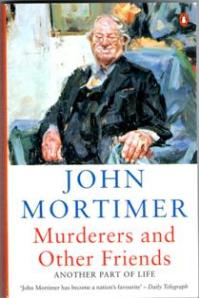
As you may recall, I have been re-reading Murderers and Other Friends (Penguin, 1995) as part of the Landing Eight mission. Due to the rather inconvenient fact of being aware that I was to lose my bookselling job come the end of March, my concentration has been somewhat fragile. Consequently, reading anything, even from an old familiar face has been rather a struggle. But, as I am nearing the end of my Landing Eight pile I have determined to soldier on regardless. Judging by experience, any sort of ‘readers block’ that I have ever encountered wilts quickly enough if I batter it into submission. After all temptation is always (and only) a Landing Bookshelf away.

First Rumpole Omnibus

Legal Eagle…

This is John Mortimer’s second volume of autobiography, the first being Clinging to the Wreckage (1982). He also wrote a play about his father’s life as a barrister entitled A Voyage Around my Father (first broadcast as a radio play in 1963). In Murderers and Other Friends, Mortimer picks up the threads of his life’s story in the 1970s, embarking upon his second marriage and acting in the Oz trial. Accounts of legal cases interweave with reminiscences of family and friends. He is an engaging writer who has a wealth of amusing and perceptive stories to tell about the great and the good, as well as the frankly criminal. The book stands up well on the whole to re-reading. However I did find that Mortimer’s more hedonistic adventures with various friends and acquaintances tried my patience somewhat. However, my present state of mind might have a strong bearing on that reaction.

As a confirmed Rumpole fan, I have re-read this book with him in mind, looking out for Rumpole related anecdotes. John Mortimer explains how he put together the various character traits that we see in Rumpole from several sources. For instance, a couple of Mortimer’s colleagues inspired Rumpole’s habit of referring to judges that he disliked, as  ‘old darling’. Closer to home, Mortimer’s father was the source of the Wordsworth quotations at inopportune moments and a waistcoat regularly adorned with cigar ash. The author does however, very modestly disclaim any resemblance to his fictional legal counterpart, ‘I lack his courage, his stoicism and the essential nobleness of his character’.

Rumpole A La Carte

Stern Pose…

As I said in the previous post, Horace Rumple’s first appearance was in a BBC Play for Today, which was later developed into a series. The character was actually created for television, something that I failed to realise on first seeing the Thames Television series in the late 1970s. Mortimer talks about Rumpole’s beginnings, explaining how Leo McKern took on the role of the Old Bailey hack for the first television episode. Mortimer is eloquent in his praise of McKern’s talent, ‘His acting exists where I always hope my writing will be: about two feet off the ground, a little larger than life, but always taking off from reality’. In his memoir, John Mortimer mentions having written the part of Rumpole with nobody in particular in mind to play the part though he felt that ‘Alastair Sim would be excellent in the part, but sadly Mr Sim was dead and unable to take it on’. No doubt Alastair Sim (had he been still alive) would have made an excellent Rumpole, but like many fellow fans, to me Rumpole will always be Leo McKern…

Now what remains to be read of the Landing Eight?

The two adventures of Rumpole illustrated here are two collections from the Landing Bookshelves:

The Omnibus (1983) contains: Rumpole of the Bailey (1978), The Trials of Rumpole (1979) and Rumple’s Return (1980). 

Rumpole a La Carte was published by Penguin in 1991. 

Mortimer and Rumpole Illustrated

Murderers and Other Friends

Legal Memoirs…

Lately I have been re-reading John Mortimer’s volume of memoirs, Murderers and Other Friends in between reading a couple of library books which I needed to tackle before they were due back. Still on the library pile is Jeet Thayil’s Narcopolis which I have fortunately been able to renew while I finish Lindsey Davis’ Roman crime novel Saturnalia.

I have long been a fan of Davis’ private eye, Marcus Didius Falco who gets embroiled in the seamy underbelly of Roman society with the able assistance of his formidable patrician wife Helena Justina. As I think I have mentioned, I have been having a crime binge lately (apart from reading Mortimer’s memoirs) thanks to my local library.

I hope to discuss the topic of crime novels in a future post, but for the moment I shall return to Mortimer and his well-known creation Horace Rumpole of the Bailey. While doing a Google search on John Mortimer (1923-2009) I came across this short video of an exhibition of caricaturist Tony Healey’s original watercolour Rumpole paintings. If you have not read any Rumpole stories or watched the television versions starring Leo McKern (1920-2002), then these glimpses of the irascible old barrister might inspire you to explore further. The exhibition also includes several lively portraits of John Mortimer.

The exhibition and the video were the work of a London gallery called Illustrationcupboard which specialises in featuring the work of contemporary book illustrators. This definitely sounds like a place to see when I next visit London. Check out the gallery’s website for some fabulous artists such as Jane Hissey, Edward Ardizzone, Brian Wildsmith and Lauren Child.

On  a separate note, I have recently set up a new chapter on the Landing entitled Booksellers Beyond which is aimed at showcasing the talents of various former booksellers who have gone on to explore other creative avenues. My first guest artist is an old friend with whom I used to work in Birmingham, Valleri Jillard who has forged a new career as a mixed media artist. Take a peek at some examples of her work over in Booksellers Beyond by following the links. I hope to add more to this section soon so keep checking back.

But now, back to Mortimer and Rumpole…

Video credit: Illustrationcupboard, uploaded to YouTube 12 March 2012 (exhibition 20 February – 10 March) – with thanks.