Landing Author: Louise Phillips

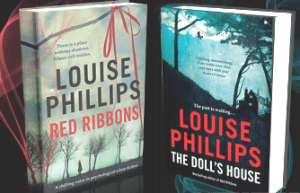
Red Ribbons & The Doll's House

A Brace of Thrillers

Here as promised is Louise Phillips to add a touch of darkness to The Landing as she answers a couple of my questions about delving into loss and deeply buried emotions. I also couldn’t resist asking a question about Louise’s experience with her promotional video and if you click on the link below you can enjoy a chill down your spine.

I met Louise perhaps not surprisingly, through my job as a bookseller but I have dear old Twitter to thank for enabling us to keep in touch, thus paving the way for this opportunity to have Louise as a guest. Many thanks to the future ‘Grande Dame’ of crime for including me in her Blog Tour and for the thoughtful answers to my questions.

Now, on with the Q & A:

CM: In both of your novels you’ve dealt with the themes of lost children/childhood. Can I ask you what drew you to examine this kind of emotional and physical loss?

LP: I think the ‘who’ of ourselves is found in childhood. I had a challenging one, and it’s made me very aware of beginnings and how the past forms us. With Red Ribbons, I dealt with the loss of a child, and as a mother, this was particularly difficult for me to write. However, just because something is difficult, doesn’t mean you should back away from it. Being a mother certainly helped the writing, and many of the reviews focused on how the narrative dealt with the emotional bond between a mother and her child. I must have done something right, seeing as how it was shortlisted for Best Crime Novel of 2012 in the Irish Book Awards, and despite the difficult nature of the story, it was a story worth telling.

The Doll’s House is very different, and is a story which questions the notion that the past cannot harm you because it has already happened. In The Doll’s House, the main protagonist, Clodagh Hamilton delves deeply into the area of hypnosis and regression. The child and the adult Clodagh Hamilton get to meet via her fragmented recall of memory whilst under hypnotic regression – this was a fascinating concept to me as the writer, the idea that the child self and the adult self could meet. By and large, stories pick you, and it’s not surprising to me that I use a character’s childhood as the backdrop to the ‘who’ of themselves, and also, why they do the things they do. But a great question, and one I will reflect more on.

CM: Psychological thriller novels such as your own work can be very unsettling to read, leaving the reader somewhat less sure of his/her own world. How does the writing process affect you, as you are so involved in the material?
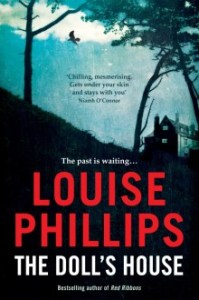
The Doll's House

Dare you enter…?

LP: In many ways, the fictional world is totally real to me when I’m writing it. It has to be, because if it doesn’t feel real to you, it won’t feel real to the reader either. Without wanting to sound over the top about it, I’m drawn to stories and emotions that force me to question and examine things. It nearly always starts with a question ‘why?’ and then ‘how?’, until I become utterly gripped. In some strange way, there are times when it feels like someone else is writing the novel. Despite being close to the material, I also have to separate myself from it. Readers want a great story that is well written, it’s not my opinion that counts, or what I feel about an individual character or what they’ve done. Maybe that protects me in a way, it certainly doesn’t frighten me. The only thing that frightens me about the writing, is first drafts – they are scary, but thankfully a long way from the finished story!

CM: Moving on to a different aspect of writing: You’ve been involved in producing a publicity video for The Doll’s House and I was just wondering whether you enjoy being a part of the promotional aspect of being a writer.

LP: It’s very different from the writing side of things, and I certainly can’t do any major promotional work while I’m writing. Do I enjoy it? Yes, in the main, but it can be hard work too. You have to put yourself out there, and that means taking risks. I was petrified the first time I was on radio, and then on television. When I did my first newspaper interview, it was the same. Now, I’d still be apprehensive, but I don’t let the apprehension stop me, and once I don’t make a mess of it, I’m happy enough. Things like making a book trailer or looking at other imaginative ways of promoting the novel are great fun. I write, so I love coming up with new ideas. The bottom line is that in today’s world it’s very difficult for a new author to get noticed, and the reason you look to be noticed, is that you want readers to read your book. If they do, hopefully, they will return for more. The recession has hit the book industry in a very dramatic way and readers when making their purchase will usually buy a novel by a writer they are familiar with and trust, namely the well-established names. As a new player in the field, it’s an uphill struggle, and anything you can do to encourage others to read your work, is a positive thing, even if it means asking your son-in-law to pretend to be a dead body in the canal!!

And here is that video….be warned…it’s rather creepy!

ABOUT THE AUTHOR
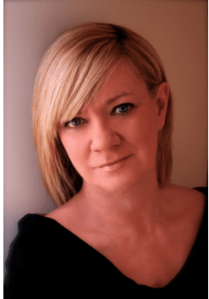
Louise Phillips

Louise Phillips

Born in Dublin, Louise Phillips returned to writing in 2006, after raising her family. That year, she was selected by Dermot Bolger as an emerging talent. Her work has been published as part of many anthologies, including County Lines from New Island, and various literary journals. In 2009, she won the Jonathan Swift Award for her short story Last Kiss, and in 2011 she was a winner in the Irish Writers’ Centre Lonely Voice platform. She has also been short-listed for the Molly Keane Memorial Award, Bridport UK, and long-listed twice for the RTE Guide/Penguin Short Story Competition. Her bestselling debut novel, Red Ribbons, was shortlisted for Best Irish Crime Novel of the Year (2012) in the Irish Book Awards. The Doll’s House is her second novel.

If you would like to contact Louise Phillips:

http://www.louise-phillips.com

@LouiseMPhillips

http://www.facebook.com/LouisePhillips

Both Red Ribbons and The Doll’s House can be ordered by clicking: http://www.louise-phillips.com/index.php/books/order  or just pop into your local Easons (3 for 2 offer on at the moment) or Dubray branch, or indeed (as the saying goes) any good bookshop.

Thanks again to Louise for taking the time to answer my questions. If you want to join in the conversation, drop a note in the box below.

Credits: promotional material and images supplied by the author with thanks.

Landing Author Expected: Louise Phillips

In the next couple of days, The Landing is moving away from the foggy distant past and right bang up to date with a new #LandingAuthor guest spot. My guest this time will be psychological thriller writer Louise Phillips who has published her second novel The Doll’s House (Hachette Ireland) on the 1st August. If the reviews are anything to go by, The Doll’s House is looking to be as gripping a read as her first novel Red Ribbons.

Louise Phillips held a very successful launch party at Bob Johnston’s Gutter Bookshop on 7  August which I sadly missed as I was away on my hols. Arlene Hunt did the honours on the night and I gather a good time was had by all.

Louise Phillips

#LandingAuthor Louise Phillips

I am very pleased to be involved with Louise’s promotional blog tour for her follow-up to Red Ribbons and to have the opportunity to put a couple of questions to her. Look out for The Landing leg of Louise Phillip’s blog tour on Thursday 29th August.

Just to whet your appetite, here is the blurb for The Doll’s House as a little taster before Thursday:

The Doll's House

Dare you enter…?

PEOPLE SAY THAT THE TRUTH CAN SET YOU FREE.
BUT WHAT IF THE TRUTH IS NOT SOMETHING YOU WANT TO HEAR?

Thirty-five years ago Adrian Hamilton drowned. At the time his death was reported as a tragic accident but the exact circumstances remained a mystery.

Now his daughter Clodagh, trying to come to terms with her past, visits a hypnotherapist who unleashes disturbing childhood memories of her father’s death. And as Clodagh delves deeper into her subconscious, memories of another tragedy come to light – the death of her baby sister.

Meanwhile criminal psychologist Dr Kate Pearson is called in to help in the investigation of a murder after a body is found in a Dublin canal. When Kate digs beneath the surface of the killing, she discovers a sinister connection to the Hamilton family.

What terrible events took place in the Hamilton house all those years ago? And what connect them to the recent murder?

Time is running out for Clodagh and Kate.

See you on Thursday with Louise Phillips!

The Swerve: Philosophical Dynamite

The Swerve

How the Renaissance Began

As I think I have mentioned in a previous post, I have had The Swerve: How the Renaissance Began (Stephen Greenblatt) on my bed side table for a few months. I bought it just after Christmas with a book token from my daughter but it has lain neglected until our summer trip. If I tell you that I was reading this at 1am while sitting at Holyhead Port awaiting an overnight ferry (it’s a long story), then perhaps that might indicate just how well Stephen Greenblatt teases out the strands of his story into an enthralling read.

Greenblatt sets out to tell the story of the re-discovery in 1417 of a copy of an ancient poem origin by the Roman poet Titus Lucretius Carus (c 99 BCE – c 55 BCE), a follower of Epicurus (341 BCE – 270 BCE). By the 1400s, all of Lucretius’ writings seemed to have been lost, except for quotations in the work of Ovid and Cicero.

Luctretius’ work De Rerum Natura (On the Nature of Things) was re-discovered by a Papal Scribe with humanist leanings called Poggio Bracciolini (1380 – 1459). As Greenblatt makes clear, Bracciolini was more interested in the poetic quality of the work than the Epicurean inspired philosophical ideas contained within the  text. The content of Lucretius’ work would have been somewhat in conflict with his role as the Pope’s amanuensis.

De Rerum Natura

De Rerum Natura

Greenblatt goes on to trace the effects of De Rerum Natura over the centuries that followed. Provocative ideas had been quietly mouldering away, contained within a manuscript in a monastery scriptorium, copied by some long ago hand. But what were the ideas, the ones that were destined to inspire writers and thinkers for generations?  The one that really surprised me was Lucretius’ theory that everything was made of atoms. I had no idea that a theory along those lines existed so many centuries ago. One of the most shocking ideas that Lucretius put forward must have been the assertion that the world and all that it held wasn’t made by any divine being. Everything that happened in the universe had a natural explanation and wasn’t the result of gods throwing their weight about. And furthermore, that there is no life after death, no heavenly rewards.

The spread of Lucretius’ ideas down the years from reader to reader and from country to country makes for fascinating reading. Also fascinating to read about was the desperate reaction of the Catholic hierarchy as they sought to contain all traces of new (or rather old) ideas and philosophy from the Pagan past. Greenblatt traces Lucretius influence running through the works of Machiavelli, Montaigne, Ben Jonson and Shakespeare. Apparently Thomas Jefferson owned several copies of De Naturum Rerum and Moliere wrote a verse translation.

I’ve only skimmed the surface here to give you an idea, but even if you don’t have a bent for history this is a fascinating read, touching as it does on so many aspects of life and philosophy. Well worth a read!

Let me know if you have any thoughts…

Credits: addtional illustration courtesy of Wikipedia, with thanks.

Origins: Felt in the Natural World

I’ve re-blogged this article because I went along to Feltmakers Ireland’s exhibition at the National Botanic Gardens, Glasnevin yesterday. It certainly brightened up an otherwise wet and gloomy day.

If you have the opportunity to pop along to Glasnevin do try to do so as there are some fantastic pieces on display. It was impossible to choose a favourite artwork from the nature inspired creations.

I’ve never actually tried felting for myself though recently The Booworm and I had a bash at turning an old jumper belonging to He Who Put the Shelves Up into felt. It worked quite well but made a mess of the washing machine so I think we would boil items in a saucepan next time!

I’ll let you know about any future developments on The Landing feltmaking front!

The Feltmakers Ireland exhibition runs until 26th August at the National Botanic Gardens in the gallery above the tea rooms.

Feltmakers Ireland's avatarFeltmakers Ireland

We hope you can join us for the launch of Origins: Felt in the Natural World on Wednesday 7th August at 4pm. You will have  an opportunity to view the work, meet up with your fellow members of the guild and enjoy some floral refreshments.

Participants:

 Muriel Barnwell, Rosaleen Fleming, Fabienne Herbert, Nessa McCormack, Anne Walsh, Natzaret Sindreu, Kay McKenna, Mette Roche, Elizabeth Bonnar, Nicola Brown, Claire Merry, Marie Dunne, Suzie Sullivan, Aiveen Reid, Sheila Jordan, Mary Hayes, Holly Angle, Katalin Szucs, Mel Bradley, Annmarie Donnellan, Maureen Cromer, Joanna Kidney, Vicky Blomfield, Marika Miklosi-Manning & Gabriella McGrath

View original post

Marc Chagall: Modern Master

The Landing Bookshelves have been rather quiet of late for one reason or another I’m afraid but I hope to shake off my dose of ‘Blogger’s Block’ as soon as possible. With a little bit of luck (as Alfred Doolittle once sang) normal service should resume shortly. Meanwhile, here’s a quick snapshot of a  new purchase for my TBR Pile...(!)

Chagall catalogue

Chagall exhibition catalogue

I went to visit the Marc Chagall (1887- 1985) exhibition at Tate Liverpool recently and indulged myself in a catalogue purchase with my birthday money afterwards. The last major Chagall exhibition held, which I also managed to visit, was Chagall: Love and the Stage at the Royal Academy in London, 1998.

I can still recall a feeling of being incredibly overwhelmed by the experience of looking at the paintings in the flesh as it were, that I had previously only seen in books. When I went on to study art history as a mature student later that year, I was able to choose Chagall as a topic in the assessment work for a couple of modules.

Not surprisingly I have yet to actually sit down and read my new catalogue properly but instead have been raptly gazing at the reproductions. One of my favourite paintings, The Promenade  (1917/18) depicting Chagall with his wife Bella floating in the air above him, is placed opposite the foreword. The rationale for this exhibition, according to the foreword, is to offer a reappraisal of Chagall’s work. This has  similarly also been essayed for Klimt, Picasso and Magritte in Tate Liverpool’s recent summer exhibitions.

The editors explain that the exhibition intends to represent Chagall ‘as a pioneering avant-gardist who responded to the initial problems and paradigms of abstraction with narrative elements, expressionist colour, nostalgia, fantasy and folklorist influences to create poetic and enduringly moving works.‘ Five essays by experts on Chagall’s work look these different aspects of his art, beginning with Simonetta Fraquelli on ‘Logic of the Illogical: Chagall’s Paintings 1911-1914’. The painting on the catalogue cover, I and the Village comes from this period; Chagall’s own particular view of the world is expressed in gorgeous colour in a brilliant composition.

Another essay in the catalogue explores Chagall’s influences from his Jewish heritage and his positioning of himself as a painter of a much wider world. Monica Bohm-Duchen (Marc Chagall: Russian Jew or citizen of the world?) discusses Chagall’s early life in Vitebsk, in a devout Hasidic household, his art studies in Russia and his eventual move to the cosmopolitan art world in Paris. Introducing her piece, Bohm-Duchen says that ‘an understanding of his complex relationship to his Russian-Jewish roots remains central to an understanding of his oeuvre’.

I look forward to settling down and reading these and the other essays in the book in the next few days. Chagall has featured in a previous blog post back in the #PoetryinJune series as the subject of an Alan Murphy poem. If you missed it first time round then do take a look at it.

More from the TBR Pile on the Landing Bookshelves soon. Drop me a line about your summer reading/activities if you have come across anything you’d like to share.

Back soon!