Trinity Book Sale Buy: The Tiger in the Smoke

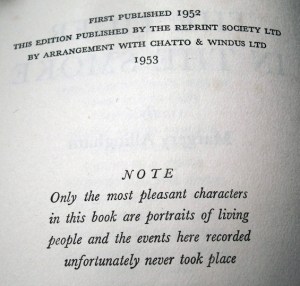
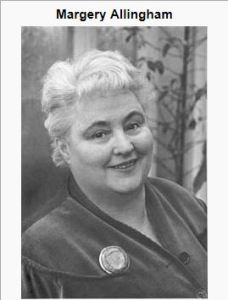
Margery AllinghamThe Tiger in the Smoke by Margery Allingham (originally Chatto and Windus, 1952) is yet another of my Trinity Book Sale purchases (TBS Purchases). As you might have gathered, my TBS purchases forms its own TBR pile within the main TBR Pile (phew!). This edition of The Tiger in the Smoke is a 1953 hardback edition, which was part of a monthly series called World Books, published by The Reprint Society at 4/6 (for members only apparently). I note from the back cover that postage and packing cost 9d extra, (you could also buy Gone with the Wind at 8/- for the same postage price which was certainly a bargain). I love the cover design with the signs of the Zodiac on them, but the publisher doesn’t credit a cover artist which is a pity.The Tiger in the Smoke
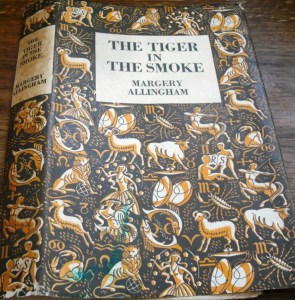
I haven’t read an Allingham crime novel for years so it was a nice indulgence to head back into the Golden Age of Crime. Margery Allingham (1904-1966) penned her first Albert Campion novel, The Crime at Black Dudley in 1929. He proved to be such a popular creation that he appeared in a total of eighteen novels and around twenty short stories. I was intrigued to discover that Allingham originally invented Albert Campion to be a spoof on Dorothy L Sayers’ character Lord Peter Wimsey. Over the course of time however, he became much more substantial than a mere jest and matured into a more complex character. Campion has an aristocratic background and his real name is as much a secret as were his missions during the war. Undoubtedly, my affection for Campion is influenced by the stylish BBC series from 1989/90 starring Peter Davison and Brian Glover. This comprised versions of eight of the novels, but not the first one, or indeed The Tiger in the Smoke. I can feel a DVD hunt at the local library coming on!

My last Landing TBR report was full of Elizabethan crimes, or at least political shenanigans and courtly dramas. This time, although we are still in the realms of dark doings, the century and location has shifted to post World War II London. The shady happenings take place in a particularly mysterious and gloomy setting here, as much of the book’s activity occurs in the midst of the worst pea souper in living memory. In fact, the atmosphere is quite Dickensian, there is a sense that Bill Sykes could swagger round a corner any minute. A motley crew of street musicians, threading its way around the alleyways, led by an albino called Tiddy Doll is suitably sinister.

The plot of The Tiger in the Smoke centres on an escaped criminal and former soldier, Jack Havoc who is trying to locate what he believes to be a treasure hoard, a secret he learned of during a wartime raid in France:

He was a man who must have been a pretty boy, yet his face could never have been pleasant to look at. Its ruin lay in something quite peculiar, not in an expression only but something integral to the very structure. The man looked like a design for tragedy. Grief and torture and the furies were all there naked, and the eye was repelled even while it was violently attracted. He looked exactly what he was, unsafe.

The Tiger in the SmokeHavoc’s commanding officer Martin Elginbrodde, who had hidden the treasure, was later killed in action. Elginbrodde had left coded instructions for his widow Meg to retrieve it in such an eventuality. The story opens five years after a Elginbrodde’s death, when photographs supposedly depicting Meg’s late husband alive and well, have appeared in her post after the announcement of her engagement to Geoffrey Levett. Meg is Campion’s cousin hence, his being called in to assist in unravelling the mystery of whether her husband is still alive or someone wants her to think that he is.

In this case, Allingham’s deceptively affable amateur detective makes a late-career appearance in a supporting role, alongside his ever-reliable criminal turned sidekick Magersfontein Lugg. The hunt for Havoc is largely in the hands of the Scotland Yard, in the person of the charismatic and forceful Charlie Luke. I remember Campion novels as being quite light-hearted, but this one is much darker in atmosphere. Perhaps this is because I read previously, novels that were set much earlier in Campion’s sleuthing career. Here he is middle-aged, with a wife (Lady Amanda Fitton) and young son (Rupert) and he is very much aware of what he has to lose at the hands of the psychopathic Jack Havoc, on the loose in the obscuring fog. Campion’s son is blithely unaware of any danger, as his father decides to send him to safety with Lugg as a bodyguard:

Mr Campion looked down at him. He was shocked at the intensity of his own emotion, and more afraid of it than of anything he had ever known. One half of his life, more than half, four foot tall and as gaily confident as if the world were made of apple pie.Note

As I said above, Campion does not have a starring role in this one, but (without giving too much away) he assists in the capture of the Elginbrodde impersonator and his intuition gets Geoffrey Levett out of a potentially fatal situation. The twin pillars taking the weight of the story are the opposing moral forces of Jack Havoc and Meg’s father, Canon Avril. The Canon is a gentle, unworldly man whose faith in God causes him to confront the murderer, because he knows it is something he must do. I won’t tell you how it turns out, but Havoc’s life philosophy, The Science of Luck, which Avril calls The Pursuit of Death is challenged by the one person able to understand.

This is not so much a who-dunnit as a mystery novel that also explores a London still getting back on its feet after the war. The Tiger in the Smoke deals with damaged humanity, not only the prowling Jack Havoc, but also the band of misfits in Tiddy Doll’s gang. In the end, when the mystery is solved and the treasure is finally discovered by Meg Elginbrodde, it seems that peace will finally arrive.

Additional picture credit: Wikipedia (with thanks)


Arabella Stuart and Bess of Hardwick

I mentioned in the last post immersing myself in some dubious sixteenth century doings. Wreath for Arabella by Doris Leslie (Hutchinson 1948) was the book that started me off on my tour of historical skulduggery. This is one of the spoils from a previous Trinity Book Sale. I feel sure that I must have read Leslie’s books before, but perhaps it’s just that I remember my mum having them from the library (along with Miss Reed and Mazo de la Roche). Doris Leslie (1891-1982) was a British novelist and historical biographer who originally wanted to be an artist, then studied drama and finally discovered a talent for writing, publishing her first book in 1927. I didn’t know anything about her before lighting on a biographical note by the Southborough Society who have put up a blue plaque in Leslie’s honour. She does not seem to be particularly well known today. Although she was writing contemporaneously with Georgette Heyer whose books are still widely available, her books have since slipped through the publishing cracks.

Wreath for Arabella is a lively, well-written fictionalised account of the life of the ill-fated Arabella (Arbella) Stuart (1575-1615), a cousin of Queen Elizabeth I (1533-1603). Both women descended from Henry VII: Elizabeth was his granddaughter (Henry VIII’s daughter) and Arabella his great great granddaughter (her father Charles Stuart was descended from Henry VIII’s sister Margaret of Scotland). Elizabeth apparently favoured choosing Arabella as her successor to the throne, only to change her mind in later years. From her earliest years, Arabella was educated as befitted as princess, studying Hebrew, French, Greek and Latin. In the end, Elizabeth’s choice of successor settled upon another cousin, James Stuart, the son of Mary Queen of Scots, so the careful preparation was to no avail. England was not to have three women (four queens if you count Lady Jane Grey) in a row on the throne after all.

As you might imagine, being a potential heir to the throne was not a particularly safe place to be. In fact, Elizabeth had taken it amiss that Arabella’s parents had married in the first place, due to the likelihood of creating yet another claimant to the throne. Arabella’s grandmothers languished in the infamous Tower of London for a while. In such family circumstances, probably it would be wiser to keep your head down (lest you lose it) and to be of a very shy and retiring disposition. Unfortunately, according to Leslie’s novel, Arabella was anything but shy and retiring and consequently earned the queen’s displeasure on more than one occasion. Elizabeth once sent Arabella away from court for flirting with her current favourite, the young Earl of Essex. More seriously, Arabella was the focus of various Catholic plots to remove Elizabeth from the throne, though admittedly she was not directly involved. Whether that was loyalty or merely the lesson learned from her cousin Mary Queen of Scots’ bad judgment, it is hard to ascertain from the novel. Suffice to say that many political figures would have liked to use Arabella as a pawn in their schemes (see, I told you there was skulduggery afoot).

This slideshow requires JavaScript.

Stuart family history in general has always fascinated me, but as a bonus, Arabella’s story meshes with the most formidable woman of the era (apart from Elizabeth herself that is), her maternal grandmother, and known to history as Bess of Hardwick (1527-1608). From relatively modest origins, Elizabeth Hardwick rose to become the richest woman in England with a penchant for building beautiful houses such as Hardwick Hall. She came very close to being the grandmother of a queen, after engineering the marriage of Arabella’s parents and coming into conflict with her royal namesake. Unfortunately as I have said, Bess’s ambition didn’t allow her to achieve her final goal, but she still left her descendants very well placed in Tudor society. She even managed to survive the other Elizabeth by five years, and lived to see Arabella welcomed at the court of the new monarch James I (VI of Scotland) and his wife Anne of Denmark.

Bess would probably not have been a very comfortable relative to have around, but her drive and her energy were undeniable. Moreover, in an era when women’s role was to play a quiet domestic part, Bess had a public status not common at the time. Bess of Hardwick organised her own life very effectively, as well as those of her extended family, whether they liked it or not. The lady of Hardwick was the one moving the pieces across the chessboard and not the other way around. She married four times, each time carefully moving further up the social scale and acquiring more land and property. Her first marriage to Robert Barlow was very short and both bride and groom were only teenagers. After her husband’s death, Bess married a widower, Sir William Cavendish, with whom she had several children, six surviving into adulthood. After marrying and burying Sir William St Loe within a few short years, her crowning achievement was to become a countess upon her fourth marriage to another widower, George Talbot, Earl of Shrewsbury. She then very shrewdly married two of her children with two of the young Talbots to keep assets within the family. Oh, and in later years she had a very public marriage breakdown. Twentieth century celebs have nothing on Bess!

One of the short live series, Kate Hubbard’s A Material Girl from Short Books (belonging to He Who Put The Shelves Up) is a great introduction to this most fascinating of women. I first came across Bess of Hardwick many years ago via a BBC television programme but I can’t find any trace of it on the usually reliable YouTube. However, you can watch some more recent biographical clips if you want to look. Reading these two books has reminded me that I have yet to get around to visiting Hardwick Hall, so maybe I will manage to fit it in during my next trip over to see the family. I will also keep a look out for more of Doris Leslie’s historical novels (or perhaps not depending on the state of the TBR Pile!)

Meanwhile, I will continue with reading more of my Trinity Book Sale bargains…

Extra picture credits: the Doris Leslie plaque taken from the Southborough Society page (see above)

Book Shelves on the Move: A Reading Renaissance?

Book Shelves

A Fresh Reading Start?

The Landing Book Shelves (the actual shelves that is, as opposed to the blog) have had a bit of a shake-up in recent weeks, because of some building work involving window replacement. The upshot is that one set of shelves is no longer on the landing, but in the hall. As other shelves have similarly moved around somewhat, many books are now in different locations and a certain amount of confusion and mixing of genres has arisen. On the other hand, this has been a great opportunity to re-discover overlooked titles and authors. It has also had the slightly depressing result of making me realise just how many books in the house (let alone on The Landing Book Shelves) remain un-read. I shy away from doing a serious count (as Cathy at 747 Books has bravely done) because I don’t want to lower my literary morale any further. Although I am now beginning to consider re-naming the blog ‘The Household Book Shelves’ since that is a more realistic picture of the challenge ahead. At this rate I may have to ban myself from going to the library.

More Book Shelves

Plenty of Penguins

In the spirit of a spring renaissance I have therefore decided to take a positive view of the un-read books and to try see them all as so much bookish potential, rather than as a task to be completed. I think that if I persist in treating them as items to be ticked off a list, then I might as well give up the whole enterprise, since it will no longer be any pleasure. With that in mind, I have been enjoying myself by making mental note of a few random titles that had previously slipped off my radar. So far, I have accumulated about half a dozen novels, belonging to either me or He Who Put The Shelves Up, that have been floating around for a while. Some of them, such as The Llangollen Ladies (Mary Gordon) and The Children of the Archbishop (Norman Collins) are Trinity Book Sale purchases from a couple of years ago. Perhaps it is no bad thing that we missed this year’s event due to a change in dates. The half-price Saturday could be a very tempting affair indeed and consequently, inestimably dangerous to the state of the TBR Pile.

A Small Book Shelf

Mainly Children’s Books

Therefore, the next few posts will I hope, feature some true examples unearthed from the TBR Pile because of the new shelf arrangements. It has been quite nice to discover books that have languished un-noticed for months (or even years). It has even been nice to do some very necessary dusting of books and shelves as everything was put back in place. Now, at least I have clean books to read! I have even been toying with the idea of creating a proper catalogue as an excuse to practice my very rusty data base skills. I have come as far as naming a file in this worthy enterprise and that’s about all.

I am not sure yet which title will feature in the next post, but I am leaning towards political skulduggery in the sixteenth century so I have a couple of options to consider. Drop by again soon if you want to see what pops up on The Landing Book Shelves.

Jane Austen: Letters to Cassandra

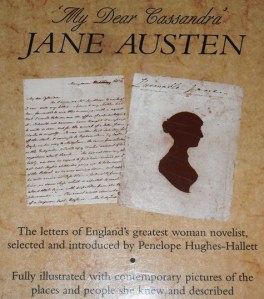
While continuing to keep up with the A Month of Letters challenge (now successfully completed), I have been browsing the bookshelves to remind myself what letter collections I have tucked away. Possibly one of the most famous letter writers in literary history was Jane Austen, whose main correspondent was her elder sister Cassandra. Perhaps it is more correct to say that, Austen’s letters to her sister have survived, whereas others have been lost (Cassandra destroyed many letters before her own death in 1845). After Cassandra’s death, the surviving letters passed to her great niece Fanny Knight and in due course, Fanny’s son published these letters in 1884.Jane Austen Letters

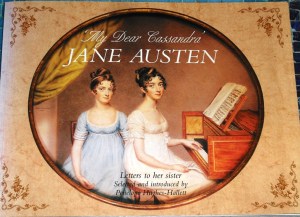
It is a sample of these letters that are published in My Dear Cassandra: Letters to her Sister (selected and introduced by Penelope Hughes-Hallett). The book is fully illustrated and features notes to contextualise the letters and excerpts from Austen’s fiction. It is a lovely book to own, though I have to confess that I do not remember when or from where I bought my copy. This collection was published as a hardback gift edition for Past Times in 1990 (paperback 1991) and it is clearly not intended to be a comprehensive, scholarly edition. However, as an introduction to Jane Austen, her letters and her world it is an excellent choice. As you start to read, you can see how Austen garnered the material for the novels yet to come. The reader can follow up references for further biographical reading, although this edition pre-dates Claire Tomalin and David Nokes’ biographies of Jane Austen (1997).

As you might suppose, this collection of letters has lain on The Landing TBR Pile for some years, so it is about time that I perused a few of the letters. I did not intend to read straight through, but of course, as the letters are presented chronologically, you read on to find out what happened next, as in any good novel. Not surprisingly, there are gaps in the story however, when they didn’t exchange the twice-weekly letters, due to being together. For instance, from 1801- 1805, there is more need of contextual prose in the absence of original letters, to keep the continuity of events flowing. The sisters corresponded when one or other was away on the extended family visits and duties that were common in that period. The one thing that is hard to appreciate is the frequency with which letters were delivered in the 1800s. We think that we are well connected now, but it is amazing to think that you could once have had an evening postal delivery. Back Cover Illustration

The problem with reading someone else’s letters is that you are peeking into to a different life and don’t know the dramatis personae. Add to that, a different century and an alien social milieu and even with the helpful notes (and they can inevitably only go so far) it can be difficult to put flesh on the incidents and people mentioned. Even so, what comes over is that Jane Austen was an observant student of human nature and enjoyed regaling her sister with various goings-on. She clearly had a great affection for family and friends but she enjoyed poking fun at various people.

Sometimes there seems to be a sharp contrast between her mocking of acquaintances, and her affectionate regard for her family. This letter from 1798, has an almost cruel throwaway comment about a neighbour, yet displays doting affection for her three-year-old nephew:

Mrs Hall, of Sherborne, was brought to bed yesterday of a dead child, some weeks before she expected, owing to a fright. I suppose she happened unawares to look at her husband.

We are very glad to hear such a good account of your patients, little and great. My dear itty Dordy’s remembrance of me is very pleasing to me – foolishly pleasing, because I know it will be over so soon. My attachment to him will be more durable. I shall think with tenderness and delight on his beautiful and smiling countenance and interesting manners till a few years have turned him into an ungovernable, ungracious fellow.

Her trademark humour is there in the line about the likelihood of the boy growing up much changed, but it is not as barbed as her comment about the bereaved Mrs Hall. I wonder what this woman was to Jane Austen that she felt the need to be so flippant. Maybe however, this was merely misfired humour in a family letter, which would never have seen the light of day if its author had not become famous. In a later letter, Jane Austen writes of how amusing Cassandra’s latest letter was, so I cannot help wishing that I could read it too. I assume that Cassandra’s letters were lost, but I have not researched this yet.

Inside TextTo finish, I will give you a snapshot of Austen’s experience at a dance in 1799, which conjures up vivid impressions of her fictional country balls:

I do not think I was very much in request. People were rather apt not to ask me till they could not help it; one’s consequence, you know, varies so much at times without any particular reason. There was one gentleman, an officer of the Cheshire, a very good-looking young man, who, I was told, wanted very much to be introduced to me; but as he did not want it quite enough to take much trouble in effecting it, we never could bring it about.

I wonder whether this young man regretted in later years, that he could not boast of having once danced with the famous author. How does that song go, ‘I’ve danced with a man, who’s danced with a girl, who’s danced with the Prince of Wales’ (Herbert Farjeon, 1927).

I definitely have more letters stashed away on The Landing, so perhaps I will have another delve later in the year. I don’t really need the excuse of A Month of Letters to read other people’s letters. Meanwhile, I will have a root around for the subject of my next blog post…


Penguin Postcards for ‘A Month of Letters’

Penguin Postcards Box

100 cards to choose from…

Longstanding readers of The Landing will know that February is the time for my contribution to the Month of Letters Challenge (#LetterMo). American writer Mary Robinette Kowal runs the letter writing challenge and you can check out the Month of Letters website for details if you want to jump on board. I have always loved both writing and receiving letters and I am also a great hoarder of letters. I have stopped throwing old letters out in a fit of spring-cleaning, as I have discovered that that way lies regret. I used to have a French pen friend when I was at school (though I don’t think the relationship lasted for long) and I wish I still had the letters. The Bookworm recently asked if she could read some of the letters between me and my school friends (just think, we actually used to write to each other in the summer holidays, how quaint was that!) The nice thing is that I have letters going back for many years, from people with whom I am still in contact. What will people do in the future when they want to have a burst of nostalgia? Comb through their email archive I suppose. Methinks it hardly sounds like an enticing prospect. It did occur to me that I should have my own mini challenge to re-read an old letter on every day of the month, but I think after all that I will just stick to writing to people in February. Maybe I will save re-reading letters for the dark, chilly November evenings by the fireside.

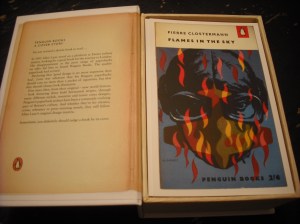
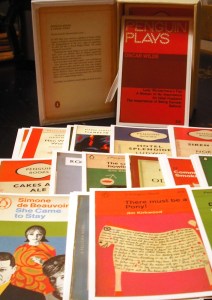
This year, by way of a change I have decided to write postcards for everyone, from my lovely box of Penguin book jacket postcards. My original aim was to try to match a person to a book postcard, but I’m not sure how realistic that will be to manage. So far, I think I have done reasonably well matching two friends who like gardening and cooking respectively, with an appropriate choice of book title. I also despatched an art-themed postcard to a creative artist friend, so far so good. Ideally, I would like to match each recipient with a favourite author, book, genre or topic as far as possible. However, I have been through the box a few times now and I have discovered that some book titles might be difficult to place with a home. I suggest Scootering: a Penguin Handbook or Common Sense about Smoking: a Penguin Special as uncommon choices for uncommon readers. On the fiction front while Orange Penguins, A Severed Head (Iris Murdoch) and Vile Bodies (Evelyn Waugh) are fine as books, would you choose to send them as a postcard design unless you were sure of a good reception?

Penguin Postcards Selection

I’ll never use all of them…

I will write an update on my progress with the book title/matching process in a few days. Meanwhile I might delve into depths of The Landing and see what I have unread in the way of collected letters. I think I may have mentioned before that I enjoy reading other people’s letters…all above board, of course…

Penguin Books ‘Great Loves’ series: Leo Tolstoy and The Kreutzer Sonata

Today’s post on Leo Tolstoy means a return to my occasional Russian theme, though yet again it is a digression from the TBR Pile. There is however, a good reason for the latest diversion from the straight and narrow as it resulted from my first ever visit to The Secret Book and Record Store in Dublin. As with so many things, I can’t believe that it has taken me years to get around to exploring this treasure trove of books (I haven’t yet tackled the record stock). Of course, I couldn’t come out without buying anything could I? Not only that, I had to fetch The Bookworm and show her what I had discovered, so yet more book buying occurred that day.

The Kreutzer Sonata

A striking jacket…

One of my finds was a novella by Tolstoy, The Kreutzer Sonata published as one of Penguin’s Great Loves series of twenty examples of ‘the most seductive, inspiring and surprising writing on love in all its infinite variety.’ The book, originally written in 1889 apparently drew on Tolstoy’s own marriage (1862) to Sofya Andreyevna, which by all accounts was a rather stormy relationship. The introduction states that ‘together they had thirteen children’. The writer fails to point out that the brunt of that would have been borne (pun intended) by poor Sofya. Sadly, of the thirteen children that she bore, only eight survived to adulthood.

In The Kreutzer Sonata, Tolstoy sets out his case against marriage and carnal love, with the story of a marriage that went disastrously wrong. The narrator of the sad tale is a train passenger called Pozdnyshev, who begins to relate the story of his life and marriage to a fellow passenger, after a disagreement between the travellers about love, marriage and divorce. I won’t go into too much detail about the plot, for those who haven’t read the book. Suffice to say that it isn’t a very cheerful read, as the main character can see no justification for marriage, or indeed any sexual relationship between men and women, as the result of his experiences with women. Pozdnyshev’s theory is that it is impossible to maintain a long-term relationship and that love and attraction does not last:

But when, as is most often the case, the husband and wife accept the external obligation to live together all their lives and have, by the second month, come to loathe the sight of each other, want to get divorced and yet go on living together, it usually ends in that terrible hell that drives them to drink, makes them shoot themselves, kill and poison each other.

If that was Tolstoy’s view, based on his own experience, then you can see why Sofya was not impressed that he chose to use that material in his book. But to be fair to Tolstoy, he seems to be saying, through his tormented fictional character, that marriage was not particularly good for women either, in particular so-called love matches. He goes as far as to compare the process whereby young women were taught to use their arts and finery to attract to a husband as immoral, saying that ‘As a rule we may say that while short-term prostitutes are generally looked down upon, long-term prostitutes are treated with respect’. Pozdnyshev goes on to say that ‘a woman is like a slave in a market or a piece of bait for a trap’. He rails against the idea of choice in a match, rather than the old-fashioned way of a matchmaker making a bargain. He maintains that it was fairer to both parties that way; less degrading than the prospective brides’ mothers parading them before men to take their pick.

Pozdnyshev then goes on to explain to his companion that the problems stem from women being so dominant. His fellow traveller is sceptical and asks how this can be so, when men have ‘all the rights and privileges’. Pozdnyshev puts forward his theory that this is to do with voting and has nothing to do with sexual rights, which is where the real issue, as he see it, lies.

No, it has to do with the fact that in sexual relations, she’s not the man’s equal. She doesn’t have the right to avail herself of the man or abstain from him, according to her desire, to select the man she wants rather than be the one who’s selected…And, in order to compensate for this, she acts on the man’s sensuality, so that he’s only formally the one who chooses… And once she has mastered this technique, she abuses it and acquires a terrible power over men.

And what do the wicked woman do to facilitate their seduction and domination of men? Well briefly, they go shopping. They are consumers of luxury goods, ‘keeping nine tenths of the human race in servitude, doing hard labour’ and have ‘turned themselves into such effective instruments for acting on [men’s] senses that [the men] can’t even speak to them with equanimity.’ So, in case you missed something there, what Tolstoy, through his mouthpiece Pozdnyshev, appears to be saying is that men are such poor weak creatures that they are unable to resist women’s lures. In other words, it’s all the fault of those pesky women using their fancy frocks (not to mention flesh) to get what they cannot get by legal and above-board means.

As you can probably imagine, the narrator’s marriage did not end well, but I won’t go into details and give away the ending. In The Epilogue to The Kreutzer Sonata (1890), Tolstoy explained his view on carnal love and marriage thus:

Let us stop believing that carnal love is high and noble and understand that any end worth our pursuit — in service of humanity, our homeland, science, art, let alone God — any end, so long as we may count it worth our pursuit, is not attained by joining ourselves to the objects of our carnal love in marriage or outside it; that, in fact, infatuation and conjunction with the object of our carnal love (whatever the authors of romances and love poems claim to the contrary) will never help our worthwhile pursuits but only hinder them.

I cannot help thinking that it was a pity he didn’t discover this view of carnal love before he caused his wife to endure childbirth thirteen times. It was rather late to get to be so high-minded about carnality.

After my Russian period, I’m not sure where I’m heading for my next post, but I will promise to try to stick to the TBR Pile…


Romans on The Landing: Ecce Romani

Today’s post is about a studious little side-project to my TBR Pile endeavours, though I am not sure whether it will be a long-lasting one or not. I have begun to tackle a cherished ambition to have a go at learning Latin, a language that I never studied at school. My impetus for this ambition fulfilment is that The Bookworm is taking Latin classes so I thought that I would keep her company. Now, to be absolutely clear about this, she is in her second year of Latin study, so it has taken me long enough to screw my courage to the sticking place and get on with a spot of conjugating. So, without even a thought of New Year resolutions, I have acquired a new Reading Challenge.

Ecce Romani

Four to go…

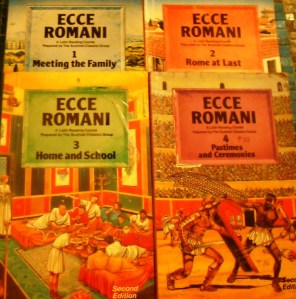
I am working from Ecce Romani: A Latin Reading Course, which was passed on to us by a friend, so I need not feel too guilty if this doesn’t work out. At least I won’t have spent a fortune on my texts. The edition I have is an older version rather than the more recently updated one, but I don’t think it will make much difference. After all, the language can hardly change, can it? The Scottish Classics Group wrote the series, originally published in 1971 (Oliver and Boyd, an imprint of the Longman Group). Longman reprinted the series many times, the edition I have being the seventeenth impression (2000). I am sure that many people must have memories, both good and bad, of studying along with Marcus, Sextus, Cornelia and Flavia. It reminds me of the Peter and Jane reading books from my school days.

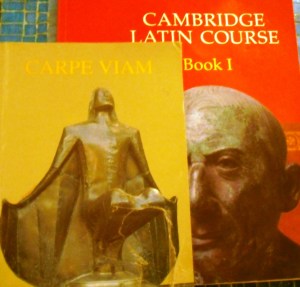
I have Ecce Romani books one to four to work through and then I will see where to go from there (assuming I make it that far). Alongside, I thought that I might dip into the Cambridge Latin Course (Cambridge School Classics Project) series from time to time, as this is the text used by The Bookworm. Cambridge also has online activities to tie in with the books, which might be handy for vocabulary testing. Finally, if I feel truly brave I will tackle some poetry from the poetry anthology called Carpe Viam (The Classical Association of Ireland, 1993, 1998). I am not sure whether I will get as far as the Latin poetry any time soon but I do have good intentions.

Cambridge Latin

How far will I get?

On with the next chapter of my challenge…

New Year, Not So New Literary Challenge

My literary blogging (and to some extent, the background reading also) has been somewhat sporadic of late, leading to a sad lack of posts in November and December. I am however, fighting shy of embarking upon any New Year resolutions to rectify this matter. The words ‘reading’, ‘blogging’ and ‘resolution’ just don’t seem to me to go together, making something that should be pleasurable into a mundane chore. Rather, I am hoping to put together a plan, a timetable, a routine (anything but make a resolution) to keep both the Landing Book Shelves and my reading challenge alive and kicking throughout 2016 and even beyond. Therefore, The Landing will remain a resolution free zone as I try to buck my ideas up (as my mum often told us to do we were kids) and get this blog firmly back on the literary road.

As part of this bucking my ideas up thingy, I thought that I would cast an eye over the blog as it approaches its fourth birthday on 2 February. As a starting point, I re-read my Prologue and the first blog post where I explained my aims for The Landing. I was supposed to be reading around the unread contents of the book shelves on the landing at home, rather than adding any more new books to the dreaded  To Be Read Pile. Over the years however, one or two wee get out clauses have crept into my challenge (in cases of literary deprivation) that I have taken advantage of many a time. My main get out clause is the library, since I have set no limit on my borrowings. In practice, I do usually only pick up one or two books at a time. I may have mentioned before on The Landing, my particular library method, which is to scan the New Titles and Just Returned sections and take potluck with what I find. Serendipity is a splendid thing…

I have also included the occasional review copy and books that I received as gifts. This has been stretched to books bought with gift vouchers (including, but not necessarily only book tokens). As you can see, I have  managed to get my hands on some fresh literary blood without too much effort. I know that reading new stuff was not really the point of the exercise, but at least I’m not going out and buying more books willy-nilly. That is unless you count my forays into second hand bookshops (particularly where I have discovered a new shop such as in Blessington) and the annual Trinity Book Fair, where I have spotted books simply begging to be purchased and loved. So that’s alright then, isn’t it?

Well perhaps not, but I think I’m stuck with my bookish urges, so I will just have to make the best of the situation and keep reading around the landing TBR pile, regardless. I believe that I did once ponder about the situation where at the same time as reading the existing landing books stock, I am relentlessly adding to it. The only thing I can say in my defence is that the rate of acquisition has slowed down enormously over the last few years, as I attempt to explore the wealth of books already here.

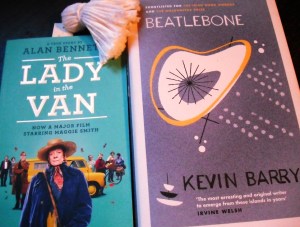
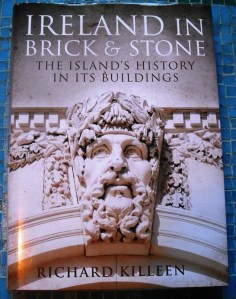
I will just close by mentioning that I had three books for Christmas (see photographic evidence), which naturally I will be forced to read…(watch this space).

Lady in the Van/BeatleboneIreland in Brick and Stone

‘A Happy Reading New Year’ to one and all!

Gladys Mitchell Crime Capers

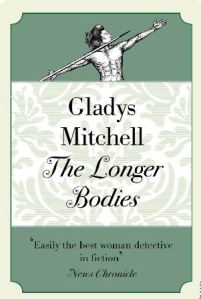
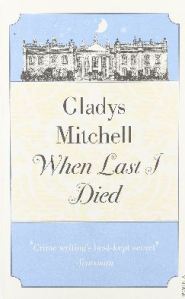
Gladys MitchellI’m afraid that today’s post about Gladys Mitchell (1901-1983) is going to be another digression from my mammoth Landing Book Shelves task. It is I admit a direct result of wandering into a charity shop for a casual browse. I know that I should avoid these temptations, but it truly is nigh on impossible to pass up the chance to poke around on a bookshelf. I had just popped into Oxfam to scan the paperbacks on my way home from shopping and, lo and behold, a crime novel caught my eye almost straightaway. My searching gaze lighted on The Longer Bodies, one of Gladys Mitchell’s early crime novels. Victor Gollancz originally published the novel in 1930 and it has been through several reprints from different publishers over the years. The Longer Bodies (2014)  is one of a recent series of Vintage reprints and the stylish theme to the jacket seems entirely appropriate to their glittering heyday.The Longer Bodies

After enjoying the twists and turns of the plot in The Longer Bodies, I am baffled as to why it has taken me until now to get around to reading Gladys Mitchell. I had heard of her before, in connection with other ‘Golden Age’ women crime writers such as Dorothy L Sayers and Agatha Christie, but serendipity has never thrust one of Mitchell’s books into my hands until now. It won’t be plot spoiling to mention that the title refers to bodies located in the village of Longer, and not bodies stretched on a torture frame to extreme length (I’ve clearly read too many historical novels).  Although as vigorous training for a field athletics event features in the plot, perhaps the title was intended to have a second meaning.

The Longer Bodies provides the third case for Mitchell’s unusual private detective Beatrice Adela Lestrange Bradley. Mrs Bradley is a ‘small, thin, unattractive, and intrepid’ woman, a ‘psychoanalyst with a flair for sleuthing’. She also appears to have a flair for extraordinary combinations of colour and design in her attire, but I suppose that doesn’t make her either more or less of a detective. She wouldn’t have been able to work undercover though, judging by this description of her while on the Longer case:

The only remarkable thing about her was the almost indecent hue of the mustard-coloured sports coat which she was wearing, with terrible effect, on top of a tomato-red dress. The costume was set off…by a small cloche hat which boasted a single, straight aggressive feather. The feather shot insolently into the air for a matter of twenty inches or so…

The other aspect to Mrs Bradley’s personal appearance is the oft remarked upon resemblance to a predatory reptile. Gladys Mitchell created a female sleuth as unlike Miss Marple or Miss Silver as it was possible to be, as may be judged by this none too fluffy description of her social manner,

With what was intended to be a whimsical smile, but which approached more nearly to the kind of grin with which an alligator on the banks of the Nile might view the coming of a chubby but careless baby.

Presumably, a wise criminal would steer well clear of that reptilian smile of Beatrice Bradley’s, as I’m sure it boded no good. Mitchell also gave her detective ‘yellow claw like fingers’, which is rather disconcerting as I keep thinking of chicken’s claws whenever her hands are mentioned. To complete the picture, Mrs Bradley was prone to fiendish cackles or screeches of laughter, but in complete contrast had a surprisingly mellifluous speaking voice, ‘which gave the lie to her whole appearance’.

Mrs Bradley is in a very literal sense a rather uncomfortable person to have around as she has a penchant for poking her companions in the ribs with her umbrella. This piece of equipment is the weapon of choice of another of my favourite female detectives, Amelia Peabody, but Mrs Bradley appears to be much more ruthless in making her point (sorry!) with her ferule. It has to be noted that it is her young male sidekicks who often suffer the rib poking, in the course of their duties on the case.When Last I Died

I have since had a minor binge on Mrs Bradley, having obtained a couple more of her cases, When Last I Died (1941) and The Saltmarsh Murders (1932) from the library. Though I’ve not yet managed to get hold of Mrs Bradley’s first outing  (Speedy Death). All have been very enjoyable, and I think that overall Gladys Mitchell plays reasonably fairly with the reader’s chances of solving the crime. In other words, I guessed the culprit in The Longer Bodies and I should really have spotted the criminal in The Saltmarsh Murders, because the clues were there. Having re-read the last section of When Last I Died more carefully, I can see the groundwork being laid, so again I would have to admit that I didn’t work hard enough on my detecting.

Mrs Bradley is such as fascinating character, that I would love to come back to her as a future blog post topic. She is not a particularly endearing person, but she is highly intelligent, determined and deliciously eccentric. I think I was particularly touched by her compassion and search for justice for the murder victims in When Last I Died (I won’t plot spoil, but if you read it you will see what I mean).  If you want to learn more about Gladys Mitchell and Beatrice Bradley, there is a well researched tribute site that is worth checking out:  http://www.gladysmitchell.com by American writer Jason Half.

If you read the clues correctly, you will reason that I will be borrowing/buying another Mrs Bradley case as soon as possible…

Picture Credits: All taken from Amazon this time, including the book jackets as I didn’t get around to scanning them from my own copies.

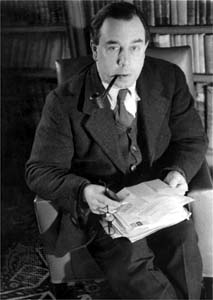
JB Priestley: A Yorkshire Grumbler’s Delights

JB Priestley

1894-1984

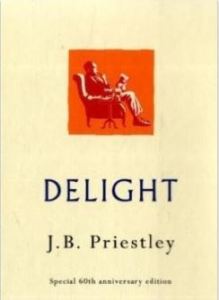
After my break from reading essays to tackle Vanity Fair (inspired by the John Sutherland essay collection), I am now reading yet another essay collection, having been inspired to do so by reading a novel. A nice bit of circular inspiration I feel. To make all clear, I recently read JB Priestley’s Angel Pavement that I bought second-hand in Blessington, which reminded me that I had his essay collection Delight tucked away on our shelves, unread since 2009. After finishing Angel Pavement, I had an urge to re-read something of Priestley’s (English Journey perhaps) but then remembered I had the essays. As always, it’s amazing how often serendipity comes into play when deciding what to read next. At least, by reading Delight, I am actually reducing the TBR Pile (which of course, I had previously increased by buying Angel Pavement etc). At this rate, there will always be a humongous TBR Pile (but then you knew that already, didn’t you?)

To return to the book in question however, Delight is a collection of short essays, originally published in 1949 by Heinemann. The edition I have is an attractive sixtieth anniversary edition, published by Great Northern Books with an introduction by Priestley’s son Tom. There are 114 short pieces, varying from three to just one page in length. The background to the essays is that Priestley wanted to write something to help to cheer up the post-war gloom. He also had something to prove to his family and friends about the perception that he never found pleasure in anything. JB Priestley’s preface is subtitled ‘The Grumbler’s Apology’ and he goes on to explain how he acquired a reputation for being a bit of grumbler.

I have always been a grumbler. All the records, going back to earliest childhood, establish this fact. Probably I arrived here a malcontent, convinced that I had been sent to the wrong planet. (And I feel even now that there is something in this.) I was designed for the part, for I have a sagging face, a weighty underlip, What am I told is ‘a saurian eye’, and a rumbling but resonant voice from which it is difficult to escape. Money could not buy a better grumbling outfit.

In the West Riding of Yorkshire, where I spent my first nineteen years, all local customs and prejudices favour the grumbler. To a good West Riding type there is something shameful about praise, that soft Southern trick. But fault-finding and blame are constant and hearty. The edge of criticism up there is sharpened every morning…I have grumbled all over the world, across seas, on mountains, in deserts. I have grumbled as much at home as abroad, and so I have been the despair of my womenfolk.

As I don’t hail from Yorkshire, but the Midlands I was intrigued by this portrayal of the Yorkshire attitude. I have always viewed Yorkshire folks as a no-nonsense breed and the idea that they were sparing of praise makes sense to me. But any Yorkshire people out there are welcome to put me straight. Since I’m not of ‘soft Southern’ breeding either, I will keep out of the argument. The only thing I will add is that I do feel that having a good old grumble can be quite therapeutic in its effect. Oh, and furthermore, that I tend not to go overboard on praise either (‘not too bad’ is high praise in my book); but whether that is a Midlander’s trait or not I cannot say with any certainty. I can say that I enjoyed roving through Priestley’s many and varied delightful experiences.Delight

In Delight then, Priestley set out to prove that despite being a right old Yorkshire grumbler, he was still able to find pleasure in many things. Not only that, his aim was to share his ‘Box of Delights’ with the post-war readers who wanted something to smile about. The collection of short essays mainly focuses on the small, simple things in life that give us delight. A Guardian review of the reprint points out that some of the ‘delights’ would most likely be lost on a modern audience, but that many would still resonate. I’m not sure I agree with that, after all I have never been a pipe smoker but I can appreciate Priestley’s fondness for choosing just the right tobacco mixture.

Part of the pleasure in reading in these pieces comes from a sense of recognising and sharing the emotion caused by the sight of fountains, waiting for the curtain to go up or buying books. I can also understand and share Priestley’s delight in the pleasure of unearned income, whether it is a small windfall or his profit from selling review copies to a local bookshop. The rest of the pleasure comes from Priestley’s writing style, which is clear and simple but not ‘dumbed-down’. His voice has humour lurking just behind it as he talks about the comparatively ordinary delights of life. This humour may however, harbour a spike should the occasion demand it, such as in recalling a critic who told Priestley that his writing ‘always seems to me too simple’. Priestley referred to this man as a ‘youngish fellow whose personality (though not his values) I respect’. He went to say that to the critic and his ilk, ‘Writing that was hard to understand was like a password to their secret society’.

Priestley genuinely wanted to be able to reach anyone and everyone with his ideas and clearly felt that writing in a clear style that excluded nobody, was the way to do it. He wrote, ‘Some contemporary critics would be better occupied solving chess problems and breaking down ciphers. They are no customers of mine, and I do not display my goods to catch their eye’. Well, you can’t say fairer than that, I suppose that’s the Yorkshire sharpness coming out. Priestley seems to have written for real readers and not fashionable literary critics who thought that you couldn’t be an intellectual without making things complicated. He sounds like my kind of man (and writer) despite the grumbling…


Additional picture credits: Wikipedia, with thanks