The Bones of a Good Story: Richard III

I was ridiculously excited to hear about the discovery of the mortal remains of Richard of York this week. Those of you who have been with me for a while will recall that one of my Landing Eight titles featured an examination of the alleged crimes of the Yorkist king. The Daughter of Time by Josephine Tey is one of my all time favourite books and was included on the blog as a re-read. As far as I know it is still in print, but if not, then this seems to be an ideal moment for a reprint of a title that is a great introduction to Richard III’s life and career.

I have found a couple of news snippets to illustrate the story of the research and discovery of the remains, including a fascinating piece about the facial reconstruction carried out:

http://www.bbc.co.uk/news/uk-england-leicestershire-21328380

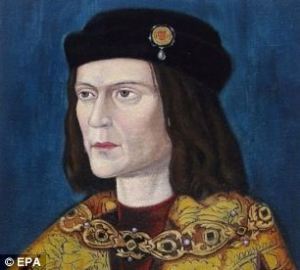
As Phillipa Langley of the Richard III Society says, “It doesn’t look like the face of a tyrant. I’m sorry but it doesn’t. “He’s very handsome. It’s like you could just talk to him, have a conversation with him right now.”

The video below was taken from YouTube and produced by the University of Leicester:

After 500 years Richard III will once more formally be laid to rest. But what of his shady reputation? Perhaps it is time for another appraisal of his life and times; maybe he will yet be posthumously acquitted of his crimes. We will wait and see…

In the meantime, tomorrow  I welcome a visitor to The Landing, as debut author Sarah Moore Fitzgerald talks about the inspiration behind her time travelling YA novel Back to Blackbrick (published by Orion on the 7th February).

So enjoy catching with the news on Richard III and look out for another edition of #LandingAuthor here tomorrow…

Ghost Light: my treasure in the in-tray

Ghost Light

Molly Allgood…

As anyone who follows me on Twitter will be aware, this week I unearthed Joseph O’Connor’s Ghost Light (Harvill Secker 2010) from my in-tray where it has been languishing for the last few months. It is the trade paperback edition, purchased in a charity shop and put aside in favour of other things. As I am sure I have remarked before, there is a particular pleasure in coming across a book that you have completely forgotten ever buying. Finding it all over again is a treat in itself. O’Connor’s novel was chosen as the Dublin One City One Book title for 2011 but I never actually got around to reading it. (See this article in The Blurb pages for more on the annual event).

The novel brings to life the secret love affair between playwright John Millington Synge (1871-1909) and Abbey Theatre actress Mary (Molly) Allgood (1885-1952) from their meeting in 1905 until Synge’s death. Molly went on to become a well-known stage and film star (as Maire O’Neill) though Synge’s family and friends brushed aside her real-life role as Synge’s lover and muse. Her relationship with Synge had never been considered suitable owing to differences in their respective religious and social positions.

I am just over half way through Ghost Light now and enjoying it very much after taking a few pages to get into it. At first, I thought the novel was going to be too sad and dreary for what I wanted at the time. Certainly, persistence has paid dividends and, while the book has its sadness, there is plenty of humour too with some brilliant comic dialogue. Of course, Molly is a wonderful heroine, both in her fiery spirited youth and her resilient old age in a battered post-war London.

Portrait of Molly Allgood

Molly Allgood, by Yeats

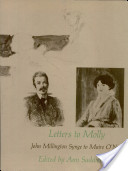
The more I progress with the novel, the more I want to know about Molly’s life and times. I found a lovely portrait, painted by John B Yeats on my internet trawl for more information. Molly made many films during her career, working up until the end of her life. She went on to marry twice (her first husband died and she was divorced from the second) and had two children. Apparently all of her letters to Synge were destroyed but an edition of his letters to Molly was published in 1971 by Harvard University Press (edited by Ann Saddlemyer). I think this is one volume I would like to add to my Landing Bookshelves letters collection. Perhaps a Christmas present to myself?

For more information take a look at Joseph O’Connor’s webpages: http://josephoconnorauthor.com/ and also an article he wrote for Prospect Magazine (from where the picture of Molly was taken): http://www.prospectmagazine.co.uk/magazine/the-playboy-and-his-muse/

Letters to Molly

Letters to Molly

New literary travel guide from Oxygen Books

St Petersburg Guide

Another delicious literary guide…

Quick Post: New literary travel guide from Oxygen Books

This is by way of a brief ‘thank you’ to Malcolm at Oxygen Books for my lovely copy of the latest in the City-Pick  series: St Petersburg (edited by Heather Reyes, Marina Samsonova and James Rann). I have had it tucked away for a wee while and have only now started dipping into it. I began with some pieces on the Marinsky Theatre, Anna Pavlova and extracts from Truman Capote’s visit to the city on a cultural exchange tour in 1957.  After reading about St Petersburg in the snow I am feeling quite Christmassy already.

My first City-Pick guide was the Dublin guide which I originally wrote about for Hackwriters and which has seen plenty of wear in the meantime. If you want to read this piece I have now tweaked it and re-posted. (here). Similarly you might like to take a look at Amsterdam (here) which I wrote about after a weekend trip in 2011. Now all I need is a holiday in Russia….

Update ( June 2013) – I have been sitting on the Istanbul guide for a while and have been inspired to take it out after seeing the Bollywood film Ek Tha Tiger (Salman Khan and Katrina Kaif) in which part of the action takes place in this lovely city. Whether the book contains any anecdotes about secret agents (of any stripe) remains to be seen though. Mind you the plot of the film began in Dublin, so if there’s ever a revised edition of the Dublin guide perhaps it might include reminiscences from the Bollywood film crew. Now there’s a thought…

cover of Istanbul guide with cresent and minarets

‘perfect gems of city writing’…

The Past is Another Country: Culture Night

I am truly sorry about the miss-use of  that quotation in the title and have no excuse except that it just popped into my head and it seemed a shame to waste it. Just for the record, I have not yet actually begun to read The Go-Between and am still reading Bring up the Bodies. Anne Boleyn’s downfall is edging closer as I write so be prepared for copious amounts of bloodletting. And now on to a snapshot of our Culture Night’s activity…

As I said in my last piece, I was itching to get out and about to catch up with a few as yet unvisited cultural venues. At risk of sounding rather like a cultural box ticker, I did manage to cross three places off my list of ‘I must it do sometime’ activities. My brochure was a mass of ticks by Friday evening so I knew that there would be no hope of doing everything on my list. As it turned out, the first port of call for my fellow culture vulture and I was a late entrant to the event, not even mentioned in the brochure (though listed on the website) so that counts as a bonus point.

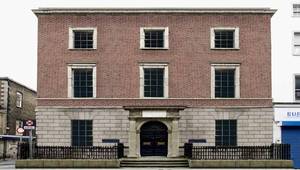
Assembly House

Dublin City Assembly House

Our bonus venue then, was the former City Assembly House in South William Street, which is due for a restoration programme by the Irish Georgian Society in partnership with Dublin City Council. I have long wanted to have a peek inside the elegant looking building but have never seen it open. Sadly, the interior fabric desperately needs attention from some dedicated craftspeople to restore its former glory. According to IGS’s literature, the group is looking to raise a staggering €2,000,000 to finance the restoration. When finished, the building will be the headquarters of the IGS and is also to be restored to its original function as a venue for exhibitions and other cultural events. The plan is to have the restoration completed in time for the building’s 250th anniversary.

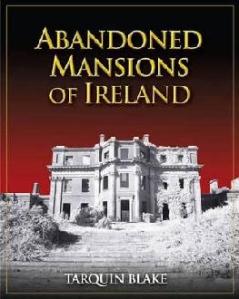
Abandoned Mansions

Tarquin Blake’s first volume

The building dates from 1765 and was the first purpose-built public exhibition gallery in Ireland. Wandering around the still gracious rooms, we could mentally step back in time and imagine how they must have looked. The double height octagonal exhibition room (once the city assembly’s meeting room) featured a collection of Tarquin Blake’s photographs of abandoned mansions of Ireland. He has recently brought out a second volume of images published by The Collins Press (see the illustration taken from the publisher’s site). It seemed strangely apposite to be viewing pictures of ruined buildings in this venue, which while not a ruin itself, clearly needs the planned intervention to prevent it becoming one. These images of ruined mansions and castles attest to a past that was indeed a very different place. Some of the mansions simply fell into disuse and became ruined while others were actively destroyed. Either way, looking at the pictures produces very mixed emotions. The owners of these houses lived very privileged and protected lives unlike the vast majority of people. Having said that, the house would have been a source of employment in the area and was a whole community in itself.

Abandoned Mansions II

More brilliant images…

I will follow the restoration process of the City Assembly House with interest and I hope one day to stroll around an exhibition in the finished rooms. If anyone is interested in the Irish Georgian Society’s activities, follow the link here and to check out Tarquin Blake’s gorgeous books click here.

And now, I’m off to read for a while…let me know what you’re reading at the moment!

Richard III in the news

News Update: Richard III in the news

Richard III

Portrait of Richard III


Anyone who has read my previous post (in June) on Josephine Tey’s The Daughter of Time will know of my longstanding interest in Richard III and the mystery of the princes in the tower. I am greatly intrigued by the recent news bulletins about the discovery of a skeleton that may perhaps be that of the king slain at the Battle of Bosworth.

One of the headlines on BBC Leicester’s website refers to the poor man as the ‘car park king’. I suppose he was hardly to know that the site of all that bloody death would end up under something as mundane as a supermarket car park. A story to keep an eye on anyway…

July 2013

More news from Leicester concerns a further dig to discover what else lies amongst the remains of Grey Friars Church. The link here is from a Mail Online report on the continuing site work.

Planning Culture Night: Landing field trip

Culture Night is still a few more days away and already I am anticipating an evening of cultural entertainment. I do realise that the Landing Eight Reading Challenge should be my paramount concern, but Culture Night comes but once a year (just like Christmas only less expensive) and is not to be missed.

Culture Night 2012 Logo

It’s that time of year again..

I have been scanning the programme and trying to work out how many items I can feasibly fit into the evening (allowing time for refreshments of course). High on my list of priorities is a tour of the Freemason’s Hall, which is one of the decreasing numbers of yet unvisited places of interest in Dublin. I tried to get to see it last time it was opened to the public but the queues snaked down the road and round the corner. I am quite clearly not the only nosy (I mean cultured) person in Dublin.

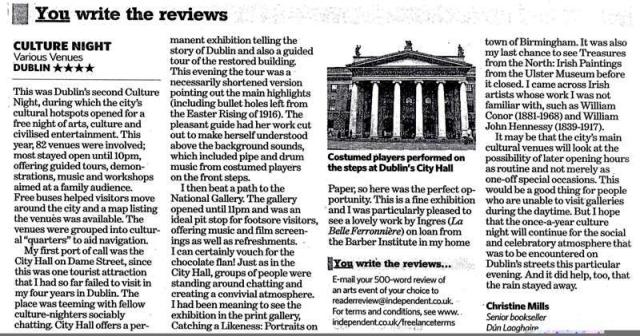
I was thinking of sticking to the South Georgian Quarter this time round, but who knows what might happen when I get the cultural bit between my teeth once again. It did occur to me while planning this year’s activities that I had written a short piece for the Reader Review column of the Independent newspaper (UK) in 2007 when Culture Night was still in its infancy. I managed to dig out a photocopy of the newspaper cutting to scan into the blog (my technological skills increase with every passing day). It is clear from looking back to 2007 how much the event has grown in five years, even spreading far beyond the confines of Dublin.

text of review

Review from the Independent (UK) (2007)

I wrote a piece this week for the Irish News Review about the up-coming 2012 event in which I mentioned that this year sees 134 venues participating in Dublin alone. It is a tribute to the hard work of all of the institutions, venues and organisers involved that this event has gone from strength to strength as it has. I will be out doing my bit to support the event on Friday evening (with a book in my bag of course!).

There will be a return to book talk for the next Landing post, but if you do get out and about for Culture Night, wherever you are, drop me a line and share your culture fix.

The Best Science Book of All Time*: The Periodic Table

As I explained in a previous post, the latest book that I have been tackling here on the ‘Landing Eight’ Reading Challenge is Primo Levi’s The Periodic Table (or Il Sistema Periodico in the original Italian, 1975). I have previously read If This is a Man and The Truce (published in one volume) which I would list as a ‘must read’ even though strictly speaking I dislike the idea of telling folks what they should read. I find it hard to resist doing it occasionally though. To read of Levi’s experiences is the nearest that most of us will, fortunately, ever get to such inhumanity. Reading of them, bearing witness to such actions, is therefore the very least we can do.

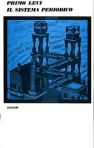
Italian first edition of Il Sistema Periodico

First edition with Escher etching

The Periodic Table has long been on the back burner (as opposed to the Bunsen burner), probably because the scientific term of the title put me off a little. I was anticipating the prose to be inevitably laden with chemical names and processes and consequently rather hard going. After having finally read the book I can testify to the fact that my brain has been absorbing the names of elements and compounds that it has not had much reason to consider in years (apart from the basics such as oxygen and carbon that is).

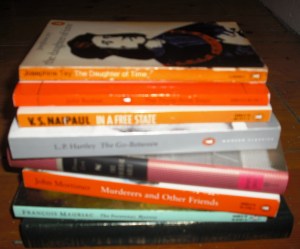
stack of classics

It’s the fifth one down

As it happens, I found the chemistry experiments fascinating (especially when things failed to turn out as hoped) despite it being a very long time since I last studied science.  I admit that I would have had trouble recalling many of the elements on the Periodic Table off the top of my head (of course, chemists have added new discoveries to the table over the years). Since reading the book, I have been trying earnestly to recall the chemical symbols I used to know.

Having my chemical memories jogged a little has brought back images from the school year that saw our form ensconced in Lab 12 with Dr F as our form mistress. Looking back, I question the wisdom of the school using a science lab as a form  room, but I suppose anything really dangerous was locked safely away. I actually used to enjoy chemistry though I have a vague memory that my experiments generally failed to turn out as expected. There was a definite excitement in the processes of measuring and heating. Fortunately nothing actually exploded.

Then, I did go on to study bakery and confectionery, which is where you mix one ingredient with another to produce a chemical reaction.

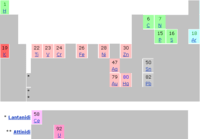
diagram of The Periodic Table of Elements

The Periodic Table showing elements used by Levi

We all do chemistry every day, but just tend not to realise it as such. Now, I think that before I go in search of my old school lab coat, perhaps I had better do just a little more reading. If anyone has a favourite scientific read I would love to hear about it, so drop me a line in the comment box.

*As voted for in 2006 by a Royal Institution survey – link to a Guardian article here.

(Thanks as always to the nice people at Wikipedia for the additional illustrations of The Periodic Table diagram and the cover of the original Italian edition of Primo Levi’s book)

From Landing to Walls: Romans and Rows in Chester

Black and white sketches of Chester

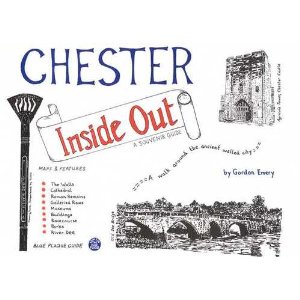
Chester Guide

The landing has been rather quiet of late as I have been away visiting my family in Birmingham for a few days. On my travels, I spent a day in Chester for the first time in many years. Though I did remember some of the city’s general features, my memory failed me on the detail. I definitely remembered the Chester Rows and I knew there were Roman remains somewhere in the city but the rest was rather hazy. Therefore, I was delighted to discover an informative souvenir-walking guide at the railway station.

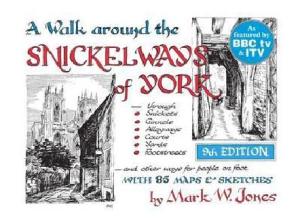
Chester Inside Out by Gordon Emery (1998) is as much of a pleasure to sit and read, as it is to use as a conventional guidebook.  The book abounds with maps, sketches, suggested walks (with detours) and snippets of Chester’s long history. The landscape orientation of the book’s page layout and its facsimile handwritten text owe a debt (acknowledged by the author) to Mark W Jones’ A Walk Around the Snickelways of York (1983, 2010).

Black and white sketches of York

Passages, walls and alleyways…

The latter title is now on its 10th edition so the formula obviously works. This type of guide has plenty to offer and can be enjoyed in different ways. I have been sitting reading my Chester guide and traversing the streets in my mind’s eye. Sadly, I have also been realising what we missed seeing on our short trip. An added bonus to walkers is the spiral binding on the book; a plastic rain cover would be perfect but you cannot have everything I suppose.

York and Chester have much in common, both being fine examples of walled cities with a history stretching back to the Roman occupation. What better way to get to know a city than to be able to walk around it atop a wall with wonderful views of the neighbourhood. In both York and Chester you really get a sense of how the cities have developed over the centuries, as the inhabitants gradually built beyond the old city walls.

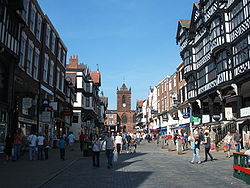
Where Chester is unique however is in its galleried streets of shops known as The Rows whose origins lie in the 14th century. The guide-book tells us that the first shops were probably built as a result of a disastrous fire in 1278. I could have spent hours just wandering up and down and window shopping (see picture below, courtesy of Wikipedia). Much more atmospheric than browsing in a glass and concrete shopping centre.

The Rows have certainly changed over the centuries:

If you could make your way along the creaky boards from one shop to another you would have to dodge displays of goods on the floor, walls, and hanging from the rafters; while stalls on the outside of the galleries dimmed the light.

A view of some of Chester’s Rows

The Chester guide is also handy if you want to go Blue Plaque spotting around the city as each one is marked on the walking route maps. At a reasonable £7.95 it was well worth the money and it will now nestle on a shelf next to my York Snickelways guide until called into service again. I wonder if anyone else has produced a similar style of city walking guide for other historic cities? I can feel a quest coming on (and a possible new collection).

If any readers have come across any such books I would love to hear (purely in the interests of research of course!)

John Buchan and the Arts and Events File

Since my last post I have been busy getting stuck into The Thirty-Nine Steps by John Buchan so I will shortly be well on the way to ticking off another title from the ‘Landing Eight’ selected recently. More on this in the next post. I have recently watched one of the film versions of the book (Robert Donat as Richard Hannay) thanks to one of those free DVDs you sometimes get with the Sunday papers. The comparison of page to screen was interesting.


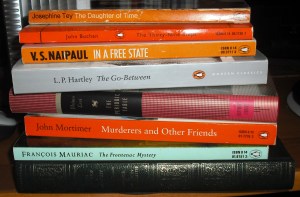
A pile of classic novels

Progress…

Other News: I have also been busy trying to add new chapters to my site to incorporate more cultural bits and bobs than I can include on the main blog stream. In my Arts and Events File I have added a few pieces that were previously published elsewhere and that I have tweaked and edited slightly before posting up here.

This bit will be a random collection of arts related topics – anything that grabs my attention really. Another section called The Blurb features small publishers, one current (Red Fox Press) and one the iconic Cuala Press run by the Yeats sisters in Churchtown, Dublin. There will also be other literary related articles, such as one on Marsh’s Library, Dublin.

I have included links on these pages so anyone interested in following up any of the information can easily do so. I test the links as I go along but would appreciate feedback if any of them fail to connect.

cover of Mandy Moore's Yarn Bombing

Yarn Bombing by Mandy Moore

Another of my arts pages highlights the fantastic ‘knitted graffiti’  (or yarn bombing) trend, which is something that I came across at an exhibition in the Royal Artis Zoo in Amsterdam last year. I just wish my own knitting was up to the challenge!

Last, but by no mean least I have posted up a page about a famous American Civil War quilt and Jane Stickle who created it so beautifully. This was inspired by a visit last year to the Knitting and Stitching Show at the Royal Dublin Showground (RDS).

I hope these pieces in the Arts and Events File and The Blurb pique your interest in the topics; if anyone has any ideas for future posts I would love to hear them.

Thanks for reading!

An Enlightening Journey with Andrés Neuman

After my Q and A with Argentinian/Spanish writer Andrés Neuman here is my piece on his novel Traveller of the Century. At a hefty 584 densely packed pages it is a book that cries out for the luxury of a few hours solid reading time. As I found that to be impossible, I have followed the characters in fits and starts. Thankfully, the engrossing themes and threads of the novel guided me through the drama. When I first got my hands on Neuman’s first novel in translation and read Roberto Bolaño’s effusive praise in the introduction, I felt somewhat ambivalent about tackling the book. I am not much given to hyperbole so I find it rather hard to swallow in others. Bolaño claims that ‘the literature of the twenty-first century will belong to Neuman and a few other blood brothers of his’; (very gender specific; no blood sisters then?). Therefore, it was with some scepticism and a certain amount of trepidation that I began to read the novel. After I had finished reading, I felt that there had been so much going on in the novel that I would pull out a few themes and images that particularly struck me, to highlight here.
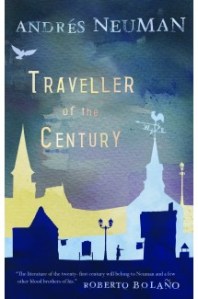
Cover of Traveller of the Century with silhouette of town

Traveller of the Century

Traveller of the century is set in nineteenth century Germany, after the European upheaval of the Napoleonic Wars. When the story opens, Hans, a translator and compulsive traveller is in a coach creaking its way through a bleak winter landscape.  Late at night, he plans to break his journey to Dessau in the town of Wandernburg and finds lodging in a rather shabby looking inn. As the story unfolds Hans, who never stays anywhere for very long, finds himself unable to leave. This is in part because of the strange qualities of the town and in part due to his increasing entanglement with the lives of the people he meets in Wandernburg.

A silken thread running through Traveller is the seeming ability of the geography of the town to shift around, almost as if the town itself does not want people to leave. In trying to find places that, he had found the previous day, ‘Hans had the strange feeling that the city’s layout somehow shifted while everyone was asleep’. He finds the market square to be the only location easy to pinpoint. This sense you get of the changing aspect of the town is unsettling and suggests unseen and unknown forces below the surface. Is it coincidence that Hans only gets to grips with the town’s geography when he is about to leave? Does he imagine this is happening; or is the town really playing with his perceptions?

Hans befriends a poor old organ grinder who usually plays in the town’s market square. As they become friendly, the organ grinder invites Hans to his home that turns out to be a cave just outside the town, where he lives with only his dog Franz for company. Hans starts to spend evenings at the cave talking to the organ grinder and two local workers Reichardt and Lamberg. There is much animated debate, discussion and cheap wine drinking carried on late into the night. One of the topics that the men discuss is the town itself; as a place to leave or to remain in. The organ grinder (who goes by no other name) is devoted to his town and sees beauty in the changing seasons of his home. The imagery of the men passionately talking and arguing into the early hours is very vivid and is a piquant contrast to Han’s elegant evenings with the town’s bourgeoisie.

Hans meets Sophie Gottlieb, a merchant’s daughter who is engaged to a local wealthy landowner, Rudi Wilderhaus. The philosophical discussions at the cave are mirrored by the Friday night Salons held at the Gottlieb house where the more socially elevated group debates the poetry, philosophy, history and literature of Germany and her neighbours. Hans is often in conflict with the hitherto leading light of the group, Professor Meitter though he finds a kindred spirit in Álvaro a Spanish merchant settled in Wandernburg. The Enlightenment is gradually gaining ground in this corner of Germany, even though the town seems otherwise rather set in its ways.

At the heart of Traveller of the Century is the illicit love affair between Sophie and Hans. Their relationship plays out against the background of often-intense discussions between the members of the two overlapping groups of debaters. Hans and later, Álvaro are equally at home in the two very different settings and Sophie is charmed by the organ grinder and his cave when Hans takes her to visit there. Apart from these encounters and the love affair between Álvaro and Sophie’s maid Elsa, the townsfolk stay in their allotted rigid social places. Enlightenment is also reaching Wandernburg’s women, as Sophie declares that ‘I for one don’t intend to spend my days with flour up to my elbows’. In tandem with discussing poetry and politics with Sophie, Hans is teaching the innkeepers daughter Lisa to read.

Translation is perhaps not surprisingly another recurring theme in Neuman’s book (see the Q&A for Neuman’s thoughts on translation of his own work). There is much discussion of language and nationality in the Friday salon and translation is also the means by which Hans earns his living. Translation becomes the means to enable Sophie and Hans’ affair to continue, as they begin to work together on Hans’ commissions. They in effect translate each other while they discuss the literature they are working on. The process of selecting the right words to use and then reading aloud their differing versions functions as a delicious foreplay, heightening their desire for one another.

There is a darker thread running through the drama, in the figure of the cloaked rapist who haunts the darker side streets of the city. I do not want to spoil the plot by mentioning the identity of the attacker. Suffice to say that the shadowy figure seems to be the antithesis of progress and enlightenment in Wandernburg. The police attempt to track the culprit by employing the appropriate rational means and careful reasoning. However, at one point Hans runs afoul of the local police and discovers that the law is not by any means as rational as it could be.

I hope I have succeeded in doing justice to a fascinating novel, that I am certain to read again. And was Bolaño right in his estimation of Traveller of the Century? Read it and judge for yourself!