Landing Author: Juliet Greenwood on WWI Food

As I promised here is Juliet Greenwood’s guest post. Picking up on my interest in the theme of growing and preparing nutritious food during the war, I asked Juliet to talk about this aspect of  We That Are Left (Honno Press) and her background research. At the end of the post I’ve added the recipes that Juliet sent me. If you buy a copy of the book you will find a few more authentic recipes to try for yourselves.

The Role of Food in World War I

When I was first thinking of writing about the First World War, I knew I wanted to write about the lives of civilians, and especially the women, who moved out from being simply wives and mothers to take over the roles of the missing men at home, as well as working on the front line as ambulance drivers and nurses.

Among the many roles of women at home was ensuring that there was enough food at home for the population to both survive and be strong enough to continue, as well as sending supplies to the soldiers at the front. Like today, much of Britain’s food was imported, and fashionable and convenient new foods, like tinned fruit, had begun to replace the traditional ways of cooking.

There was no rationing in WWI until the very end of the war, but many staples immediately became expensive as there was panic buying, and there were shortages too. This was a new kind of war, not fought in countries far away, like South Africa, but one into which the civilians were drawn as well (it was also the first time bombing was experienced from both Zeppelins and bi-planes). This war on home soil was something that hadn’t happened In Britain since the Civil War in the 17th Century, and the response seems to have been quite chaotic at first, but it was the lessons learnt that led to the efficient rationing systems of the Second World War.

I did much of my research in the online British Newspaper Archive, looking at newspapers of the time. It’s noticeable that from 1916 onwards there is a real obsession with food. Articles appear about allotments, along with means of preserving with the little sugar available – and there are arguments too about where allotments should be allowed by disgruntled residents who clearly think it lowers the tone of the neighbourhood!

It wasn’t just food, but medicines too. So women, especially those in the countryside returned to the old ways of their grandmothers. They grew and preserved as much as they could and foraged for things like blackberries and rosehips, which are an excellent source of vitamin C and wonderful home remedies for coughs and colds. As well as women working the land, schoolchildren were drafted in to help, growing food wherever there was space.

Rosehip Syrup

Full of vitamin C…

The upper classes and the rich didn’t escape, either. The army of servants needed to run a Downton-style house were gone. Meals became simpler. Even restaurants limited the number of courses as part of the war effort. Before the war vegetarianism was a sign of being a Fabian and a serious crank, like the playwright George Bernard Shaw. It’s a sign of how things changed that the recipes in the newspapers begin focusing on meatless meals and how to make delicious things from vegetables. As a vegetarian I loved trying out the Cornish Lady’s Meatless Meal, which was delicious!

For Elin, the heroine of We That Are Left, learning to run the family estate in Cornwall and particularly the kitchen garden, leads to her developing her passion for baking and creating recipes from the ingredients available. It’s something that takes her to places she could never have imagined – and that includes racing through France in a beaten up ambulance, braving bombs and enemy soldiers to save the lives of both strangers and those she loves.

In researching the recipes of The Great War I found that, as for Elin, the changing role of food reflected a deeper change in a society that would never be the same again. On the one hand, the opulence of the Edwardian upper classes had gone. On the other, recruiters for the army were shocked at facing the reality of the appalling state of health of the poor in such a prosperous country. And women could never be quite seen again as the fragile little woman standing in the shadow of her husband and incapable of being a citizen in her own right.

And here are the recipes…

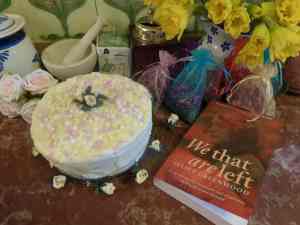
WWI Seed Cake  WWI Seed Cake
Original version:

2½lb Flour

2lb Refined Sugar

12ozs Caraway Seeds

2lbs Butter or Margarine

4 teaspoons Orange Flower Water

10 Eggs

½lb Candied Peel


Modern (scaled down!) version

8oz     230g   Butter or Margarine

8oz     230g   Sugar

2oz   60g     Caraway or Poppy Seeds

8oz     230g   SR Flour

2oz      60g     Candied Peel

Rind and juice of 1 Orange

Rind and juice of 1 Lemon

3 Eggs

Cream butter and sugar, add eggs one at a time with flour alternately, then add juice of one orange, caraway/poppy seeds, candied peel. Spoon into a greased 7inch/ 18cm tin and bake in oven at 180 degrees (160 for fan assisted)/ Gas Mark 4 for one hour or until a knife comes out clean. When cool cover with butter icing (Vanilla or lemon both worth well).

This is one that sounds really tasty (and we are growing leeks in the garden!)

A ‘Meatless Meal’

Based on a 1918 newspaper recipe but on more manageable lines and with the addition of cheese to improve tastiness. Serves 2 or 4 depending on how hungry you are (but be warned, it is delicious!). Adjust the amounts (especially the cheese) to your own taste.

 Chop three leeks. Fry gently in butter until soft. Add a clove of garlic and ten chopped mushrooms (add more if you like mushrooms).

In a saucepan melt two tablespoons of butter, slowly add one tablespoon of floor and stir for one minute. Then add approximately ½ pint (284 ml) milk slowly until you reach a consistency of double cream. Add approximately 4oz (113) grated cheese. Stir in leek and mushroom mix. Pour over 2 – 4 large pieces of toast. Place in a fireproof dish, scatter grated cheese on top and place under a hot grill until golden brown. Serve hot.

………………………………..

Many thanks to Juliet for kindly contributing to The Landing Authors posts. If you want to know more about her work and inspirations, then here are all of the links you need:

Website:     http://www.julietgreenwood.co.uk/We that are left
Blog:            http://julietgreenwoodauthor.wordpress.com/

Facebook:    https://www.facebook.com/juliet.greenwood

Twitter:      https://twitter.com/julietgreenwood

If you want to check out other books published by Honno Press:

 http://www.honno.co.uk/index.php

I’d love to know about what World War I fiction you’ve read and would recommend. Do drop me a line… 


Introducing Landing Author Juliet Greenwood

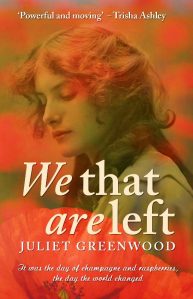
As there are still plenty of summer days left for reading (albeit that you might be reading in mac and wellingtons) I thought I would feature one of my recent library reads which I flew through recently. We That are Left by Juliet Greenwood (Honno Press 2014) is set  during the First World War, which is a very topical subject just at the moment. The action moves between Cornwall, Anglesey and France as the war unfolds and opens at Elin Helstone’s  Cornish home Hiram Hall just before the outbreak of hostilities:We that are left


Elin lives a luxurious but lonely life at Hiram Hall. Her husband Hugo loves her but he has never recovered from the Boer War. Now another war threatens to destroy everything she knows.

With Hugo at the front, and her cousin Alice and friend Mouse working for the war effort, Elin has to learn to run the estate in Cornwall, growing much-needed food, sharing her mother’s recipes and making new friends – and enemies. But when Mouse is in danger, Elin must face up to the horrors in France herself.
 And when the Great War is finally over, Elin’s battles prove to have only just begun.


I have read many novels from this period, but ever since reading Not So Quiet by Helen Zennor Smith some years ago, I’ve tried to  read more about women’s role during the great conflict. Juliet Greenwood’s novel combines love (as opposed to romance) with the hard realities of war for both soldiers and civilians, against a background of women’s wartime activity. Whether it’s growing food, driving ambulances or running a hospital and foraging for medical supplies, Greenwood’s women step up and are counted. It was a time when women were challenging social roles and agitating for the vote, and it was ironic that it took a war for women to have the opportunity prove what they could do. It is also worth pointing out that after the war many women who served in the war effort would have had just the same difficulties as the men in returning to peace time after all that they had seen and endured.

I haven’t hosted a Landing Author for a while, so I thought I would ask Juliet Greenwood if she would be kind enough to write a guest post for The Landing. After seeing a cookery demonstration recently at TCD’ s World War I day of talks and events, I decided that it would be interesting to focus on food as a post topic. At the cookery demonstration, Domini Kemp and Catherine Cleary from RTE’s History on a Plate recreated some recipes from the Ireland of that period. In Juliet’s novel, Elin has her Welsh mother’s collection of tried and tested recipes which she puts to good to good use when ingredients are scarce. A nice feature of We that are left is that Juliet has included some of the recipes that she mentions in the story. I’m planning to try out some of them myself and will be posting the results on Curiously Creatively in due course.

I’ll be posting up Juliet’s guest post, complete with recipes to tempt you into the kitchen, in a couple of days so do look out for it. Juliet Greenwood is the second Honno Press author that I’ve hosted here, the first being Jacqueline Jacques so check out her guest posts too if you have the time.

In the meantime, here’s a little information about Juliet Greenwood if you haven’t read her books before:

Juliet Greenwood

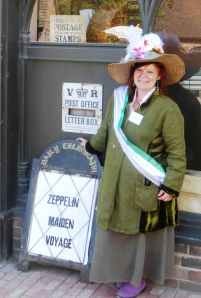
At Blist’s Hill Victorian Town


Juliet lives in a traditional quarryman’s cottage between the mountains of Snowdonia and the island of Anglesey. She has a large garden and attempts to grow as much as she is able and experiment with the results. When not writing Juliet works collecting oral history, before such stories are lost forever.

‘We That are Left’ is her second Book for Honno Press. Her first, ‘Eden’s Garden’ was a finalist for ‘The People’s Book Prize’ 2014. Both books were Kindle top 5 best sellers in June and July 2014.

Juliet also writes serials and stories for magazines as ‘Heather Pardoe’.


Juliet’s Media Links:

We That Are Left Honno Press, 2014

The Welsh Books Council’s Book of the Month, March 2014

The National Museum of Wales Book of the Month, March 2014

Waterstones Wales Book of the Month March, 2014 http://www.amazon.co.uk/That-Are-Left-Juliet-Greenwood/dp/190678499X

Eden’s Garden Honno Press, 2012

Finalist for ‘The People’s Book Prize’, May 2014

http://www.amazon.co.uk/Edens-Garden-Juliet-Greenwood/dp/1906784353


Website:     http://www.julietgreenwood.co.uk/

Blog:            http://julietgreenwoodauthor.wordpress.com/

Facebook:    https://www.facebook.com/juliet.greenwood

Twitter:      https://twitter.com/julietgreenwood

I hope all of that has whetted your appetite before Juliet Greenwood’s guest post on writing about women and food in the First World War!


Summer of Heritage 2014: Tours Of Dún Laoghaire Rathdown

I wrote this piece for the Irish News Review this week after having a tour round Cabinteely House, so I thought I’d re-post it here in case anyone in the Dublin or Dún Laoghaire Rathdown part of Ireland is looking for ideas for day trips. Follow the links to have a browse through the tour list. Enjoy the rest of the summer holiday!

Chris Mills's avatarIrish News Review

dlrevents_ep_505-x-700

I am firmly into cultural brochure and leaflet mode to ensure that I don’t miss anything in my local area before September. I struck lucky with DLR County Council’s Summer of Heritage brochure. It lists no less than twenty tours you can take during the summer in the Dún Laoghaire Rathdown area. Plenty to keep you occupied during July and August with the bonus that all of the tours are free and all are suitable for children (with extra care needed in some properties). It’s also worth noting that you can take a tour of the Dalkey Castle and Heritage centre for free as part of this Summer Heritage series. These special tours are at 10.45 on Mondays and Thursdays until 4 September. You can browse the site after the tours and if you’ve never been to Dalkey Castle I would recommend this as a great opportunity to see this…

View original post 689 more words

Leskov and Shostakovich on The Landing

Following on from the Landing Book Shelves foray into Russian literature, with Tolstoy and Pasternak, we have Nikolai Leskov (1831-1895) with The Enchanted Wanderer (first serialised in Russkiy Mir, St Petersburg, 1873) which was translated by Ian Dreiblatt. Technically this isn’t by any stretch of the imagination a Landing book, since I only bought it this year and it has sat on my bedside table more or less ever since. I have been reading it over the last week or so in between a couple of the inevitable library finds (I must do a library books blog post soon with a few ‘recommends’).

I had been browsing in the Rathfarnham Map and Bookshop but I was about to leave empty handed when this smart Melville House edition (2012) of the Leskov caught my eye. Melville House is another of those publishers that has had the smart idea of publishing lesser known classics (Hesperus  and Persephone are also publishers of forgotten classics) and in particular Melville specialises in novellas. The blurb on the back jacket says that many of the titles published have never been seen in book form before. I’m already lusting after more books from the publishing list, but they will have to join the mental book queue.

The Enchanted Wanderer

Simple and Elegant…

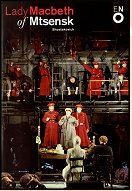
I hadn’t heard of Leskov before, but when I read the back jacket for some biographical details, I let out a small cry of delight. At this point you should be warned that I am about to digress somewhat from the topic of The Enchanted Wanderer. The reason for that unseemly public outburst was my discovering that Leskov had written a novella called Lady Macbeth of Mtsensk (first published in 1865). The significance of that piece of information is that it provoked in me a burst of nostalgia. I went to see the operatic adaptation of Lady Macbeth by Dmitri Shostakovich (1906-1975) on an Art College trip to London with my sister several years ago. The production was an English National Opera piece at the Coliseum. Our night at the opera was the final item in a packed day of sightseeing. I remember being in the bar of the coliseum feeling tired, footsore and too scruffy for the wonderful surroundings. Strangely enough, I don’t recall that anyone else batted an eyelid even though everyone seemed much smarter than we were.

I have been trying to pin down the date of the London trip because unusually for me, I don’t have a programme saved. As far as I can tell from my friend Google, it was the spring of 1987 though I don’t know the exact date as I’m not sure how long the  opera ran. This was to be my first opera and a dramatic start to opera going it proved to be indeed. Our seats were up the Gods, for the princely sum of £5 if my memory serves me correctly. It still amazes me that you could go to a production of such quality for so little cost at that time and of course, in such a fabulous building.

Leskov’s book ticks all the dramatic boxes for passion, murder and jealousy and it was turned into a four act opera with some changes in the action. I’ll just briefly set the scene so as not to spoil the plot too much. The plot of Lady Macbeth tells the story of  provincial merchant’s wife Katerina Ismailova, who is unhappily married to Zinovy Ismailov. She is Zinovy’s second wife and is  constantly berated by her father in law Boris for not producing an heir for the estate. Enter a new farmhand called Sergei who is attracted to Katerina and the plot thickens.  Set against the background of provincial life, Leskov tackles the themes of adultery, the subservient role of women and murder. Here’s a plot summary of the book if you want to know who dun what and to whom.

Lady Macbeth of Mtsensk

Programme from 2001 revival

Shostakovich’s opera was written in 1932 and first performed in 1934, but fell foul of Stalin in 1936 and disappeared from the public eye until the 1960s. I discovered from an article in the Guardian from 2004 that the sex and violence in the opera didn’t go down too well with the party leadership, though Lady M had been a great success with audiences in Moscow and St Petersburg. When it first re-surfaced, the opera was produced in a bowdlerised form but later staging of the opera returned to the original version. Here’s a review that I dug up from The Spectator of 5 June 1987:

No problems whatsoever with David Pountney’s shattering production of Shostakovich’s second opera. The tragedy is that it should have been his last: Stalin’s notorious denunciation of 1936 effectively silenced a 27-year-old opera composer of genius. For this reason if no other, Pountney’s updating the work to the 1930s and setting it in an abattoir is an act of neat gallows-humour revenge. Brimming with pole-axing coups de theatre, brilliantly conducted by Mark Elder and graced with a central performance by Josephine Barstow [Katerina]that is remarkable even by that singing actress’s own Himalayan standards, this is without doubt the best show in the West End, and to miss it would be sheer insanity. Oh, and it was absolutely ready on the first night.

I remember that the whole production, from the music to the singing, to the spectacular set design absolutely overwhelmed me. It probably wouldn’t have been the opera that anyone would recommend as beginner’s choice, but for me it was a brilliant way to start. You were picked up by the scruff of the neck and flung in at the deep end. And it was sung in English, which helped considerably. I think it was also the first time that I heard Willard White (Boris) sing and though I can’t claim to be an operatic expert, even I can tell that he had (and probably still does have) a wonderful voice and a charismatic stage presence.

We might have been high up in the theatre, but the opening bars of the music made an immediate impact on us. You should have seen weary students (and me), preparing to settle down in the comfortable seats and recover from the day’s exertions, jerk upright at the first dramatic notes of Shostakovich’s score. This is the first time I’ve thought about that trip for years and even now I can remember the excitement and the shocking action of the plot. I don’t think it will surprise anyone too much if I mention that Katerina (Lady Macbeth) comes to a sad and sticky end, as tragedy seems to be a staple ingredient of operatic stories. I was reading about the later revival of the opera by ENO  a few years ago and I’ve included a picture of the programme as I can’t locate one from 1987. Maybe sometime I’ll get to see Lady Macbeth of Mtsensk again, but I’ll certainly look out for a copy of the book.

All this was quite a digression from The Enchanted Wanderer, so I may have to return to him in another blog post. Meanwhile, I hope you are all enjoying your summer reading. Any recommendations?

Summer at the Bookshop: it started with a sketch…

In honour of bookselling summers gone by (and fellow booksellers), I am re-posting an edited version of a blog article that I originally wrote for Writing.ie when I was working for Hughes and Hughes a few years ago. It was first posted on 31 May 2012 in the now discontinued Booksellers’ blog column. The post was inspired by the fun we had putting together a summer-themed table at the front of the shop. The book recommendations from 2012 still stand I think, so if you are looking for ideas for the kids then read on…

If anyone had told me twenty years ago, that bookselling would involve playing with bits of coloured paper and cotton wool; I would have raised a gently inquiring eyebrow. These days I am more experienced in such creative matters. Indeed, there are times when it feels less like working in a bookshop and more like being back in primary school. Thank heavens for all of those Blue Peter watching years when I was being inspired by Val’s and John’s handiwork.

Like most creations, our summer themed table began with the merest sketch of an idea. The tricky part is usually translating the idea into 3D reality (and serving customers at the same time). That was where the cotton wool came into play as we attempted to create a model of an ice-cream cone (complete with flake) for our shop front display table. With the addition of yellow wrapping paper and some crepe paper in a lovely shade of blue, we were well on the way to bringing the seaside to a Dundrum shop floor.

The table was truly a joint effort: Claire, Maeve and Michelle were responsible for some very bijou beach huts and a shoal of little Nemos. And did I mention the fierce-looking pirates? However, the pièce de résistance was Andrew’s larger than life ice-cream cone, which dominates the table, inviting thoughts of summer treats. Don’s original idea was very well realised by the team and we were very pleased with ourselves (she said modestly).

Summer Table

Our rather splendid summer scene

We have all had a great deal of fun cutting out shapes, but the serious purpose was obviously to make something a little more eye-catching than basic merchandising. We filled the table with stock aimed at parents and children, with a mixture of new summer titles, colouring and activity books and toys. We arranged some bright and cheerful gardening gear for kids, which include hats and gloves for any future ‘Bloom’ exhibitors out there. When I saw the little ‘Bug House’, I was reminded of Dick King-Smith’s enchanting ‘Sophie’ books. For anyone not familiar with the series, the plot of the first novel saw Sophie earnestly collecting garden bugs of all shapes and sizes for her mini farm. Not all parents would appreciate that one I suppose…

For parents travelling with younger children, sticker, activity and colouring books are usually a good idea. For example, the Airport Colouring Book will peacefully while away the inevitable waiting time. If not, there is always Julia Donaldson and Axel Scheffler to rely upon, with for instance the Tales from Acorn Wood Activity Book.

Usborne Books had the bright idea of bringing out a book made up of holiday postcards for children to colour. There’s no excuse for anyone not to send cards home to the grandparents then! We also have plenty of ideas for summer holiday reading. Gerry Boland’s new Marco adventure, Marco: Master of Disguise(O’Brien Press) is completely charming. Marco is an escaped tea drinking grizzly bear who is hiding out from the zoo authorities. Áine McGuiness’ illustrations are wonderful; you could just see yourself giving a home to a grizzly like Marco (always assuming that you had enough tea bags).

For children’s holiday reads, then look no further than to the winners of the CBI Book Awards, announced recently. For older readers, Celine Kiernan’s Into the Greyis a gripping and atmospheric story. Celine received the double whammy of the Book of the Year Award and the Children’s Choice Award. I’ll hazard a guess at which award she was most pleased to win.

At the other end of the reading scale, his delightful picture book Stuck will no doubt appeal to the many Oliver Jeffers fans around. Stuck won the ‘Honour Award’ for Illustration, beating off stiff competition. Jeffers’ new book, The Hueys in the New Jumperhas recently hit the bookshelves, and it promises to be another bestseller. I want a Huey of my own now please (complete with orange jumper). Mark O’Sullivan won the Judges’ ‘Special Award’, for My Dad is 10 Years Old; Paula Leyden won the Eilís Dillon Award for The Butterfly Heart, based on her own experiences of growing up in Zambia. Siobhán Parkinson had two titles in the shortlist and won the ‘Honour Award’ for Fiction with Maitriόisce, which explored five generations of a family. Last but by no means least, Roddy Doyle was lucky enough to win the schools’ ‘Shadowing Award’ for A Greyhound of a Girl, which is now out in paperback just in time for the holidays.

Congratulations to all of the winners mentioned above. I hope that I have given a few useful ideas for the holiday season, but if you need a bit of help choosing, just pop in and ask a bookseller.

I hope the post has inspired you to either pop into a real bookshop for your children’s summer reads, or to grab scissors and paper and have some creative fun during the holidays! The Bookworm read A Greyhound of a Girl when it first came out and thoroughly enjoyed it and going a little further back, was a firm Sophie fan. If you’ve never met Dick King-Smith’s feisty heroine then do give her adventures a read.

Picture credit: me (unfortunately I’ve lost the original jpeg file so the quality isn’t great) and also used on the Writing.ie blog post.

Cranford on the small screen

After reading Cranford recently, The Bookworm and I decided to indulge in a DVD binge and we watched the entire BBC Cranford production from 2007 in one day of entranced viewing. Rest assured that we did manage a meal and beverage break in the midst of the nineteenth century. I had already done a little light Googling and so we were aware that the series wasn’t a straightforward adaptation of the novel. Even so, after having read and enjoyed the activities of the Cranford ladies so recently, it was strange to find the Cranford we knew had been turned upon its head. The scriptwriters, for some reason known only to themselves decided to mash Cranford up with a couple of other short novels and a spot of seasoning. I must stress that we did thoroughly enjoy all of the episodes of the drama. However at the same time, it just wasn’t the Cranford life that we’d just been reading about, which was rather vexing.

The television series, for those unfamiliar with its intricacies,  was constructed from plots and characters taken from My Lady Ludlow, Mr Harrison’s Confessions and Cranford. I was intrigued to read (on Wikipedia) that the scriptwriters had also worked themes from a non-fiction work called The Last Generation in England into the drama. Gaskell wrote the latter piece about the town in which she grew up (Knutsford) upon which she later based Cranford. I felt that it therefore made sense for a drama to return to the original source of Gaskell’s inspiration. I wasn’t so convinced by the idea of putting episodes from three entirely unrelated novels into the dramatic blender. If you take a look at the trailer below, you’ll see what I mean about the mixed plot lines and crossed characters.

After having searched around for details of the plots from the other books, I can see where the scriptwriters have fitted them in and where they have shifted the original Cranford plots to accommodate them. It was confusing enough after having read Cranford, but it must have completely baffled anyone doing it the other way around. As far as I can see, the various pieces of fiction are entirely unrelated to one another and I don’t think there’s a character overlap anywhere. The bonus here is that I have now discovered the existence of these novellas so I’m planning to buy them as soon as possible. I was skimming through My Lady Ludlow on the Project Gutenberg but I would rather obtain a printed version, the more to savour Lady Ludlow’s story. However, there is a delicious irony in reading about the traditionally minded lady in such a new-fangled way (and me a common person able to read!)

Part of the way through writing this post, I stopped to watch the DVD’s extra feature on how the series was made. I have to admit that The Bookworm and I are rather fond of the behind the scenes type of extra bits. Call it research, call it plain nosiness, but we like going behind the cameras for a while. The various people involved in the writing and production of the re-imagined Cranford village seemed to be real Elizabeth Gaskell enthusiasts. Given that, I couldn’t see why they would then want to muck about with her text so much. Why was it not possible to adapt a straightforward Cranford? Was it just to go one better than the earlier BBC series? Surely, the other novellas could have been adapted into wonderful television plays. I suspect that it was all about money really, and what would make a better merchandising package, to say nothing about the possibility of the Return to Cranford series.

Since I have now had a bit of a grouse about the re-writing of the novel, it is only fair to remind you that as I said before, we both enjoyed watching the drama. The ensemble cast was a dream and the costumes and settings were marvellous, taking me back to those long-ago Sunday evenings watching the current BBC adaptation. I suppose you just have to separate the programme from its original source material(s).

Don’t be surprised if we succumb to temptation and borrow Return to Cranford from the library!

Credits: YouTube – BBC trailer uploaded by Luthi3n84 on 28 April 2008 – with thanks

Ladies who take tea: Cranford

Over the last wee while, I have been reading Mrs Gaskell’s Cranford aloud to the Bookworm (usually on a Sunday morning for some reason) and we are now roughly half way through. I can’t honestly be sure if I have ever read it before but I do recall watching a BBC series some years ago. After a bit of searching I tracked down the series from 1972 that I remember watching with mum (it was dad’s cue to go and do the washing up, as he wasn’t a fan). When we get through the novel, unless I can dig up a copy of that series from somewhere, we are going to watch a DVD of the newer series from 2007 that I missed first time around, .

Cranford

Dust jacket long since gone

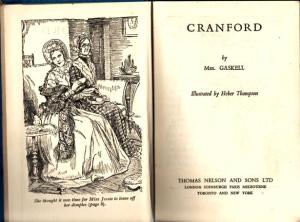
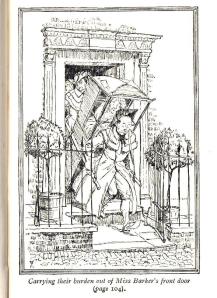
My edition of Cranford is a modest little Thomas Nelson hardback volume (undated) which is somewhat shabby after previous handling. Judging by the flyleaf I am the fourth owner of the book, but who knows for sure (I haven’t written in it, though I often do put my name in books). Heber Thompson illustrated the book with black and white sketches of various scenes from the story. I have chosen to scan a couple for the blog post that relate to events in the early chapters (see below).  We were particularly fascinated by the manoeuvres of the sedan chair men, not having realised that it was customary for the chairs to be carried into the house. And did you know that it was possible (and perhaps expected) to give up your dimples at a certain age?


Elizabeth Cleghorn Stevenson (1810-1865) married Rev William Gaskell, a Unitarian minister in 1832. She published most of her work under her married name including a collection of poems (Sketches Among the Poor) co-authored with her husband. The exceptions were early short pieces of fiction that were published under a pseudonym and Mary Barton (1848) her first novel which was initially published anonymously. Mrs Gaskell became very well-known for the first biography of Charlotte Bronte, which she wrote at Patrick Bronte’s request after his daughter’s death. She produced a highly sanitised version of Charlotte Bronte in the biography; I was reading a Guardian article by Tanya Gold who was quite scathing about the book. Not having read it, I can’t really comment though I have heard that criticism levelled at Gaskell before, who apparently began the mythologizing of Bronte’s life and work.

Cranford title page

Miss Matty looking a tad disapproving…

The Gaskell’s social circle included many from dissenting backgrounds and the couple were friends with reformers such as William and Mary Howitt and literary luminaries Charles Dickens and Harriet Beecher Stowe. Elizabeth Gaskell’s concern for the welfare of the poor and interest in women’s lives comes over in her work. In Cranford (based on Knutsford in Cheshire where she spent her early years), Gaskell details the lives of the female population of the town.

All of the petty economies made by widows and spinsters in straightened circumstances and the eagerness with which a new diversion to the predictable daily round was received, are minutely and sympathetically explored. The book doesn’t have a plot as such, being a series of episodes in the lives of the genteel ladies of the small town. This provides plenty of opportunity for gentle humour, as social events and minor scandals take place. These are seen through the eyes of a young woman Mary Smith, who  lived in Cranford as a child and now comes to stay for extended visits.

There are several sad episodes and one rather touching one is where an elderly spinster, Miss Matty relents in her prohibition of her maid Martha having ‘followers’. Poor Miss Matty has been recently reminded of how she lost her chance of marriage, and is willing to allow Martha to have a young man provided he passes inspection,

“God forbid!” said she, in a low voice, “that I should grieve any young hearts”.  She spoke as if she were providing for some distant contingency and was rather startled when Martha made her ready eager answer. 

” Please, ma’am, there’s Jem Hearn, and he’s a joiner making three-and -sixpence a day, and six foot one in his stocking-feet, please, ma’am; and if you’ll ask about him to-morrow morning, every one will give him a character for steadiness; and he’ll be glad enough to come to-morrow night, I’ll be bound.”

Though Miss Matty was startled, she submitted to Fate and Love.

Perhaps catching up with Elizabeth Gaskell’s books on both page and screen will become another offshoot of my TBR Pile reading project. I am certain of having read Cousin Phillis (1864), and Wives and Daughters (1865) in the dim and distant past, though they have now mysteriously disappeared from The Landing Book Shelves. There are a couple more novels that I would like to read as well as the Charlotte Bronte biography.

The Sedan Chair

It doesn’t look very safe..

I’m not sure how many more Sundays worth of reading lie ahead of us (distractions are many as I’m sure you’re aware) but I enjoy ‘grown-up’ reading aloud so I’m not in a hurry to finish. It doesn’t seem that long since we were on A very hungry Caterpillar; the years have suddenly flown by!

Do you ever read aloud? And if so, what are your favourites?

Words on the Street: Literary Dublin

It has been a while since I featured anything of an excursionary (I think I made that word up) nature on The Landing so I’m taking the opportunity offered by last Thursday’s ‘Literature Crawl’ around Dublin for European Literature Night. This was the second time that I’d participated in the Words on the Street event and for me, as it was last year my attendance was in the guise of a book club outing. Last year we managed to tick of three events as we didn’t make it into town very early. This year however, we were planning to go for broke and be ready to start at 6.30pm with the first reading and not give up until the last one at 9pm.

The devil was in the decision-making: about which readings we were to attend, strongly influenced by which buildings we wanted to see inside and which reader we wanted to hear. It was a tricky balancing act indeed, because it is physically impossible to hear all of the readings (eleven) within the evening unless you run very fast and only stay for half a reading anyway which would be pointless. I’d have to admit that I was unfamiliar with any of the authors/works except for Jon McGregor so I was willing to have a go at any of them in the interests of literary discoveries.

For my part also, one given was that I wanted to hear Bryan Murray who was such a good reader last year and secondly, I wanted to see inside Buswells Hotel. One of our party vetoed Joe Duffy, so we agreed to part ways for one event as the building (a usually inaccessible part of the National Gallery) won out over any other considerations for the remainder of us.

Therefore, these were our final tally in route order. Where possible I’ve added in publication details below if anyone wants to follow anything up.

Even the Dogs Jon McGregor (UK, in the National Library, read by Jon McGregor)
Bloomsbury, 20111

I’d meant to read Jon McGregor at some stage but I’ve not yet got around to him. It was nice to have a reading by the author himself and to start off our literary crawl in one of my favourite buildings added to the pleasure of the evening. McGregor planned his reading so that he would read the first chapter at the first session and so on. An intriguing first chapter, sad, spooky, bleak yet not without human warmth.

At Livia’s Bar Pierre J Mejlak (Malta, in Buswells Hotel, read by Aengus MacGrianna)
http://wordswithoutborders.org/article/at-livias-bar
http://www.pierrejmejlak.com/xita_en.htm

I loved this short story but I don’t think much of Mejlak’s work has yet been translated into English. I found the short story published online and another piece on the author’s website which is worth a read too.

Nothing Ever Matters José Ovejero (Spain, No 5 South Leinster St, the National Gallery, read by Joe Duffy)

Apparently the author specified which extract was to be read at the event, which was as far as I know the only time this was the case, unless it just wasn’t made obvious by other readers. There seems to be a mistake in the title given in the brochure, as the book I came up with on Google was Nothing Ever Happens (Hispabooks, 2013). This novel seems especially intriguing as the chapter read (Claudio) seems to be part way into the novel, which neatly throws up questions yet gives very little away.

Ceasarion Tommy Wieringa (Netherlands, St Ann’s Church, read by Bryan Murray)

As ever, Bryan Murray brought the novel alive with his enthusiasm and obvious love of literature and reading. This is one I would definitely like to get hold of; it depicts the relationship between a mother and son who have been abandoned by the boy’s father. The tensions between one very absent parent and one very present parent are the focal point of the story.

The Prophets of Eternal Fjord Kim Leine (Denmark, the Mansion House, read by Phelim Drew)
Gyldendal, 2012

This seemed to be a very sombre historical novel, literally dark in the sense of being set in Greenland where the winters are very long, but also one full of dark passions and cultural and religious clashes. Phelim Drew seemed suitably sombre in his presentation of the piece.

Love Virtually Daniel Glattauer (Austria, Hodges Figgis Bookshop, read by Maria Doyle Kennedy)
Quercus Publishing, 2012

This was a great one to finish with as it was amusing and witty, promising a modern style of romance via email rather than letters.

I enjoyed all of the readings as an introduction to new reading avenues and I hope to follow up some of the leads. Last year I slipped up on those good intentions, so this year I’ve made a point of tracking down some publishing information while the event is still fresh in my mind. It looks as if some of the books will be easier to get hold of than others, though I haven’t checked everywhere yet. Hodges Figgis certainly had stock of Love Virtually, but I can’t remember which others were available on the night.

I’d be interested to hear from anyone who attended the Dublin readings that we didn’t choose. Ideally I’d have gone to all of them! Drop me a line below if you can recommend any of the others or if you have been to any of the readings in other cities. It would great to hear about them…

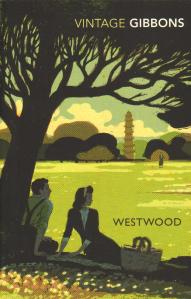
Westwood by Stella Gibbons

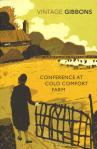
Alighting on Westwood as the next Landing read was the first result of my rummage and dusting session, and it is a mere whippersnapper at only a couple of years of residence. Vintage Books re-printed Westwood in 2011 and I bought it along with Conference at Cold Comfort Farm in I think, 2012. I’ve since read this sequel to Cold Comfort Farm (which I enjoyed, having been terribly afraid of being disappointed) but not got around to Westwood until now. Writing this post has reminded me that at some point I would like to get hold of Christmas at Cold Comfort Farm.

Westwood

A picnic at Kew

When I first spotted the Stella Gibbons (1902 – 1989) re-prints I was probably as guilty as most people in thinking that she had written just one book. In her introduction to this edition of Westwood, Lynne Truss says, ‘This is what everyone knows about Stella Gibbons: she wrote only book, but it was a very, very good one’. Fortunately, I now know better; Gibbons went on to write in total, twenty-five novels, three volumes of short stories and four volumes of poetry. She started out as a journalist, working for amongst other papers, the Evening Standard, having studied her craft at University College, London. No mere flash in the pan then, you’d have to admit, though nothing ever attained the critical and public success of Cold Comfort.

Cold Comfort Farm, published in 1932 was Gibbons’ first novel but she began her literary career as a poet with a collection entitled The Mountain Beast in 1930. Westwood was published just after World War II, in 1946 and was set in a war ravaged London landscape. The book may be set in a city, and a damaged one at that, but Gibbons was able to find the same natural beauty in London, that she describes in Cold Comfort Farm and juxtapose it with the grim reality of blitzed houses,

‘The ruins of the small shapely houses in the older parts of the city were yellow, like the sunlit houses of Genoa; all shades of yellow; deep, and pale, or glowing with a strange transparency in the light…Pink willow-herb grew over the white uneven ground where houses had stood, and there were acres of ground covered with deserted, shattered houses whose windows were filled with torn black paper.’

Conference at Cold Comfort Farm

One of the sequels


Set against the background of wartime privation, Westwood is a satirical comedy of relationships focussing on two very different friends, Margaret Steggles and Hilda Wilson. Margaret is plain, bookish, serious and not particularly attractive to men (as her mother had no compunction in telling her) whereas Hilda is lively, down to earth, very pretty and has any number of service boys. Margaret feels that she is never likely to meet a man who will want to marry her, while Hilda just wants to have fun without getting too involved with any of her ‘boys’.  Independently of each other, they both encounter the same man; a distinguished, rather pompous playwright called Gerard Challis (based on real life writer Charles Morgan) who lives a somewhat charmed life despite the war, in a lovely old house called Westwood in Hampstead.

Margaret is drawn into the Challis family circle because of finding a ration book on Hampstead Heath which proves to belong to Challis’ daughter Hebe Niland. When she belatedly remembers to return it, the spoilt Hebe, rushing off to a party leaves her two children in Margaret’s care until Grantey (Mrs Grant), the family’s old retainer comes to baby sit. Margaret adores Challis’ plays and is thrilled to have the chance to make the acquaintance of the writer and his family: his elegant wife Seraphina, the beautiful Hebe and artist son-law Alex Niland. Margaret also becomes friendly with Zita Mandelbaum, a refugee who helps around the house. Zita is passionately fond of music and the two young women go to concerts together, which opens up a new world of experience for Margaret.

In contrast, Hilda meets Gerard Challis as they both travel home on the tube one evening after blackout. Gerard has spotted Hilda, admires her hair and eyes, and sees in her an opportunity for a romantic dalliance. As he gallantly offers to see her home in the dark (her torch has broken), he gives his name only as Marcus since Hilda doesn’t realise his celebrity status. Gerard is convinced that since Hilda looks like a Daphne or a Thetis, she must have a poetic soul that he can nurture, but he is sadly mistaken as he gradually realises over several months of clandestine cultural outings. Hilda feels quite sorry for ‘Marcus’; she feels he is a lonely old thing, doesn’t take him terribly seriously and has no time for mythical references,

‘Hilda was beginning to feel annoyed. She was not used to this sort of talk, and for Thetis and enchanted paths, she could not have cared less. She said suddenly:
“Are you on the B.B.C?”
“Good heavens, no!” he replied, shuddering. “You odd child, why do you ask?”
“ You talk like one of the announcers; Robert Robinson, I think his name is. “And you sound like one, too,” she added darkly.
“No,” he said after a pause, “no, I have nothing to do with that institution for perverting the taste and moulding the opinions of the masses.

Stella Gibbons

Portrait from the 1980s


As you can see by his maligning of the output of Britain’s national broadcaster, Gerard Challis had a well-developed sense of his own cultural superiority. However, he also was fond of moulding the minds of those around him, particularly the women in his life. Clearly there were times when this didn’t work, such as during his courtship of Seraphina twenty years previously. Gerard Challis has spent so much of his life in writing about his ‘Ideal Woman’ that he is unable to appreciate the qualities of any flesh and blood ‘ordinary’ females. Is it possible that he doesn’t actually really like women, as his wife suspects, since he keeps on wanting to ‘improve’ them,

“You were such a pet, always wanting to improve my mind.”
“My desire seems to have remained unfulfilled,” said Mr Challis dryly.
“Well, you must remember me trying to read all those alarming books you unloaded on me…I did try…only somehow there was never any time for anything;…”

There is a wonderful cast of supporting characters including Hilda’s kind-hearted, jolly mother, two American servicemen (Lev and Earl) and Lady Challis (Gerard’s mother) who runs a virtual commune in a row of converted cottages. Westwood doesn’t have a conventional love story ‘Happy Ever After’ ending though there are romantic entanglements a-plenty (don’t worry, I’m not going to tell you what does happen).  Suffice to say that by the end of the novel Margaret has learned much about herself and is a much happier person than she was at the beginning. Gibbons leavens the sadness and poignancy of the book with her sharp humour and a very funny set-piece during a picnic at Kew Gardens.

And what of Hilda, Gerard, Zita, Lev and Earl et al? Well, I’ll leave you to find that out for yourselves. Meanwhile I’m off for another rummage on the shelves. Are there any more Stella Gibbons fans out there?

Picture credit: portrait of Stella Gibbons taken from Wikipedia, with thanks.


A Maytime Poetic Interlude: London Bells

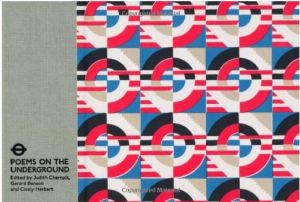
Browsing through the ‘One City One Book’ poetry book, If Ever You Go brought to my mind last year’s birthday present from my daughter. She chose to buy me the new edition of Poems on the Underground, which I have been picking up to read every so often. For this edition, the editors have decided to collect poems into themed sections including The Darker Side, The Artist as ‘Maker’, Exile and Loss and The Wider World. All of the poems in the anthology have been featured on the London Underground poetry posters at some point since the project began in 1986. My smart new edition was published to coincide with the 150th anniversary of the famous underground.

Poems on the Underground

Poetry in Motion

It seemed appropriate to follow on from April’s Dublin theme, with a poem from the section on London. I have chosen one from that ever-prolific poet Anonymous, as a nod towards my last #PoetryinJune blog post in 2013 when he/she insisted on sneaking in to close the series. Another reason for choosing this lighthearted London poem is that many of you probably remember it from childhood (or at least a version of it).  According to a Wikipedia article the following version first appeared in Tommy Thumb’s Pretty Song Book, c 1774 (but with ‘ye’ rather than ‘the’). An excellent source of information about nursery rhymes is Iona and Peter Opie’s The Oxford Dictionary of Nursery Rhymes (Oxford University Press), though I’m not sure if it’s still in print. I thought I had a copy tucked away somewhere but it must have been wishful thinking on my part. I think I’m right in saying that Iona and Peter Opie’s work on British nursery rhymes and childhood lore in general is the best source available. 


London Bells

Two sticks and an apple,
Ring the bells at Whitechapel

Old Father Bald Pate,
Ring the bells at Aldgate

Maids in white aprons,
Ring the bells at St Catherine’s.

Oranges and lemons,
Ring the bells at St Clement’s.

When will you pay me?
Ring the bells at the Old Bailey.

When I am rich,
Ring the bells at Fleetditch

When will that be?
Ring the bells at Stepney.

When I am old,
Ring the great bell at Paul’s.


This is the version that I grew up with; the last bell was sung to represent a very deep, slow, imposing peal:

Oranges and Lemons

Oranges and Lemons

Oranges and lemons,
Say the bells of St. Clement’s.

You owe me five farthings,
Say the bells of St. Martin’s.

When will you pay me?
Say the bells of Old Bailey.

When I grow rich,
Say the bells of Shoreditch.

When will that be?
Say the bells of Stepney.

I do not know,
Says the great bell of Bow.

Here comes a candle to light you to bed,
And here comes a chopper to chop off your head!

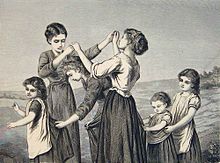
The Wikipedia article I’ve linked above suggests some meanings behind the rhyme and also quotes yet another version of it. We used to play the game illustrated in this nineteenth century plate, when you went round and round and got your head ‘chopped off’ if you were too slow. It’s strange how you play games as a child without ever really thinking about what the words or rituals mean. But let’s not get into too much blood thirsty stuff now, as I shall be off to bed shortly and don’t want to be dreaming of the dark doings in the Tower of London.

So, altogether now:

Here comes a candle…