Daniel Seery: A Model Landing Author

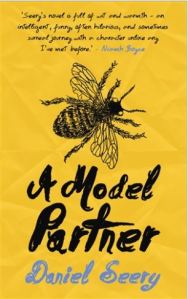
As promised yesterday, and just in time to liven up a chilly Monday morning in Dublin are a few questions that I put to Daniel Seery, author of A Model Partner (Liberties Press). I was surprised to realise just how long it’s been since I had a guest post (my last was Louise Phillips in August) so I’m pleased to welcome Daniel to the #LandingAuthors club. I do feel compelled to mention that as I  now work for Liberties Press, any praise I give Daniel’s book might seem biased. Therefore, I will more or less let him speak for himself other than to say that I think Daniel has created a very engaging and sympathetic character in his main protagonist Tom Stacey.

CM: I was reading in your piece on Writing.ie that you have written and directed a play and been shortlisted in an RTE drama competition. Can I start by asking you how difficult you found it to direct your own piece?

DS: When I write a piece I tend to visualise the whole scene, the pace of the drama, the way a character will deliver a line, the tone they use, even their movement. Initially, it was difficult to let go of this and allow the actor to move forward with their interpretation of the play. And in this respect I had to stop myself from over-directing and trying to control every aspect. But I knew the actor very well. I’d seen him in plenty of plays and I trusted his judgement and his skill. In the end, a lot of the directing came down to the physical arrangement and other technical details.
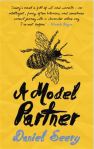
A Model Partner

CM: Moving on to novel writing, how different do you find the creative process to be from writing for the stage? 

DS: I had a good idea of the themes that I wanted to have in the play so I approached it in the same way I’d approach a novel, in that I usually try to get a rough draft down as quickly as possible in an effort to capture the tone of the piece. The editing stage was very different though, imagining how everything was going to look from an audience perspective and adapting it for the stage. But it’s nice to take on a new challenge with your writing. I’ve a couple of ideas for screenplays and I hope to get the time to write them someday.

CM: In A Model Partner, you have thrown a lot of misfortune Tom’s way during his formative years. Did you plan this from the start or did events take shape as you worked?

DS: The first time I imagined Tom he was leaning against a wall, listening in on his neighbours. I pictured this character on the fringes of society and I wanted to delve into how he ended up in this situation. Because I wanted the character to have a lot of heart, it would make more sense that he was a victim of circumstance and the actions of other people. It also offers the notion that often the bad events in our lives can impact us greater than the good.  

CD: Assuming that Tom finds ‘the one’ do you think that she would be able to cope with Tom’s obsessive need to place his chair exactly so, or do you feel that he would no longer have a need to control his environment so closely?

DS: I think a large part of relationships is about understanding and allowing for a partner’s natural or emotional flaws, so Tom would need to meet someone who is patient and will give him time to change. I think there are some signs in the book that his behaviour is altering. Perhaps he just needs someone to have faith in him and to love him, just like everybody else, I guess.

CD: Following on from the last question, I wondered how much research you did in order to flesh out Tom’s psychological profile in a convincing way.

DS: I wanted Tom to have rigid mannerisms but I wasn’t sure as to what extent I could push this character. So I researched a lot of psychology and medical journals in order to find similar cases and articles relating to trauma and OCD and the unwavering need to control an environment. Once I had some understanding of similar conditions and that I wasn’t merely going on any engrained stereotypical ideas, I felt free to move forward with Tom and the book. Luckily, I work in a library so I have plenty of access to this type of material.

CD: Deciding to use a wax dummy as a model for a partner could have been tricky to pull off as a plot device for all sorts of reasons that it might be best not to go into here. Were you at all wary of introducing her/she/it into the story?

DS: I think writers can often have doubts about the avenues they are taking with their plot. There is certainly a risk when introducing a waxwork model as a character, the fact that it could turn out farcical or that it might weaken some of the themes you are building. But the positive outweighed the negative, like the humour it could add to balance out the book or as a tool to show that beauty runs much deeper than a culmination of perfect traits. It needed a lot of work to fit seamlessly into the book but I think it was a risk worth taking.

CD: This final question is out of simple curiosity: Tom’s friend J.P. carries On the Road around with him and of course, Tom and his grandfather have their own road trip. Were you inspired by a road trip of your own and are/were you a Kerouac devotee?

DS: I wasn’t inspired by a road trip but the back story was in some ways influenced by the fact that my father is a truck driver. As a kid I’d love getting the chance to sit beside him in the cab and go for a drive. If I’ve a natural talent at anything in life it is definitely the talent of being a good passenger. Although Iggy Pop’s The Passenger was released on the Lust for Life album the year I was born, I still think he must have written the song about me!

‘All of it was made for you and me…so let’s take a ride and see what’s mine’

With On the Road, I loved the novel but I wouldn’t say I was a devotee like J.P. Instead, I wanted to use Kerouac’s book as a symbol of a future that JP naively presumes he is entitled to. But with the likes of JP, their aspirations are only a mimic of someone else’s aspirations and they are reluctant to chase or work for their vision of the future. And in some ways they are forever waiting on an adventure that is never going to happen.

Many thanks to Daniel Seery for taking the time to answer a few questions about Tom Stacey and A Model Partner. I hope that you will now be intrigued enough to want to read the book for yourselves. If so, just follow the links to the Liberties Press site where you can order a copy.

Now, I’ll try not to leave it too long before my next #LandingAuthor…
Introducing Landing Author Daniel Seery

As I mentioned on Twitter earlier this week, I am due to host debut author Daniel Seery  (A Model Partner, Liberties Press) on The Landing. Daniel’s novel had a successful  launch last week at The Gutter Bookshop in Dublin by fellow Stinging Fly contributor Colin Barrett. As you will know from one of my previous posts, Daniel generously gave a guest spot on his blog in the form of a Q & A to his cover designer Karen Vaughan. This time it’s Daniel’s turn to go under the spotlight with a few questions based on A Model Partner. I’m going to post up the email interview on Monday but meanwhile here is a short introduction to Tom Stacey, whose methodical search for his perfect partner will lead him into some surreal situations…. But will he find ‘the one’?

A Model Partner

The bees are a buzzing…

Tom Stacey has moved into his neighbour’s bedsit. He wasn’t asked. It was just that the door was open and his neighbours have gone on holiday. And it is so much bigger than his own bedsit. Plus, he has a lot to think about these days. The bees for one. He hasn’t seen any but he keeps hearing them, buzzing in the fridge at work, in the overhead lights, in the test equipment in the factory where he has spent the last fifteen years of his working life. They seem to be getting louder and more insistent, and they are beginning to affect the way he goes about his business.

Then there is his search for Sarah McCarthy to worry about. Sarah was his first love when, as a teenager, he travelled around the country in the back of a horsebox with his grieving grandfather. But perhaps it is not the bees or the past which is the problem. Perhaps it is his on going loneliness. Twenty-two dates with Happy Couples dating agency and nothing to show – bar a dent in his bank balance and several complaints about ‘eccentric behaviour’. Relationships are all about the details and there are just not enough boxes to tick in the Agency’s personal profile form.

Armed with a wax model and a list of criteria, Tom sets out on a quest to create a personal profile to find his ideal match. On his journey, he meets people just like him, warm but unable to show it, lonely and unable to remedy it, the lost, the misplaced and the damaged.

Daniel Seery

Daniel Seery

About the author:

Daniel Seery is a writer from Dublin. His work has appeared in local and national publications including The Stinging Fly and REA Journal and he has worked on a number of public arts commissions. In 2012 he was the resident writer in the Axis Centre, Ballymun. He has also been shortlisted for an RTÉ drama competition, has recently been one of the winners of the Irish Writers’ Centre Novel Fair and he has written and directed a play The One We Left Behind which ran in the Irish Writers’ Centre in May 2012 and in the Helix in August 2012. A Model Partner is his first novel.

Credits: Book blurb and cover taken from Liberties Press website.
Author photograph taken from Daniel Seery’s blog.

Landing Author: Louise Phillips

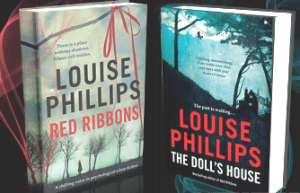
Red Ribbons & The Doll's House

A Brace of Thrillers

Here as promised is Louise Phillips to add a touch of darkness to The Landing as she answers a couple of my questions about delving into loss and deeply buried emotions. I also couldn’t resist asking a question about Louise’s experience with her promotional video and if you click on the link below you can enjoy a chill down your spine.

I met Louise perhaps not surprisingly, through my job as a bookseller but I have dear old Twitter to thank for enabling us to keep in touch, thus paving the way for this opportunity to have Louise as a guest. Many thanks to the future ‘Grande Dame’ of crime for including me in her Blog Tour and for the thoughtful answers to my questions.

Now, on with the Q & A:

CM: In both of your novels you’ve dealt with the themes of lost children/childhood. Can I ask you what drew you to examine this kind of emotional and physical loss?

LP: I think the ‘who’ of ourselves is found in childhood. I had a challenging one, and it’s made me very aware of beginnings and how the past forms us. With Red Ribbons, I dealt with the loss of a child, and as a mother, this was particularly difficult for me to write. However, just because something is difficult, doesn’t mean you should back away from it. Being a mother certainly helped the writing, and many of the reviews focused on how the narrative dealt with the emotional bond between a mother and her child. I must have done something right, seeing as how it was shortlisted for Best Crime Novel of 2012 in the Irish Book Awards, and despite the difficult nature of the story, it was a story worth telling.

The Doll’s House is very different, and is a story which questions the notion that the past cannot harm you because it has already happened. In The Doll’s House, the main protagonist, Clodagh Hamilton delves deeply into the area of hypnosis and regression. The child and the adult Clodagh Hamilton get to meet via her fragmented recall of memory whilst under hypnotic regression – this was a fascinating concept to me as the writer, the idea that the child self and the adult self could meet. By and large, stories pick you, and it’s not surprising to me that I use a character’s childhood as the backdrop to the ‘who’ of themselves, and also, why they do the things they do. But a great question, and one I will reflect more on.

CM: Psychological thriller novels such as your own work can be very unsettling to read, leaving the reader somewhat less sure of his/her own world. How does the writing process affect you, as you are so involved in the material?

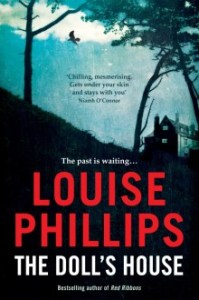
The Doll's House

Dare you enter…?

LP: In many ways, the fictional world is totally real to me when I’m writing it. It has to be, because if it doesn’t feel real to you, it won’t feel real to the reader either. Without wanting to sound over the top about it, I’m drawn to stories and emotions that force me to question and examine things. It nearly always starts with a question ‘why?’ and then ‘how?’, until I become utterly gripped. In some strange way, there are times when it feels like someone else is writing the novel. Despite being close to the material, I also have to separate myself from it. Readers want a great story that is well written, it’s not my opinion that counts, or what I feel about an individual character or what they’ve done. Maybe that protects me in a way, it certainly doesn’t frighten me. The only thing that frightens me about the writing, is first drafts – they are scary, but thankfully a long way from the finished story!

CM: Moving on to a different aspect of writing: You’ve been involved in producing a publicity video for The Doll’s House and I was just wondering whether you enjoy being a part of the promotional aspect of being a writer.

LP: It’s very different from the writing side of things, and I certainly can’t do any major promotional work while I’m writing. Do I enjoy it? Yes, in the main, but it can be hard work too. You have to put yourself out there, and that means taking risks. I was petrified the first time I was on radio, and then on television. When I did my first newspaper interview, it was the same. Now, I’d still be apprehensive, but I don’t let the apprehension stop me, and once I don’t make a mess of it, I’m happy enough. Things like making a book trailer or looking at other imaginative ways of promoting the novel are great fun. I write, so I love coming up with new ideas. The bottom line is that in today’s world it’s very difficult for a new author to get noticed, and the reason you look to be noticed, is that you want readers to read your book. If they do, hopefully, they will return for more. The recession has hit the book industry in a very dramatic way and readers when making their purchase will usually buy a novel by a writer they are familiar with and trust, namely the well-established names. As a new player in the field, it’s an uphill struggle, and anything you can do to encourage others to read your work, is a positive thing, even if it means asking your son-in-law to pretend to be a dead body in the canal!!

And here is that video….be warned…it’s rather creepy!

ABOUT THE AUTHOR

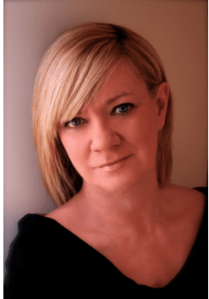
Louise Phillips

Louise Phillips

Born in Dublin, Louise Phillips returned to writing in 2006, after raising her family. That year, she was selected by Dermot Bolger as an emerging talent. Her work has been published as part of many anthologies, including County Lines from New Island, and various literary journals. In 2009, she won the Jonathan Swift Award for her short story Last Kiss, and in 2011 she was a winner in the Irish Writers’ Centre Lonely Voice platform. She has also been short-listed for the Molly Keane Memorial Award, Bridport UK, and long-listed twice for the RTE Guide/Penguin Short Story Competition. Her bestselling debut novel, Red Ribbons, was shortlisted for Best Irish Crime Novel of the Year (2012) in the Irish Book Awards. The Doll’s House is her second novel.

If you would like to contact Louise Phillips:

http://www.louise-phillips.com

@LouiseMPhillips

http://www.facebook.com/LouisePhillips

Both Red Ribbons and The Doll’s House can be ordered by clicking: http://www.louise-phillips.com/index.php/books/order  or just pop into your local Easons (3 for 2 offer on at the moment) or Dubray branch, or indeed (as the saying goes) any good bookshop.

Thanks again to Louise for taking the time to answer my questions. If you want to join in the conversation, drop a note in the box below.

Credits: promotional material and images supplied by the author with thanks.

Landing Author Expected: Louise Phillips

In the next couple of days, The Landing is moving away from the foggy distant past and right bang up to date with a new #LandingAuthor guest spot. My guest this time will be psychological thriller writer Louise Phillips who has published her second novel The Doll’s House (Hachette Ireland) on the 1st August. If the reviews are anything to go by, The Doll’s House is looking to be as gripping a read as her first novel Red Ribbons.

Louise Phillips held a very successful launch party at Bob Johnston’s Gutter Bookshop on 7  August which I sadly missed as I was away on my hols. Arlene Hunt did the honours on the night and I gather a good time was had by all.

Louise Phillips

#LandingAuthor Louise Phillips

I am very pleased to be involved with Louise’s promotional blog tour for her follow-up to Red Ribbons and to have the opportunity to put a couple of questions to her. Look out for The Landing leg of Louise Phillip’s blog tour on Thursday 29th August.

Just to whet your appetite, here is the blurb for The Doll’s House as a little taster before Thursday:

The Doll's House

Dare you enter…?

PEOPLE SAY THAT THE TRUTH CAN SET YOU FREE.
BUT WHAT IF THE TRUTH IS NOT SOMETHING YOU WANT TO HEAR?

Thirty-five years ago Adrian Hamilton drowned. At the time his death was reported as a tragic accident but the exact circumstances remained a mystery.

Now his daughter Clodagh, trying to come to terms with her past, visits a hypnotherapist who unleashes disturbing childhood memories of her father’s death. And as Clodagh delves deeper into her subconscious, memories of another tragedy come to light – the death of her baby sister.

Meanwhile criminal psychologist Dr Kate Pearson is called in to help in the investigation of a murder after a body is found in a Dublin canal. When Kate digs beneath the surface of the killing, she discovers a sinister connection to the Hamilton family.

What terrible events took place in the Hamilton house all those years ago? And what connect them to the recent murder?

Time is running out for Clodagh and Kate.

See you on Thursday with Louise Phillips!

Making Elderflower Champagne – and a celebration.

I’m reblogging this piece in honour of my (or rather our) successful batch of Elderflower cordial. This is the second year that we have had a go and we were very pleased with the results. Maybe we’ll have a bash at champagne next year, who knows!….

Landing Author: Sam Hawksmoor

Today’s post is given over to a guest blog spot, this time featuring YA author Sam Hawksmoor. I have known Sam (in a virtual sense) since long before I ever had a Twitter persona or a blog to call my own. As well as writing teen fiction, Sam has edited a great writer’s website called Hackwriters since 1999 and he has kindly published several of my pieces on books and bookselling over the last few years.

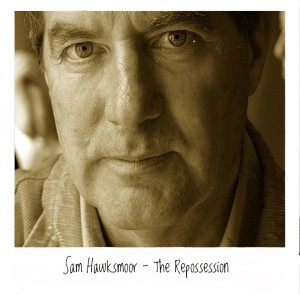
Sam HawksmoorAccording to his author website, Sam has taught creative writing, he wrote for radio and screen, travelled widely and has even done the odd bit of gold prospecting in British Colombia. All of this experience led up to  becoming a fully fledged kids’ writer, with two brilliant sci-fi thrillers  The Repossession and its sequel The Hunting being published by Hodder last year. The two main protagonists, Genie and Rian weathered many storms together and I’m sure that I’m not the only reader to hope for the ending they deserve in the final volume of their adventure. I was pleased to see that The Repossession has been shortlisted for two book awards, The Leeds Book Awards (May 2013) and the Amazing Book Awards (July 2013).

Sam has gone on to publish a time travel adventure this year, The Repercussions of Tomas D which is as yet only available as an ebook (thus challenging my technological skills). It was worth grappling with the Kindle app, to follow Tomas’ experiences as he inexplicably finds himself in the middle of World War II as Britain struggles to keep going during The Blitz. We may have fantasies about being able to time travel, but what might the consequences be if we could travel in time? Tomas and his not-exactly-girlfriend Gabriella are plunged into a whole new world as a result.

I asked Sam if he would write a piece for The Landing about how he got started writing for teens, how he chooses what to write, what approach he takes to the subjects.

In other words: The ‘Nuts and Bolts’ about writing for a YA audience:

I can say precisely when I decided to write young fiction.  It happened the very day that a friend and I were held up at gunpoint at his apartment in Hollywood.  They tied us up as they robbed everything he had.  I was only visiting, so they had nothing to steal from me.  Remember dial phones?  Try dialling 911 with the tip of your tongue.  A SWAT team arrived real fast but of course the baddies were long gone.   But that very evening I had the sudden inspiration to write The Bears You love – a girl, her robot bear, an evil relative who wanted her money and her flight into a desolate climate changed America.  That was a long time ago.  I wrote it.  Couldn’t find a single publisher who’d read it, let alone reject it.  Lot of heartache in that book, lying in a suitcase somewhere rotting.  Writing for kids wasn’t fashionable back then.  And don’t think I was an amateur just having a go.  At the time I had two adult novels in print and was working on a third.  Just the very idea of writing ‘for kids’ was not really on the radar and a tough story about mega cities of the rich surrounded by scavengers surviving by diving into the city dumpsters wasn’t ‘cute’.  ‘Completely wasting your time writing juvenile fiction.’ Said my then publisher at Sphere.

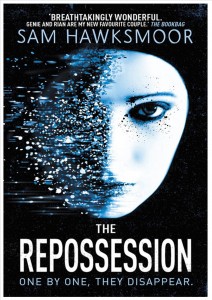
Cover of The Repossession

Every writer has tales like these.  I have a lot of ‘as yet to sell’ novels awaiting daylight.  Who’d be a writer anyway huh?  Yet, once you have the idea, you have to put it down and if you’re going to put it down you have to get the end and then… what stick it on Smashwords?   Hmmm.  After the Bear episode, I was distracted by writing screenplays.  If you think selling kids books is hard, trying getting a script made.  Yes I had a few optioned, but after knocking my head on many walls I finally realised, hell I need a real job.  A salary – a life – before it’s too late.  Nothing like teaching students to put you off writing forever it seems.  I had to begin at the bottom.  No one was interested that I had published anything, especially fiction, (which is sneered at in academic circles I discovered). Real writing was what they did for obscure academic journals peer-reviewed by similar narrow-minded obscurists and the less readable it was the higher the esteem it gained.  Anything remotely accessible was clearly garbage.   When I finally got to run something (Falmouth Post Grad) I brought my enthusiasm for children’s writing to it.

Times had changed.  Someone called J K Rowling was gaining attention.  Philip Pullman was respectable and brilliantly written.  It was OK to talk about literary values in children’s fiction, study it even.  Later I was running courses in Children’s Writing at Portsmouth University and they were massively oversubscribed.  Everyone wanted to write for kids and there was a lot of talent there (if not the necessary staying power).  I took it further into the MA that I ran there.   I decided that here I was discussing all this exciting material, but I wasn’t writing it.  My first attempt was something called Mean Tide set in Greenwich, written under a pseudonym and although it was mentored by Beverley Birch at Hodder, it didn’t get through the hoops there.  I learned something important though; keep it focussed on the kids.  My adults got a lot of equal time in that book, a mistake it seems.  I still have a fondness for it, so I put it out on Lulu as a calling card.  The Repossession and The Hunting came out of my screenwriting days.  I had been working in Vancouver at the time and a number of incidences that my wayward niece and her friends would get up to was kind of shocking to me.  How little they thought of their own safety and just how many kids disappeared and how little their families seemed to care.

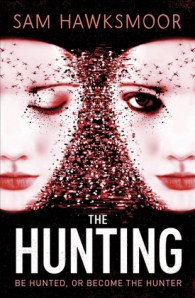
cover of The Hunting

The central character Genie is based on someone I know.  In fact I wrote it for her and she would await each chapter and give me quite harsh notes that I had to take on board.  (Yes someone really was forced to live behind bars at home when they came back from school each day – I saw it with my own eyes).  The mother was a teacher! Did it turn out all right?  No.   What happens in those two books and the concerns the kids have follows from observations and talks with Canadian teens.  The schools they go to are huge, it’s hard to stand out.  Kids work to pay bills.  It’s very different to the UK.  My nephew’s best friend was blown away – shot at point-blank range – they were just walking from a coffee shop and wham.  No reason.  Social media is like viral poison.  Huge numbers can gang up on you, destroy lives.  There is no restraint.  I don’t try to adopt their language.  Couldn’t even if I tried. It moves on too swiftly.  But issues such as love, doubt, fear, peer pressure are universal and tapping into that puts me back in my own school days.  It was harsh, yet somehow I survived – and if I could survive, then today’s kids can.  That’s how I see it.  So when I write fiction for teens I put myself in their shoes.  The world doesn’t make sense.  Yet more often than not the kids are good, ambitious, want to be something and usually the opposite of whatever is happening at home.

Is the subject difficult?  Well putting a kid through teleportation experiments isn’t pretty, especially when you know it’s not going to work.  It’s fantastical, but rooted in the tradition of experimental science.  I’m trying to keep my feet on the ground, rather than write something that couldn’t be believed.  In Repercussions of Tomas D, I’m playing with time travel.  In time stories you can spend a lot of time building a machine and all that.  But I rather liked what happened in ‘The Butterfly Effect’ and for my ‘hero’ Tomas D it’s something that happens to him, not a choice.  I like the idea too that in creating a ‘hero’ that stops the war, he automatically becomes the greatest traitor that ever lived.  The fun in writing comes with the consequences of the situations you create.  Tomas D’s girlfriend is left behind and discovers the day after Tomas disappears that she is the only person in her school who remembers that Germany didn’t win the war.

To be honest that’s the fun part of writing, inventing a new present for young Gabriella to live in.  Dealing with the past is about research. But here again I draw upon two personal experiences.  One is the beach I frequent each year in France where the German gun emplacements are still intact. 70 plus years on, there is a visible reminder of war every hundred yards or so along the French coast.  That and finding a picture of my grandfather buried up to his neck in rubble – still alive – from a German air raid on Lincolnshire.  This was the second time he had been bombed.  The first time was in 1914 when a German Zeppelin dropped a bomb on his home killing his brother and parents.  There’s a photo of him in his pyjamas standing in his bedroom with the front of the house blown off.   So for Tomas D to have this nightmare about being buried alive by German bombs  – it comes from a reality.

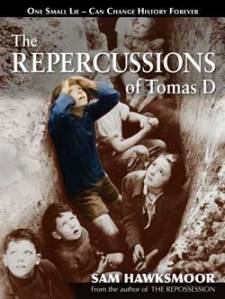
cover of The RepercussionsHow will this appeal to teens or young readers?  Hmm.  In doing my talks to schools, I am acutely aware of how little history is taught and how varied.   Increasingly the names Hitler and Churchill mean nothing (unless it is a nodding dog on TV) so the story of a boy going back in time and altering everything really only appeals to a kid who knows something about our Island story. (I should send a copy to Michael Gove).  This is why publishers increasingly are wary of publishing ‘historical fiction’ I guess.  I would argue that history – especially ‘economic’ history should be a much bigger part of curriculum’s to provide a better understanding of how society works and where it is going.  I am but a straw in the wind on this.  I am in progress on a number of works.  All YA fiction.  One survival story set again in Canada, the second in a parallel London at war with the French.  I live in hopes they will see the light of day.

I take the business of writing for kids very seriously.  Some of the best fiction ever written is I would argue for kids.  Incarceron by Catherine Fisher for example. Clever on so many levels and stretches the imagination.  Never dumbed down and it’s inspirational.  Ship Breaker by Paulo Bacigalupi one of the most vivid and yet plausible visions of our future on this planet. Hopefully one day I’ll find a way to do that myself.

Sam Hawksmoor 2013

Sam Hawksmoor … until recently was the Course Leader for the MA in Creative Writing at Portsmouth University and a similar programme in Falmouth, Cornwall. He is the joint-editor of Hackwriters.com. Sam is the author of ‘The Repossession’ and ‘The Hunting’ with Hodder Children’s Books.  Sam currently lives in windswept Lincolnshire but misses Vancouver, the mountains and the coffee bars, the setting for several of his YA novels.

Credits: author photo and bio taken from Leeds Book Awards site; other pictures from author’s own site.

Landing Author: Bethany Dawson

Today’s post contains a guest piece from debut author Bethany Dawson with whom I first made contact via good old Twitter (@storiesbybeth). I was given a copy of her novel My Father’s House (Liberties Press, 2013) by the publishers earlier this year, and upon reading it, I was very impressed by its literary quality.

For those of you who haven’t read My Father’s House, the novel’s plot centres on Robbie Hanright’s return from Dublin to his family home in County Down when he learns of his father’s illness. Robbie turned his back on the family farm, his parents and two sisters to make a new life for himself a few years previously.

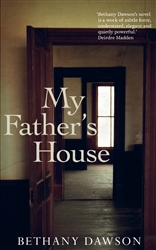
book jacket of My Father's House

An Evocative Image..

As the narrative unfolds we learn more about what he left behind and why he chose to do so. Time has moved on since Robbie fled to Dublin and things and people have changed back home so he has much to absorb and to reflect upon. Robbie meets faces from the past and has to come to terms with his actions. But will he learn from the past?

This is a deceptively quiet novel where the focus is upon relationships with family and friends. The reason I say ‘deceptively’ is because there is a huge depth of emotion conveyed within an ostensibly straightforward series of events. The effect builds throughout the novel to satisfying effect. The layers of the characters are gradually revealed and I found that the more I knew about them, the more I wanted to know. I don’t want to reveal too many of the plot details so I won’t tell you any more.

Bethany Dawson has written a piece especially for The Landing in which she discusses her characters and her readers’ responses to them:

Muddling through: characterisation in My Father’s House

I have found peoples’ response to the characters in My Father’s House very interesting. One reader said she finished the novel feeling sad that there hadn’t been a happier ending. Another said she wished the main character, Robbie, had just ‘grown a set’.

My fascination with people and how they relate to one another is the centre from which my book flows. Several thousand words into my original manuscript I felt as though I knew my characters pretty well. By the end of the three years it took to complete the writing of the novel, I had spent far too much time with them.

Robbie is the kind of man I hoped would be better but always left me feeling slightly disappointed. His relationship with his father, John, is complex, and both their Northern Irish identity and the shadow of sickness intensify the difficulties they have connecting. I found it wonderfully challenging to write scenes with the two of them. The culture of sweeping things under the carpet means so little is actually said and at times I found the tension unbearable.

Robbie’s mother is a refreshing example of someone who took the opportunity to change. A few readers found her transformation from dowdy housewife to a woman with a young lover who keeps ostrich feathers on her dresser quite amusing.

I wanted readers to see their brothers, sisters, fathers, mothers and grandparents reflected in my characters. Although the story is a work of fiction, there are truths reflected in it with which most people can identify. In general, the characters muddle through a very difficult time and try, quite unsuccessfully at times, to work out how to relate to one another. By the final page of the novel some things are resolved but most are not, and in this way I hope I have been true to how the majority of real life stories come to an end.

BIO

Bethany Dawson

Bethany Dawson

Bethany Dawson released her debut novel My Father’s House last month. She completed a Master of Philosophy in Creative Writing at Trinity College, Dublin in 2007. She works as the Assistant Editor of The Zimbabwean, an independent newspaper produced in the UK. She currently lives in Belfast, Northern Ireland with her husband and son, but has spent time living in both Zimbabwe and South Africa.

Bethany blogs at http://www.storiesbybethany.blogspot.ie/ and if you want to take a look at the Liberties Press website, she has recorded a promotional video for My Father’s House.

Many thanks to Bethany Dawson for contributing to The Landing

Photo credit: Carl Whinnery

UPDATE – June 2013 –

Bethany Dawson is featured in this month’s edition of The Gloss magazine talking about living and travelling in South Africa. You can click on The Gloss website for an extract of the article.

Landing Author: Jacqueline Jacques (Part II)

Head and shoulders portrait of Jacqueline Jacques

Jacqueline Jacques

I hope you enjoyed the first part of the Q and A with writer Jacqueline Jacques, published here yesterday. Follow the link to Part I if you missed it and if you also missed my original introduction of Jacqueline’s historical crime novel on Thursday, then click over to that first to catch up with us! I am working on a piece about the book (which I enjoyed very much) at the moment. I really liked the idea of making the main character an artist who, through his role sketching crime suspects, becomes involved in the events which follow. And of course, Walthamstow was a fascinating character in its own right, at the heart of the novel and all the action.

And now, to the second half of my email interview with Jacqueline…

When you decided to go ‘darker’, did you have any idea in which direction it would take your work?  Did the difficult subjects you chose to deal with in Mary Quinn’s life affect you as you worked?

book cover of Victorian street scene

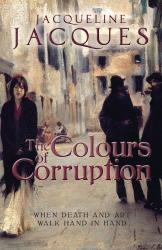
Colours of Corruption

I’ve tried the paranormal and outgrown it.  Horror wasn’t for me, so I guessed that my next novel would probably be crime fiction of some sort. I didn’t want to be bogged down in police procedurals, clues, clever deductions and red herrings, so I set an artist on a voyage of discovery.  He was the one to find out how ordinary, law-abiding people could become the victims of unscrupulous predators.  I hadn’t, at that point, read any crime fiction apart from Stef Penney’s The Tenderness of Wolves, so I fell back on my own studies in sociology, on various news stories, on a story structure recommended by the crime writer, Michelle Spring, and on my imagination.  Eventually, after the third or fourth draft I knew exactly where I was going.  And yes, I was very moved by Mary’s suffering, what she was forced to do to survive. I wanted to make life easier for her, but I couldn’t.  It was horrible but it happened and I had to record it.

I read on your website that you used to be a teacher.  I wondered if you would ever be inspired to write novels for children as other former teachers, such as Roddy Doyle have done.

Possibly, if time allows, but I have a number of adult novels I should like to write first.
I went to a Kate Atkinson interview recently, in which she was asked what minor character in her fiction she would like to revisit and why?  May I ask you the same question?

I’d be interested to see how little Clara grows up, given the trauma I’ve put the poor child through (I feel a little responsible for her.)  I suppose I might get the chance if I write more books about Archie Price.

Just to close with, can I ask you why you decided to move from the short story form to the novel and will you perhaps go back some day?

I find I need the longer form of story-structure in order to explore and develop my characters and plot.  Short stories cannot always contain all I need to say.  If I returned to short-story writing it would be purely as an exercise, I think, to test myself against a word count or the discipline of making a story believable in a few words. I once heard Beryl Bainbridge say, ‘Why waste characters and a good plot on a short story when you can write a book?’

Many thanks to Jacqueline for taking the time to answer my questions about her work. As I mentioned yesterday, she is in the running for the fiction award in the People’s Book Prize 2013 in which the voting is open until 20th May. As well as being a successful writer, Jacqueline is also an artist and you can check out her website for more information on her work. You could also look up her author page on Honno Press, for earlier novels such as her science fiction novel Skin Deep (2004).

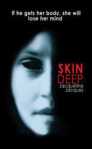
cover showing half of a woman's face

Skin Deep, Honno Press, 2004


Thanks for reading the Jacqueline Jacques interview and don’t forget to drop a line in the box if you have any comments or suggestions for future posts.

Landing Author: Jacqueline Jacques (Part I)

As I promised on Thursday, here are the results of an email interview that I conducted with author Jacqueline Jacques about her new novel, The Colours of Corruption. I have actually divided Jacqueline’s Q and A into two sections as it is quite a long piece and I will post Part II up tomorrow. Since reading the book and working on the questions, I have learnt that The Colours of Corruption has been put forward by Honno Press for inclusion in the People’s Book Prize 2013. There is still time to cast your vote as the polls close on 20th May (I have already cast mine!).

book cover of Victorian street scene

Colours of Corruption

Art plays a large part in The Colours of Corruption.  Can you start by telling us a little about why you decided to make a painter your protagonist?

 I wanted to write a crime novel from the point of view of someone who was neither criminal nor victim, policeman nor private detective.  I don’t know enough about police procedurals to write confidently about them, but I do know a bit about painting and painters.  Listening to Woman’s Hour one day I heard Lois Gibson talking about her work as a forensic artist, drawing the perpetrators of crime from their victims’ descriptions.  I researched further and was astonished at how large a part such artists play, even today, in the solution of crime.  Archie Price, with his extraordinary gift for almost reading a witness’s mind, would have been invaluable to the police, at a time when photography was in its infancy.  Passionate about his painting, he is, at the same time quite naive about the real world and unprepared for the vicious criminals he comes up against.  He has all-too-human frailties, is weak, is charming.  An unreliable hero.  Perfect.

I am a dyed-in-the-wool Brummie, but I still love reading fiction based on London’s many layered past. You said on your blog that Walthamstow features in most of your fiction.  Can you tell us what it is in the place that keeps pulling you back to it in your work?

As a child I felt that it was the best place on earth to grow up in.  It had (still has) an incredible bustle of creativity about it. Easy access to the forest gave me trees to climb, paths to ramble, changing seasonal moods to fire my imagination. There was the wonderful High Street market to explore, the library to feed my soul, the Town Hall grounds to play in, the marshes, the river, Lloyd Park for swings and roundabouts, and London, only half an hour away by train. Why Walthamstow? It was my home and I loved it.

Your engaging and courageous hero, Mary Quinn is an Irish woman whose family had all travelled over to England to find work.  I was wondering if you have any Irish connections yourself.

Probably.  My grandmother spoke of ‘Black Irish’ genes (Spanish Irish) in the family, and of ‘Great Uncle Archie coming over from Ireland,’ but I haven’t done any research on this.  

You really evoke a convincing sense of life in this often sordid part of Victorian England.  How did you set about researching the period?  And I was fascinated by the underground passages.  Did they really exist?

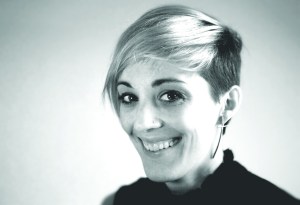
Black and white photo of Jacqueline Jacques

Jacqueline Jacques

 I borrowed books and maps, studied photographs and paintings of the period.  I went for walks on the Walthamstow marshes, through the streets and in Epping Forest.  I trawled the Internet for social history, facts about the police, housing, tile patterns, music hall.  But mostly I relied on my memory. I felt I knew these people; that I’d grown up among them.  I may be a few generations removed from the characters in the book, but we, too, were poor (after the war) and struggled to stay afloat just as they must have done.  My father, who grew up in Walthamstow in the 1920s, once told me about connecting cellars beneath the High Street shops, used by villains on the run from the police.  It may have been a myth for all I know.  My Dad was also a teller of tales. Truth or fiction?  Who knows?  I’m a writer.  I’ll use anything to make a good story.

Following on from the research behind The Colours of Corruption, I was wondering if, while you plotted the novel you knew early in the process where your characters would be at the end of the story.

 I vaguely knew that Archie would be drawn deeper into the criminal network but I had no idea what would happen to the other characters until the very end.  In fact I wrote several endings, none of which worked to my satisfaction.  As I got to know the characters, their histories, their motivations, they more or less told me how they would behave in any given circumstance and I wrote it down.  Sometimes I would drop a fact into the mix, like Mary’s sweet singing voice, or a sword-stick, or a pair of gold cufflinks, just to see where it would take me.  Sometimes it worked, sometimes it didn’t.  It’s a haphazard way of working, but there’s nothing like it for excitement.

I hope you enjoyed that look behind the scenes, more from Jacqueline Jacques on The Colours of Corruption to follow shortly.

Jacqueline Jacques and Victorian Corruption

This is just a quick post to flag up a new guest on The Landing, Jacqueline Jacques who will be answering questions about her new book Colours of Corruption (Honno Press, January 2013).

Jaqueline Jaques

Jaqueline Jacques

Just to whet your appetite, this the publisher’s  synopsis of Jacqueline’s engrossing crime novel, set in Victorian England:

Mary, a desperately poor cleaner, is a witness to murder. Archie, one of the first artists to work for the police, to support his other work, draws the man she says she saw at the scene. Fascinated by her ‘face full of bones’, he persuades her to sit for a portrait, but the man who buys the picture really wants to buy Mary. When he realises he’s betrayed her, Archie takes her to hide with his friends, but doesn’t realise what he’s started. He has no idea how this one woman links his wealthiest clients, the poorest slums, terrible secrets, and a violent thug who is now looking for Archie – the man Mary described to the police.
 
As this gripping thriller uncoils, Jacqueline Jacques paints an intricate, vibrant picture of the layers of Victorian London, where the poor are commodities, criminals have nothing to lose and the rich can buy anything.
 
And the murders go on…

colours_corruption

I plan to post up Jacqueline’s responses to my gently probing questions on Saturday 20th April so stop by and take a look. In the meantime follow the link above to Jacqueline’s website to find out more about the author and her previous novels:

Lottie  (Honno  1997)

Someone to Watch Over Me   (Piatkus 1997)

Wrong Way Up the Slide  (Piatkus 1998)

A Lazy Eye  (Piatkus  2000)

Skin Deep  (Honno 2004)

Sharp eyed viewers may recall that Honno Press has featured on these pages before, as I have previously reviewed one of their classic reprints, Winter Sonata by Dorothy Edwards  for Belletrista.

I’ll be back on Saturday….

Picture credits: Honno Press (with thanks)